
Major Overhaul Recommended for Arts Council England to Boost Regional Influence and Artistic Freedom
In This Article
HIGHLIGHTS
- A report by Dame Margaret Hodge recommends overhauling Arts Council England's (ACE) funding strategy to enhance regional decision-making and reduce bureaucracy.
- The report criticizes the Let's Create strategy for stifling artistic innovation and suggests replacing it with a less prescriptive model.
- Concerns about political interference in ACE's decision-making process were highlighted, urging the protection of arts funding from politics.
- The report calls for simplifying ACE's application process and extending the funding cycle for national portfolio organisations from three to five years.
- Wigmore Hall's withdrawal from ACE funding underscores the dissatisfaction with current funding strategies, emphasizing the need for reform.
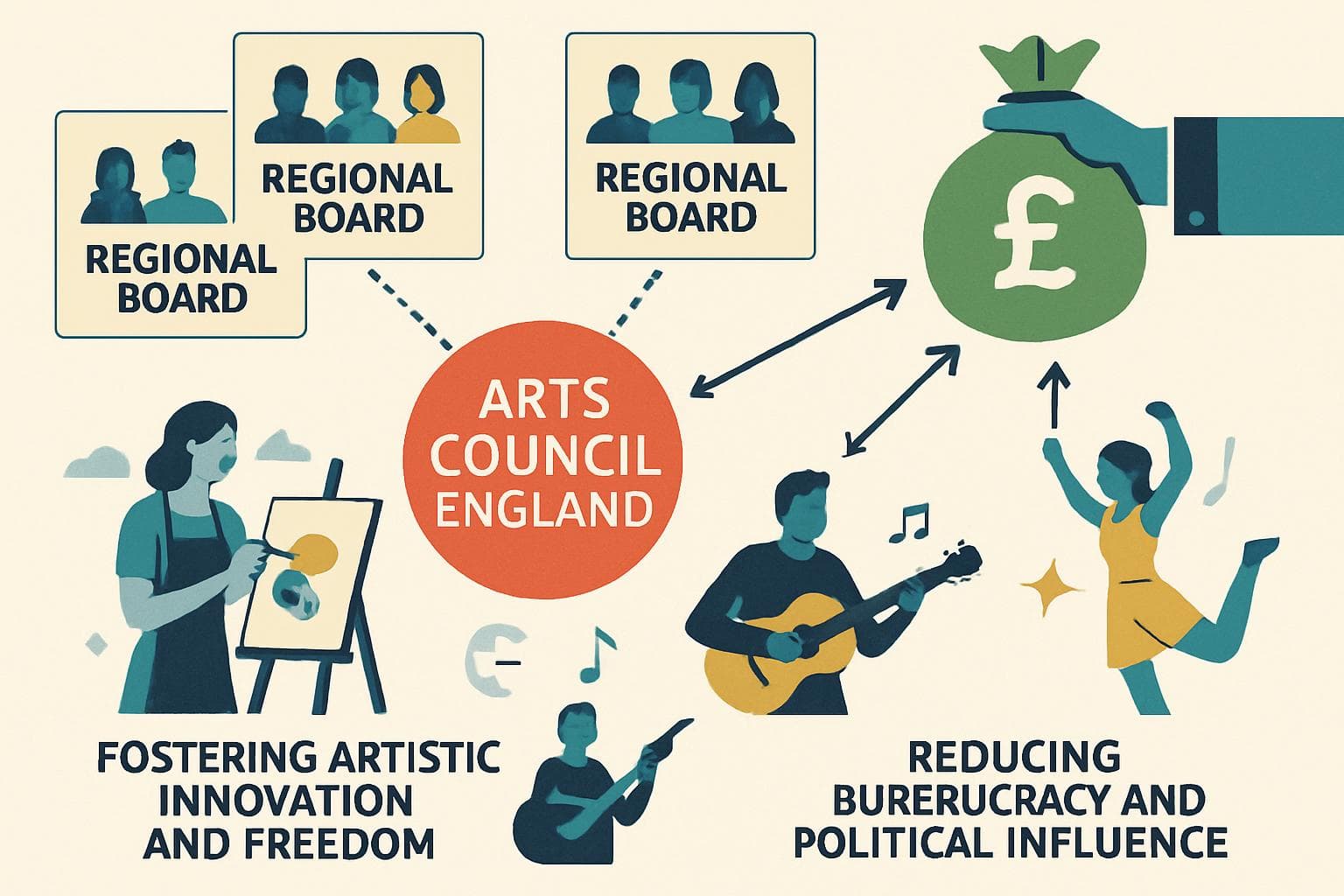
A comprehensive review led by Dame Margaret Hodge has called for significant changes to Arts Council England's (ACE) funding strategy, aiming to decentralize decision-making and foster artistic innovation. The report, commissioned by the government, suggests that ACE should maintain its role but with enhanced local and regional boards to decide on funding allocations, thereby empowering regional arts organizations.
Criticism of the Let's Create Strategy
The report takes aim at ACE's current Let's Create strategy, describing it as a "straitjacket" that limits artistic creativity. Critics argue that the strategy prioritizes access over excellence, leading to a bureaucratic burden that stifles innovation. Dame Margaret Hodge recommends replacing it with a more flexible approach that allows arts organizations to showcase their unique strengths without being constrained by rigid criteria.
Concerns Over Political Influence
A key issue highlighted in the report is the perceived political interference in ACE's decision-making process. Hodge emphasizes the importance of safeguarding arts funding from political bias to preserve artistic freedom and public trust. She advocates for strengthening the arm's-length principle to ensure that ACE operates independently of political pressures.
Calls for Simplification and Extended Funding Cycles
The report also addresses the need to simplify ACE's application process, which has been criticized for its complexity and excessive red tape. It suggests extending the funding cycle for national portfolio organisations from three to five years, providing more stability and allowing for long-term planning. This recommendation aims to reduce administrative burdens and foster a more supportive environment for arts organizations.
Reactions from the Arts Community
The report has been met with mixed reactions from the arts community. John Gilhooly, director of Wigmore Hall, which recently withdrew from ACE funding, expressed support for the recommendations, stating that they validate long-standing concerns about ACE's approach. He urged the government to implement the report's suggestions fully, emphasizing the need for ACE to transition from a regulatory body to a champion of the arts.
WHAT THIS MIGHT MEAN
The proposed overhaul of Arts Council England's funding strategy could lead to a more balanced distribution of resources across the country, potentially revitalizing regional arts scenes. By reducing bureaucratic hurdles and extending funding cycles, arts organizations may experience greater stability and creative freedom. However, the implementation of these recommendations will require careful navigation to avoid potential conflicts between national and regional priorities.
If the government adopts the report's suggestions, it could set a precedent for other cultural funding bodies, emphasizing the importance of artistic excellence and regional empowerment. However, the challenge will be to maintain a balance between access and excellence, ensuring that both grassroots initiatives and established institutions receive adequate support.
Major Overhaul Recommended for Arts Council England to Boost Regional Influence and Artistic Freedom
In This Article
 Marcus Blake| Published
 HIGHLIGHTS
- A report by Dame Margaret Hodge recommends overhauling Arts Council England's (ACE) funding strategy to enhance regional decision-making and reduce bureaucracy.
- The report criticizes the Let's Create strategy for stifling artistic innovation and suggests replacing it with a less prescriptive model.
- Concerns about political interference in ACE's decision-making process were highlighted, urging the protection of arts funding from politics.
- The report calls for simplifying ACE's application process and extending the funding cycle for national portfolio organisations from three to five years.
- Wigmore Hall's withdrawal from ACE funding underscores the dissatisfaction with current funding strategies, emphasizing the need for reform.
A comprehensive review led by Dame Margaret Hodge has called for significant changes to Arts Council England's (ACE) funding strategy, aiming to decentralize decision-making and foster artistic innovation. The report, commissioned by the government, suggests that ACE should maintain its role but with enhanced local and regional boards to decide on funding allocations, thereby empowering regional arts organizations.
Criticism of the Let's Create Strategy
The report takes aim at ACE's current Let's Create strategy, describing it as a "straitjacket" that limits artistic creativity. Critics argue that the strategy prioritizes access over excellence, leading to a bureaucratic burden that stifles innovation. Dame Margaret Hodge recommends replacing it with a more flexible approach that allows arts organizations to showcase their unique strengths without being constrained by rigid criteria.
Concerns Over Political Influence
A key issue highlighted in the report is the perceived political interference in ACE's decision-making process. Hodge emphasizes the importance of safeguarding arts funding from political bias to preserve artistic freedom and public trust. She advocates for strengthening the arm's-length principle to ensure that ACE operates independently of political pressures.
Calls for Simplification and Extended Funding Cycles
The report also addresses the need to simplify ACE's application process, which has been criticized for its complexity and excessive red tape. It suggests extending the funding cycle for national portfolio organisations from three to five years, providing more stability and allowing for long-term planning. This recommendation aims to reduce administrative burdens and foster a more supportive environment for arts organizations.
Reactions from the Arts Community
The report has been met with mixed reactions from the arts community. John Gilhooly, director of Wigmore Hall, which recently withdrew from ACE funding, expressed support for the recommendations, stating that they validate long-standing concerns about ACE's approach. He urged the government to implement the report's suggestions fully, emphasizing the need for ACE to transition from a regulatory body to a champion of the arts.
WHAT THIS MIGHT MEAN
The proposed overhaul of Arts Council England's funding strategy could lead to a more balanced distribution of resources across the country, potentially revitalizing regional arts scenes. By reducing bureaucratic hurdles and extending funding cycles, arts organizations may experience greater stability and creative freedom. However, the implementation of these recommendations will require careful navigation to avoid potential conflicts between national and regional priorities.
If the government adopts the report's suggestions, it could set a precedent for other cultural funding bodies, emphasizing the importance of artistic excellence and regional empowerment. However, the challenge will be to maintain a balance between access and excellence, ensuring that both grassroots initiatives and established institutions receive adequate support.