
Budapest Mayor Defies Police Ban on Pride March Amidst Government Crackdown
In This Article
HIGHLIGHTS
- Budapest's mayor, Gergely Karácsony, insists the Pride march will proceed on June 28, despite a police ban citing Hungary's Child Protection Law.
- The police ban is part of a broader crackdown by Prime Minister Viktor Orbán's government against LGBTQ rights, sparking legal and public resistance.
- The Hungarian Supreme Court has previously thwarted police attempts to ban Pride-related events, supporting the mayor's stance.
- International figures, including MEPs and foreign politicians, plan to attend the event in solidarity with Hungary's LGBTQ community.
- The mayor argues the event is a municipal gathering, not subject to the same restrictions as public assemblies, challenging the police's authority.
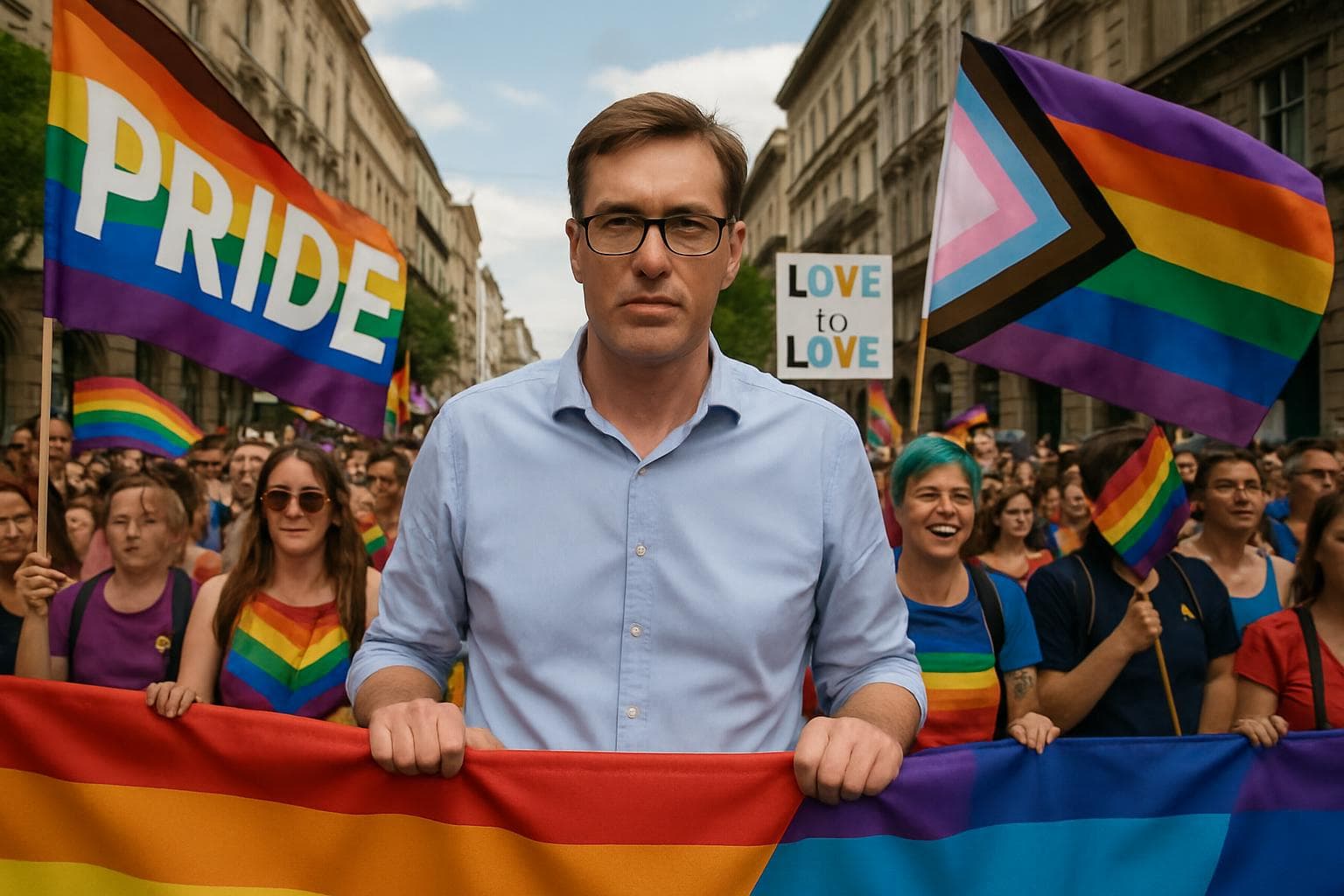
In a bold move against Hungary's government, Budapest Mayor Gergely Karácsony has vowed that the city's annual Pride march will proceed on June 28, despite a police ban. The ban, supported by Prime Minister Viktor Orbán's administration, cites recent legislation restricting the promotion of same-sex relationships to minors. However, Karácsony maintains that the event, organized by the city council, does not require official authorization as it is classified as a municipal gathering.
The police's decision to prohibit the march has been met with defiance from both local and international supporters of LGBTQ rights. "Budapest city hall will organize the Budapest Pride march as a local event on 28 June, Period," Karácsony declared on social media, emphasizing the event's significance as a "Day of Freedom."
Legal and Political Tensions
The ban is the latest development in a series of confrontations between Orbán's nationalist Fidesz government and Hungary's LGBTQ community. The government's stance is rooted in the Child Protection Law, which has been criticized for curtailing LGBTQ rights under the guise of protecting minors. Tamas Menczer, Fidesz's communications chief, stated, "The protection of children trumps all other laws."
Despite these challenges, the Hungarian Supreme Court has previously ruled against police attempts to ban Pride-related events, providing legal backing for the march. The mayor, a vocal critic of Orbán's policies, has expressed confidence in the safety and success of the event, stating, "I believe that everyone can attend safely on 28 June."
International Support and Solidarity
The planned Pride march has garnered international attention, with numerous MEPs and foreign politicians, including the mayors of Amsterdam and Brussels, pledging to attend in solidarity. This support underscores the broader European disapproval of Hungary's recent legislative measures.
Karácsony, who has been a prominent figure in Hungarian politics since 2010, insists that his commitment to the Pride march is driven by moral conviction rather than political gain. "A good politician has a strong moral compass," he remarked, adding that the majority of Budapest residents support his stance.
WHAT THIS MIGHT MEAN
As the date of the Pride march approaches, the standoff between Budapest's city hall and the national government could escalate, potentially leading to further legal battles. The Hungarian Supreme Court's previous rulings in favor of Pride events suggest that the judiciary may continue to play a crucial role in upholding the rights of the LGBTQ community.
Politically, the situation highlights the growing tensions between Hungary and the European Union over issues of human rights and democratic values. The international attention and support for the Pride march may increase pressure on Orbán's government to reconsider its stance on LGBTQ rights. However, given the administration's firm position, significant policy changes seem unlikely in the immediate future.
Related Articles
Hungary Grants Asylum to Former Polish Minister Amidst Political Turmoil
Eurostar and LeShuttle Services Disrupted by Channel Tunnel Power Outage

Global Counsel Enters Administration Amid Epstein Link Fallout

Global Counsel Faces Collapse Amidst Epstein Scandal Fallout

Europe Urged to Assert Global Power Amid Rising Threats
EU and UK Explore Closer Trade and Defence Ties Amid Global Uncertainty
Budapest Mayor Defies Police Ban on Pride March Amidst Government Crackdown
In This Article
 Alex Carter| Published
 HIGHLIGHTS
- Budapest's mayor, Gergely Karácsony, insists the Pride march will proceed on June 28, despite a police ban citing Hungary's Child Protection Law.
- The police ban is part of a broader crackdown by Prime Minister Viktor Orbán's government against LGBTQ rights, sparking legal and public resistance.
- The Hungarian Supreme Court has previously thwarted police attempts to ban Pride-related events, supporting the mayor's stance.
- International figures, including MEPs and foreign politicians, plan to attend the event in solidarity with Hungary's LGBTQ community.
- The mayor argues the event is a municipal gathering, not subject to the same restrictions as public assemblies, challenging the police's authority.
In a bold move against Hungary's government, Budapest Mayor Gergely Karácsony has vowed that the city's annual Pride march will proceed on June 28, despite a police ban. The ban, supported by Prime Minister Viktor Orbán's administration, cites recent legislation restricting the promotion of same-sex relationships to minors. However, Karácsony maintains that the event, organized by the city council, does not require official authorization as it is classified as a municipal gathering.
The police's decision to prohibit the march has been met with defiance from both local and international supporters of LGBTQ rights. "Budapest city hall will organize the Budapest Pride march as a local event on 28 June, Period," Karácsony declared on social media, emphasizing the event's significance as a "Day of Freedom."
Legal and Political Tensions
The ban is the latest development in a series of confrontations between Orbán's nationalist Fidesz government and Hungary's LGBTQ community. The government's stance is rooted in the Child Protection Law, which has been criticized for curtailing LGBTQ rights under the guise of protecting minors. Tamas Menczer, Fidesz's communications chief, stated, "The protection of children trumps all other laws."
Despite these challenges, the Hungarian Supreme Court has previously ruled against police attempts to ban Pride-related events, providing legal backing for the march. The mayor, a vocal critic of Orbán's policies, has expressed confidence in the safety and success of the event, stating, "I believe that everyone can attend safely on 28 June."
International Support and Solidarity
The planned Pride march has garnered international attention, with numerous MEPs and foreign politicians, including the mayors of Amsterdam and Brussels, pledging to attend in solidarity. This support underscores the broader European disapproval of Hungary's recent legislative measures.
Karácsony, who has been a prominent figure in Hungarian politics since 2010, insists that his commitment to the Pride march is driven by moral conviction rather than political gain. "A good politician has a strong moral compass," he remarked, adding that the majority of Budapest residents support his stance.
WHAT THIS MIGHT MEAN
As the date of the Pride march approaches, the standoff between Budapest's city hall and the national government could escalate, potentially leading to further legal battles. The Hungarian Supreme Court's previous rulings in favor of Pride events suggest that the judiciary may continue to play a crucial role in upholding the rights of the LGBTQ community.
Politically, the situation highlights the growing tensions between Hungary and the European Union over issues of human rights and democratic values. The international attention and support for the Pride march may increase pressure on Orbán's government to reconsider its stance on LGBTQ rights. However, given the administration's firm position, significant policy changes seem unlikely in the immediate future.
Related Articles
Hungary Grants Asylum to Former Polish Minister Amidst Political Turmoil
Eurostar and LeShuttle Services Disrupted by Channel Tunnel Power Outage
Global Counsel Enters Administration Amid Epstein Link Fallout
Global Counsel Faces Collapse Amidst Epstein Scandal Fallout
Europe Urged to Assert Global Power Amid Rising Threats
EU and UK Explore Closer Trade and Defence Ties Amid Global Uncertainty