
Justice Department Recommends Minimal Sentence for Officer in Breonna Taylor Case
In This Article
HIGHLIGHTS
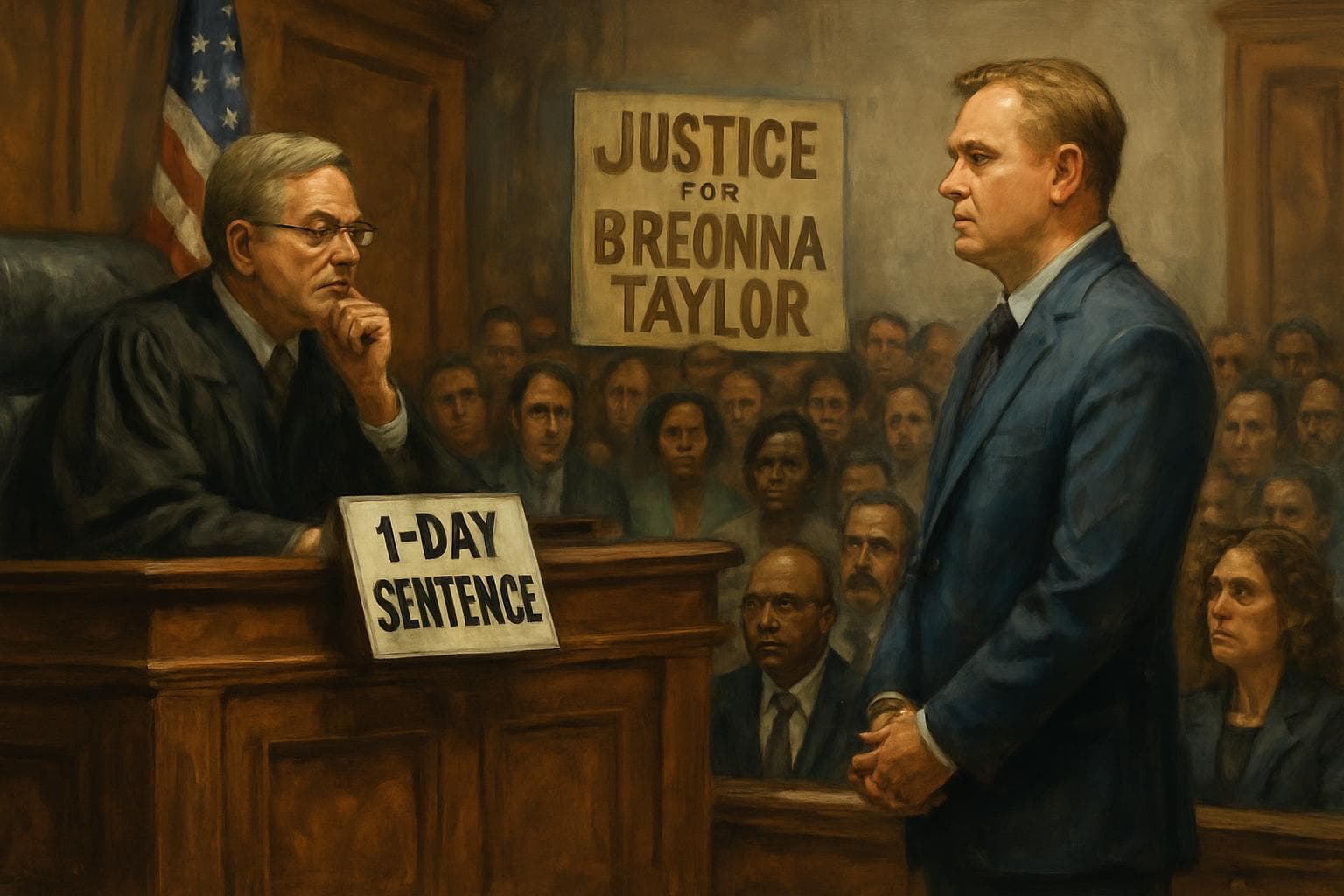
- The US Department of Justice recommends a one-day prison sentence for Brett Hankison, convicted of civil rights violations in the Breonna Taylor case.
- Hankison was involved in a botched raid where Taylor was fatally shot, but he did not fire the shots that killed her.
- The Justice Department argues that additional prison time is unnecessary, proposing three years of supervised release instead.
- The Taylor family's attorneys criticized the recommendation, calling it an insult and a failure of justice.
- A judge will decide on the sentencing next week, which could set a precedent for similar cases involving police conduct.
The US Department of Justice has recommended a one-day prison sentence for Brett Hankison, a former Kentucky police officer convicted of civil rights violations in connection with the fatal police raid that resulted in Breonna Taylor's death. The recommendation, which includes three years of supervised release, has sparked outrage among Taylor's family and civil rights advocates.
Background of the Case
Breonna Taylor, a 26-year-old Black woman, was killed in March 2020 during a police raid at her Louisville home. Officers were executing a "no-knock" search warrant, suspecting her former boyfriend of hiding narcotics at her residence. Taylor's boyfriend, Kenneth Walker, fired a shot at the officers, believing them to be intruders, which led to a barrage of police gunfire. Hankison, who fired 10 shots into Taylor's apartment, was the only officer charged and convicted in the incident.
Justice Department's Recommendation
Despite facing a maximum sentence of life in prison, the Justice Department's sentencing memorandum argues that Hankison's actions, while reckless, did not directly result in Taylor's death. Assistant Attorney General Harmeet K. Dhillon noted that Hankison did not hit anyone with his shots and has no prior criminal record. The memorandum suggests that the jury's verdict ensures Hankison will not serve as a law enforcement officer again, rendering further imprisonment unnecessary.
Public and Legal Reactions
The recommendation has been met with criticism from Taylor's family and civil rights groups, who view it as a miscarriage of justice. "Recommending just one day in prison sends the unmistakable message that white officers can violate the civil rights of Black Americans with near-total impunity," the Taylor family's attorneys stated. The case has been a significant catalyst for the Black Lives Matter movement, highlighting systemic issues in policing and racial justice.
Upcoming Sentencing Decision
A judge is set to consider the Justice Department's recommendation at a sentencing hearing next week. The decision could have broader implications for how similar cases are handled in the future, particularly those involving police conduct and civil rights violations.
WHAT THIS MIGHT MEAN
The upcoming sentencing decision in Brett Hankison's case could set a critical precedent for future cases involving police misconduct and civil rights violations. If the judge accepts the Justice Department's recommendation, it may prompt discussions about the adequacy of current legal frameworks in holding law enforcement accountable. Conversely, a harsher sentence could signal a shift towards more stringent consequences for officers involved in controversial shootings. Legal experts and civil rights advocates will be closely watching the outcome, which could influence policy reforms and public trust in the justice system.
Related Articles
Andrew Mountbatten-Windsor's Arrest Sparks International Calls for Justice

Norwegian Diplomats Under Investigation for Epstein Connections

Epstein Files Unveil Northern Ireland Links and Elite Network

Police Probe Peter Mandelson Over Alleged Leaks to Jeffrey Epstein
Senate Blocks Resolution to Limit Trump's Military Actions in Iran

Bill Gates Withdraws from India AI Summit Amid Epstein Controversy
Justice Department Recommends Minimal Sentence for Officer in Breonna Taylor Case
In This Article
 Sofia Romano| Published
 HIGHLIGHTS
- The US Department of Justice recommends a one-day prison sentence for Brett Hankison, convicted of civil rights violations in the Breonna Taylor case.
- Hankison was involved in a botched raid where Taylor was fatally shot, but he did not fire the shots that killed her.
- The Justice Department argues that additional prison time is unnecessary, proposing three years of supervised release instead.
- The Taylor family's attorneys criticized the recommendation, calling it an insult and a failure of justice.
- A judge will decide on the sentencing next week, which could set a precedent for similar cases involving police conduct.
The US Department of Justice has recommended a one-day prison sentence for Brett Hankison, a former Kentucky police officer convicted of civil rights violations in connection with the fatal police raid that resulted in Breonna Taylor's death. The recommendation, which includes three years of supervised release, has sparked outrage among Taylor's family and civil rights advocates.
Background of the Case
Breonna Taylor, a 26-year-old Black woman, was killed in March 2020 during a police raid at her Louisville home. Officers were executing a "no-knock" search warrant, suspecting her former boyfriend of hiding narcotics at her residence. Taylor's boyfriend, Kenneth Walker, fired a shot at the officers, believing them to be intruders, which led to a barrage of police gunfire. Hankison, who fired 10 shots into Taylor's apartment, was the only officer charged and convicted in the incident.
Justice Department's Recommendation
Despite facing a maximum sentence of life in prison, the Justice Department's sentencing memorandum argues that Hankison's actions, while reckless, did not directly result in Taylor's death. Assistant Attorney General Harmeet K. Dhillon noted that Hankison did not hit anyone with his shots and has no prior criminal record. The memorandum suggests that the jury's verdict ensures Hankison will not serve as a law enforcement officer again, rendering further imprisonment unnecessary.
Public and Legal Reactions
The recommendation has been met with criticism from Taylor's family and civil rights groups, who view it as a miscarriage of justice. "Recommending just one day in prison sends the unmistakable message that white officers can violate the civil rights of Black Americans with near-total impunity," the Taylor family's attorneys stated. The case has been a significant catalyst for the Black Lives Matter movement, highlighting systemic issues in policing and racial justice.
Upcoming Sentencing Decision
A judge is set to consider the Justice Department's recommendation at a sentencing hearing next week. The decision could have broader implications for how similar cases are handled in the future, particularly those involving police conduct and civil rights violations.
WHAT THIS MIGHT MEAN
The upcoming sentencing decision in Brett Hankison's case could set a critical precedent for future cases involving police misconduct and civil rights violations. If the judge accepts the Justice Department's recommendation, it may prompt discussions about the adequacy of current legal frameworks in holding law enforcement accountable. Conversely, a harsher sentence could signal a shift towards more stringent consequences for officers involved in controversial shootings. Legal experts and civil rights advocates will be closely watching the outcome, which could influence policy reforms and public trust in the justice system.
Related Articles
Andrew Mountbatten-Windsor's Arrest Sparks International Calls for Justice
Norwegian Diplomats Under Investigation for Epstein Connections
Epstein Files Unveil Northern Ireland Links and Elite Network
Police Probe Peter Mandelson Over Alleged Leaks to Jeffrey Epstein
Senate Blocks Resolution to Limit Trump's Military Actions in Iran
Bill Gates Withdraws from India AI Summit Amid Epstein Controversy