
European Court Challenges UK Over Shamima Begum Citizenship Revocation
In This Article
HIGHLIGHTS
- The European Court of Human Rights has questioned the UK over its decision to revoke Shamima Begum's citizenship in 2019, citing potential human rights violations.
- Begum's lawyers argue she was a victim of child trafficking, challenging the decision under Article 4 of the European Convention on Human Rights.
- The UK government maintains that the decision was made on national security grounds and has been upheld by domestic courts.
- The case has reignited debates over the UK's relationship with European human rights laws and the treatment of individuals involved with the Islamic State.
- Prime Minister Sir Keir Starmer is set to address living costs and national security in an upcoming speech, amid ongoing legal and political discussions.
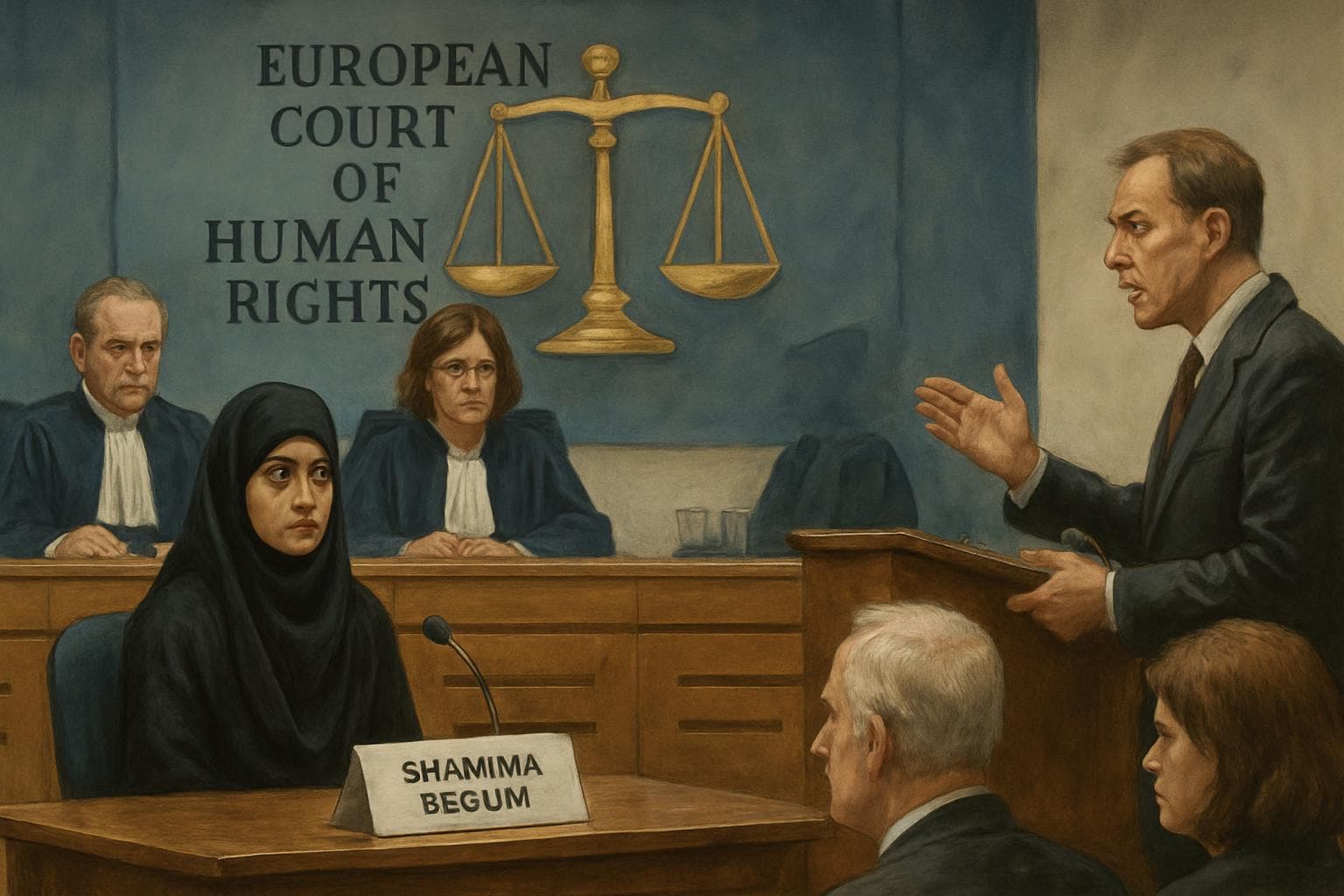
The European Court of Human Rights has raised questions about the UK government's decision to strip Shamima Begum of her British citizenship in 2019, a move that has sparked renewed debate over national security and human rights. Begum, who left the UK as a teenager to join the Islamic State in Syria, remains stateless in a refugee camp.
Background and Legal Context
In 2015, Shamima Begum, then 15, left her home in East London to join the Islamic State, where she was married to an IS fighter. The UK government, citing national security concerns, revoked her citizenship in 2019, a decision upheld by domestic courts. However, Begum's lawyers argue she was a victim of child trafficking, challenging the decision under Article 4 of the European Convention on Human Rights, which prohibits slavery and forced labor.
European Court's Intervention
The European Court has asked the UK to justify its actions, questioning whether the government considered Begum's potential status as a trafficking victim before revoking her citizenship. This intervention has bolstered Begum's legal team and fueled criticism from Conservative and Reform parties, who view it as foreign interference.
Political and Social Implications
The case has reignited discussions about the UK's obligations under European human rights laws and the treatment of individuals associated with terrorist organizations. Prime Minister Sir Keir Starmer is expected to address these issues in an upcoming speech, alongside plans to tackle living costs and national security.
Voices from the Legal Community
Gareth Peirce, a lawyer representing Begum, emphasized the failure to protect a vulnerable child, stating, "It is impossible to dispute that a 15-year-old British child was lured for the purposes of sexual exploitation." The case presents an "unprecedented opportunity" to address these significant considerations, according to Birnberg Peirce Solicitors.
WHAT THIS MIGHT MEAN
The outcome of this case could have far-reaching implications for the UK's legal obligations under international human rights treaties. If the European Court rules against the UK, it may prompt a reevaluation of how national security decisions are balanced with individual rights, particularly in cases involving potential trafficking victims. Politically, the case could influence ongoing debates about the UK's relationship with European human rights frameworks, potentially impacting future legislative and judicial decisions.
Images from the Web

Related Articles

UK Government to Reform Asylum Seeker Support and Employment Policies

Labour MP's Husband Arrested in UK-China Espionage Probe

UK-Iran Tensions: Starmer Defends Cautious Approach Amid Trump Criticism

Andrew Mountbatten-Windsor Arrested Amid Misconduct Allegations
Trump Criticizes UK Plan to Transfer Chagos Islands to Mauritius

Breakthrough Drug Offers Hope for Children with Severe Epilepsy
European Court Challenges UK Over Shamima Begum Citizenship Revocation
In This Article
 Ethan Brooks| Published
 HIGHLIGHTS
- The European Court of Human Rights has questioned the UK over its decision to revoke Shamima Begum's citizenship in 2019, citing potential human rights violations.
- Begum's lawyers argue she was a victim of child trafficking, challenging the decision under Article 4 of the European Convention on Human Rights.
- The UK government maintains that the decision was made on national security grounds and has been upheld by domestic courts.
- The case has reignited debates over the UK's relationship with European human rights laws and the treatment of individuals involved with the Islamic State.
- Prime Minister Sir Keir Starmer is set to address living costs and national security in an upcoming speech, amid ongoing legal and political discussions.
The European Court of Human Rights has raised questions about the UK government's decision to strip Shamima Begum of her British citizenship in 2019, a move that has sparked renewed debate over national security and human rights. Begum, who left the UK as a teenager to join the Islamic State in Syria, remains stateless in a refugee camp.
Background and Legal Context
In 2015, Shamima Begum, then 15, left her home in East London to join the Islamic State, where she was married to an IS fighter. The UK government, citing national security concerns, revoked her citizenship in 2019, a decision upheld by domestic courts. However, Begum's lawyers argue she was a victim of child trafficking, challenging the decision under Article 4 of the European Convention on Human Rights, which prohibits slavery and forced labor.
European Court's Intervention
The European Court has asked the UK to justify its actions, questioning whether the government considered Begum's potential status as a trafficking victim before revoking her citizenship. This intervention has bolstered Begum's legal team and fueled criticism from Conservative and Reform parties, who view it as foreign interference.
Political and Social Implications
The case has reignited discussions about the UK's obligations under European human rights laws and the treatment of individuals associated with terrorist organizations. Prime Minister Sir Keir Starmer is expected to address these issues in an upcoming speech, alongside plans to tackle living costs and national security.
Voices from the Legal Community
Gareth Peirce, a lawyer representing Begum, emphasized the failure to protect a vulnerable child, stating, "It is impossible to dispute that a 15-year-old British child was lured for the purposes of sexual exploitation." The case presents an "unprecedented opportunity" to address these significant considerations, according to Birnberg Peirce Solicitors.
WHAT THIS MIGHT MEAN
The outcome of this case could have far-reaching implications for the UK's legal obligations under international human rights treaties. If the European Court rules against the UK, it may prompt a reevaluation of how national security decisions are balanced with individual rights, particularly in cases involving potential trafficking victims. Politically, the case could influence ongoing debates about the UK's relationship with European human rights frameworks, potentially impacting future legislative and judicial decisions.
Images from the Web
Related Articles
UK Government to Reform Asylum Seeker Support and Employment Policies
Labour MP's Husband Arrested in UK-China Espionage Probe
UK-Iran Tensions: Starmer Defends Cautious Approach Amid Trump Criticism
Andrew Mountbatten-Windsor Arrested Amid Misconduct Allegations
Trump Criticizes UK Plan to Transfer Chagos Islands to Mauritius
Breakthrough Drug Offers Hope for Children with Severe Epilepsy