
Giant Tortoises Make Historic Return to Floreana Island After 180 Years
In This Article
HIGHLIGHTS
- 158 juvenile Floreana giant tortoises have been reintroduced to Floreana Island after nearly 200 years of extinction.
- The reintroduction is part of the Floreana Ecological Restoration Project, aiming to restore the island's ecosystem.
- A back-breeding program initiated in 2017 produced over 600 hatchlings, with several hundred now ready for the wild.
- Invasive species eradication efforts since 2023 have facilitated the return of native wildlife, including the Galapagos rail.
- The project is a collaboration between the Galápagos National Park Directorate, charities, and Floreana's local community.
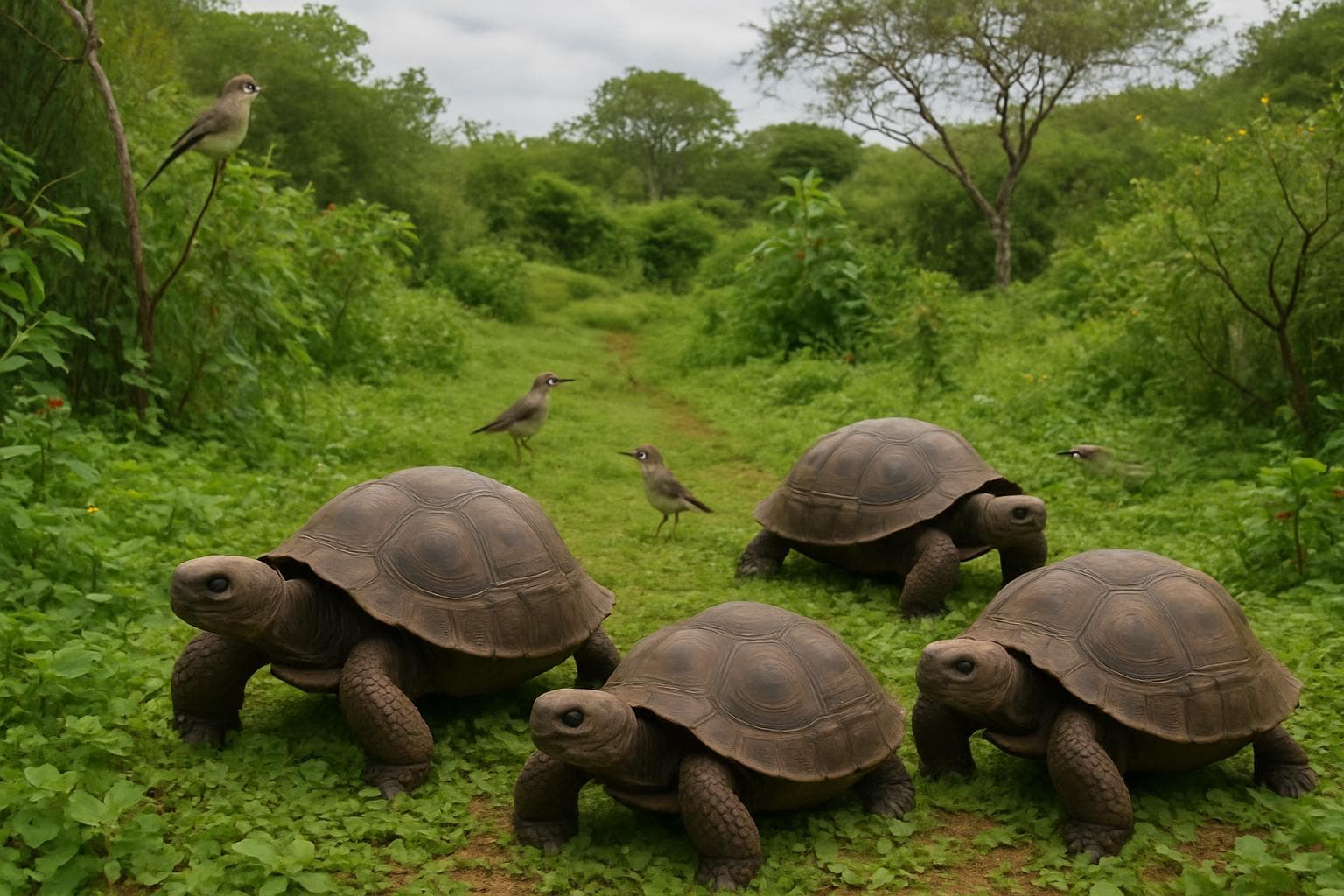
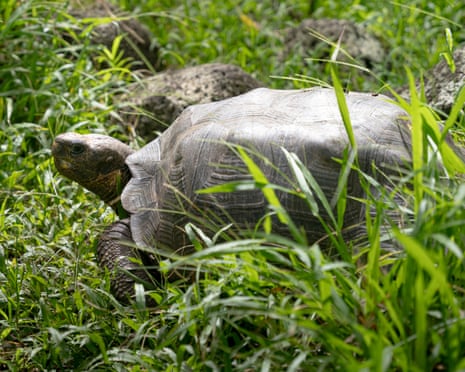
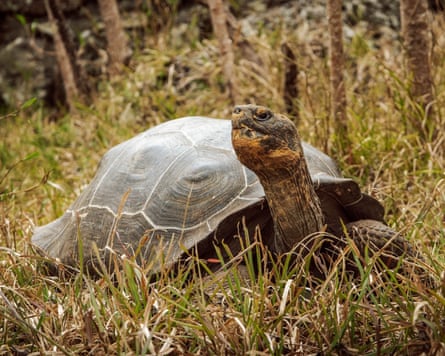
In a landmark conservation effort, 158 juvenile Floreana giant tortoises have been reintroduced to their native habitat on Floreana Island in the Galápagos, marking the first time in nearly two centuries that these iconic creatures have roamed the island. This significant milestone is part of the Floreana Ecological Restoration Project, spearheaded by the Galápagos National Park Directorate and supported by various conservation charities.
A Long-Awaited Return
The Floreana giant tortoise, scientifically known as Chelonoidis niger niger, was driven to extinction in the 1840s due to overexploitation by sailors and whalers. However, a relic population discovered on Wolf Volcano on Isabela Island in 2008 revealed genetic links to the extinct Floreana tortoises. This discovery led to a back-breeding program initiated in 2017, which successfully produced over 600 hatchlings by 2025. Several hundred of these tortoises have now been deemed large enough to survive in the wild.
Restoring the Ecosystem
The reintroduction of the tortoises is a crucial step in the broader ecological restoration of Floreana Island, which has suffered from the introduction of invasive species such as rats and feral cats. An eradication program launched in 2023 has significantly reduced these invasive populations, allowing native species like the Galapagos rail to make a comeback. The project also aims to bolster the island's biodiversity, which includes species such as the Floreana mockingbird and the Floreana racer snake.
Community and Conservation
The restoration project is a collaborative effort involving the Galápagos National Park, conservation organizations, and the island's 160 residents. Verónica Mora, a representative of the Floreana community, emphasized the importance of this initiative, stating, "This moment marks an important step toward a future where conservation and community wellbeing go hand in hand." The return of the tortoises is expected to enhance local livelihoods, particularly in agriculture and tourism, as the island's ecosystem continues to recover.
WHAT THIS MIGHT MEAN
The successful reintroduction of the Floreana giant tortoise could serve as a model for similar conservation efforts worldwide, highlighting the importance of genetic research and community involvement in ecological restoration. As the tortoises begin to reshape the island's landscape, their presence may further accelerate the recovery of native flora and fauna, potentially leading to increased biodiversity. Continued monitoring and management will be essential to ensure the long-term success of this ambitious project. Additionally, the eradication of invasive species remains a critical component, as their resurgence could threaten the fragile balance being restored on Floreana Island.
Images from the Web
Giant Tortoises Make Historic Return to Floreana Island After 180 Years
In This Article
 James Okoro| Published
 HIGHLIGHTS
- 158 juvenile Floreana giant tortoises have been reintroduced to Floreana Island after nearly 200 years of extinction.
- The reintroduction is part of the Floreana Ecological Restoration Project, aiming to restore the island's ecosystem.
- A back-breeding program initiated in 2017 produced over 600 hatchlings, with several hundred now ready for the wild.
- Invasive species eradication efforts since 2023 have facilitated the return of native wildlife, including the Galapagos rail.
- The project is a collaboration between the Galápagos National Park Directorate, charities, and Floreana's local community.
In a landmark conservation effort, 158 juvenile Floreana giant tortoises have been reintroduced to their native habitat on Floreana Island in the Galápagos, marking the first time in nearly two centuries that these iconic creatures have roamed the island. This significant milestone is part of the Floreana Ecological Restoration Project, spearheaded by the Galápagos National Park Directorate and supported by various conservation charities.
A Long-Awaited Return
The Floreana giant tortoise, scientifically known as Chelonoidis niger niger, was driven to extinction in the 1840s due to overexploitation by sailors and whalers. However, a relic population discovered on Wolf Volcano on Isabela Island in 2008 revealed genetic links to the extinct Floreana tortoises. This discovery led to a back-breeding program initiated in 2017, which successfully produced over 600 hatchlings by 2025. Several hundred of these tortoises have now been deemed large enough to survive in the wild.
Restoring the Ecosystem
The reintroduction of the tortoises is a crucial step in the broader ecological restoration of Floreana Island, which has suffered from the introduction of invasive species such as rats and feral cats. An eradication program launched in 2023 has significantly reduced these invasive populations, allowing native species like the Galapagos rail to make a comeback. The project also aims to bolster the island's biodiversity, which includes species such as the Floreana mockingbird and the Floreana racer snake.
Community and Conservation
The restoration project is a collaborative effort involving the Galápagos National Park, conservation organizations, and the island's 160 residents. Verónica Mora, a representative of the Floreana community, emphasized the importance of this initiative, stating, "This moment marks an important step toward a future where conservation and community wellbeing go hand in hand." The return of the tortoises is expected to enhance local livelihoods, particularly in agriculture and tourism, as the island's ecosystem continues to recover.
WHAT THIS MIGHT MEAN
The successful reintroduction of the Floreana giant tortoise could serve as a model for similar conservation efforts worldwide, highlighting the importance of genetic research and community involvement in ecological restoration. As the tortoises begin to reshape the island's landscape, their presence may further accelerate the recovery of native flora and fauna, potentially leading to increased biodiversity. Continued monitoring and management will be essential to ensure the long-term success of this ambitious project. Additionally, the eradication of invasive species remains a critical component, as their resurgence could threaten the fragile balance being restored on Floreana Island.
Images from the Web