
Preliminary Report Reveals Fuel Cutoff Led to Deadly Air India Crash
In This Article
HIGHLIGHTS
- A preliminary report indicates that the Air India crash on 12 June was caused by the fuel to both engines being cut off seconds after takeoff.
- The Boeing 787-8 Dreamliner crashed in Ahmedabad, killing 260 people, with only one survivor.
- Cockpit voice recordings reveal confusion between pilots over the fuel cutoff, with one denying responsibility.
- The Aircraft Accident Investigation Bureau is leading an ongoing investigation, with a final report expected in 12 months.
- Experts are puzzled by the incident, as the fuel switches are designed to prevent accidental activation.
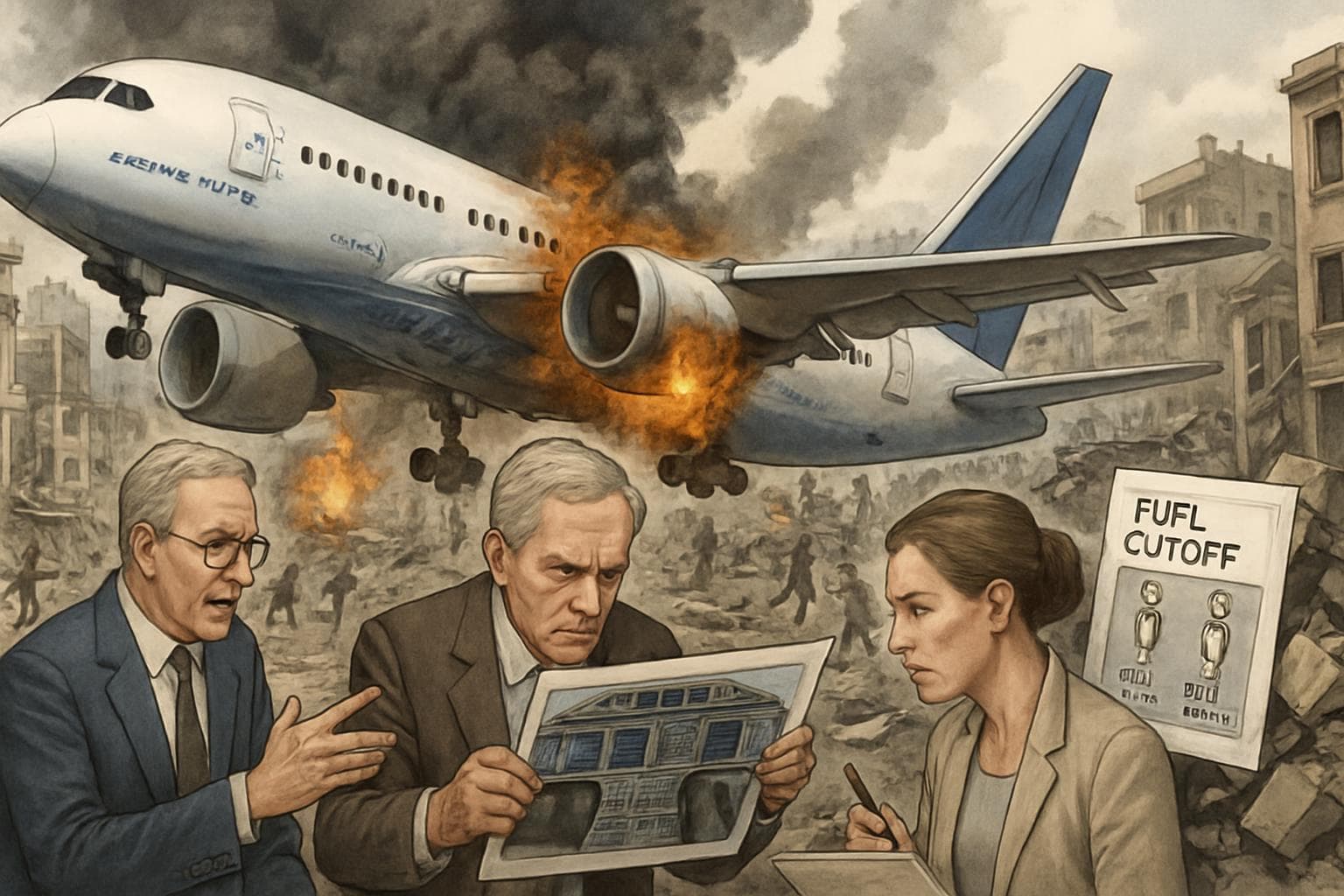
A preliminary investigation into the tragic crash of Air India Flight 171 has revealed that the fuel supply to both engines was abruptly cut off moments after takeoff, leading to the aircraft's catastrophic failure. The Boeing 787-8 Dreamliner, bound for London, crashed into a densely populated area in Ahmedabad on 12 June, resulting in the deaths of 260 people, including 19 on the ground. Miraculously, one British national survived the crash.
Confusion in the Cockpit
The Aircraft Accident Investigation Bureau (AAIB) report, based on cockpit voice recordings, highlights a moment of confusion between the pilots. One pilot is heard questioning the other about the fuel cutoff, to which the latter responds with denial. The report does not specify which pilot made the remarks. Captain Sumeet Sabharwal and co-pilot Clive Kundar were at the controls during the incident.
Technical Anomalies and Safety Features
The investigation has raised questions about the sudden movement of the fuel control switches to the "cutoff" position, a procedure typically reserved for post-landing or emergencies like engine fires. The switches, equipped with safety features to prevent accidental activation, were returned to their normal position, but only one engine managed to regain thrust before the crash. Experts are baffled, as the switches are designed to require deliberate action to move.
Ongoing Investigation and Expert Opinions
The AAIB, with assistance from Boeing, General Electric, and international aviation experts, continues to probe the wreckage and data recorders. The preliminary findings have not recommended any immediate action against the manufacturers. Aviation safety experts, including Shawn Pruchnicki and Peter Goelz, have expressed concern over the incident, questioning the possibility of pilot error or technical malfunction.
WHAT THIS MIGHT MEAN
As the investigation progresses, the aviation community eagerly awaits the final report, which could take up to a year to complete. The findings may have significant implications for aviation safety protocols, particularly concerning the design and operation of fuel control systems in modern aircraft. If pilot error is determined to be a factor, it could lead to changes in training and operational procedures. Alternatively, if a technical fault is identified, it may prompt regulatory bodies to issue directives to prevent similar tragedies in the future.
Related Articles

Labour MP's Husband Arrested in UK-China Espionage Probe

Nottingham Attacks Inquiry: Families Demand Accountability and Truth

Global Counsel Faces Collapse Amidst Epstein Scandal Fallout

Rising Measles Cases in the UK Spark Urgent Vaccination Campaign

Bafta Film Awards 2026: A Night of Glamour and Identity Challenges

UK Police Intensify Investigation into Andrew Mountbatten-Windsor Amid Misconduct Allegations
Preliminary Report Reveals Fuel Cutoff Led to Deadly Air India Crash
In This Article
 Ethan Brooks| Published
 HIGHLIGHTS
- A preliminary report indicates that the Air India crash on 12 June was caused by the fuel to both engines being cut off seconds after takeoff.
- The Boeing 787-8 Dreamliner crashed in Ahmedabad, killing 260 people, with only one survivor.
- Cockpit voice recordings reveal confusion between pilots over the fuel cutoff, with one denying responsibility.
- The Aircraft Accident Investigation Bureau is leading an ongoing investigation, with a final report expected in 12 months.
- Experts are puzzled by the incident, as the fuel switches are designed to prevent accidental activation.
A preliminary investigation into the tragic crash of Air India Flight 171 has revealed that the fuel supply to both engines was abruptly cut off moments after takeoff, leading to the aircraft's catastrophic failure. The Boeing 787-8 Dreamliner, bound for London, crashed into a densely populated area in Ahmedabad on 12 June, resulting in the deaths of 260 people, including 19 on the ground. Miraculously, one British national survived the crash.
Confusion in the Cockpit
The Aircraft Accident Investigation Bureau (AAIB) report, based on cockpit voice recordings, highlights a moment of confusion between the pilots. One pilot is heard questioning the other about the fuel cutoff, to which the latter responds with denial. The report does not specify which pilot made the remarks. Captain Sumeet Sabharwal and co-pilot Clive Kundar were at the controls during the incident.
Technical Anomalies and Safety Features
The investigation has raised questions about the sudden movement of the fuel control switches to the "cutoff" position, a procedure typically reserved for post-landing or emergencies like engine fires. The switches, equipped with safety features to prevent accidental activation, were returned to their normal position, but only one engine managed to regain thrust before the crash. Experts are baffled, as the switches are designed to require deliberate action to move.
Ongoing Investigation and Expert Opinions
The AAIB, with assistance from Boeing, General Electric, and international aviation experts, continues to probe the wreckage and data recorders. The preliminary findings have not recommended any immediate action against the manufacturers. Aviation safety experts, including Shawn Pruchnicki and Peter Goelz, have expressed concern over the incident, questioning the possibility of pilot error or technical malfunction.
WHAT THIS MIGHT MEAN
As the investigation progresses, the aviation community eagerly awaits the final report, which could take up to a year to complete. The findings may have significant implications for aviation safety protocols, particularly concerning the design and operation of fuel control systems in modern aircraft. If pilot error is determined to be a factor, it could lead to changes in training and operational procedures. Alternatively, if a technical fault is identified, it may prompt regulatory bodies to issue directives to prevent similar tragedies in the future.
Related Articles
Labour MP's Husband Arrested in UK-China Espionage Probe
Nottingham Attacks Inquiry: Families Demand Accountability and Truth
Global Counsel Faces Collapse Amidst Epstein Scandal Fallout
Rising Measles Cases in the UK Spark Urgent Vaccination Campaign
Bafta Film Awards 2026: A Night of Glamour and Identity Challenges
UK Police Intensify Investigation into Andrew Mountbatten-Windsor Amid Misconduct Allegations