
Sky's Bid for ITV's Broadcasting Arm Raises Concerns Over UK Media Landscape
In This Article
HIGHLIGHTS
- Sky, owned by Comcast, has made a £1.6bn offer for ITV's broadcasting division, sparking significant interest and debate.
- The sale could impact ITV's public service obligations and its relationship with STV in Scotland, affecting regional programming.
- ITV's share price rose by 16% following the announcement, yet remains below theoretical valuations due to market uncertainties.
- Regulatory and political challenges loom, particularly concerning the consolidation of major UK broadcasters under US ownership.
- ITV and STV face declining advertising revenues amid competition from digital platforms like Netflix and YouTube.
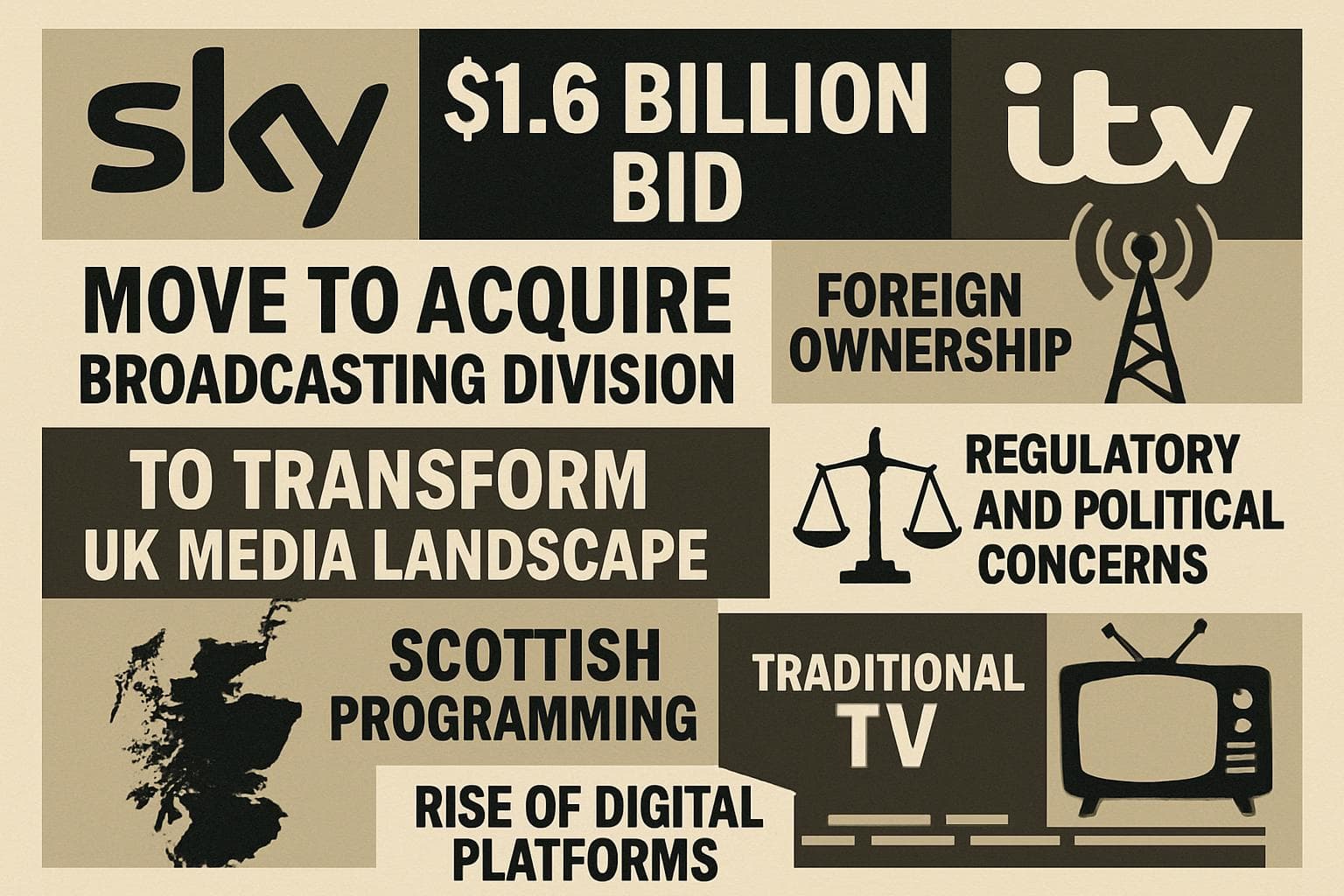
Sky, the UK’s leading pay-TV provider, has made a £1.6 billion bid to acquire ITV's broadcasting division, a move that could reshape the British television industry. The offer, made by Sky's parent company Comcast, has sparked discussions about the future of ITV's public service obligations and its longstanding relationship with STV in Scotland.
Impact on Scottish Broadcasting
The potential sale of ITV's media and entertainment division, which includes popular channels like ITV1, ITV2, and ITV3, as well as the streaming service ITVX, could have significant implications for Scottish viewers. In central and northern Scotland, ITV1 is replaced by STV, which sources much of its content from ITV1 through an affiliation deal. This arrangement means that any changes in ITV's programming or budget could directly affect STV's offerings.
Financial and Market Considerations
Despite ITV's share price jumping 16% after the announcement, it remains below some analysts' valuations. The broadcasting division, which reported operating profits of £250 million last year, faces intense competition from digital giants like Netflix and Disney. Advertising revenue, a critical income stream for ITV, is projected to decline by 6% this year, reflecting broader economic challenges.
Regulatory and Political Hurdles
The proposed acquisition raises regulatory and political questions, particularly regarding the consolidation of major UK broadcasters under US ownership. The UK competition regulator is expected to scrutinize the deal closely, given the potential impact on the media landscape. Additionally, the political implications of a US company owning a significant portion of the UK’s free-to-air commercial broadcasting sector cannot be overlooked.
Challenges for Traditional TV
Both ITV and STV are grappling with declining audiences for traditional linear TV, as viewers increasingly turn to digital platforms. This shift has led to a drop in advertising revenue, further complicating the financial landscape for both broadcasters. Despite these challenges, linear TV remains a crucial medium for reaching mass audiences, particularly during major sporting events.
WHAT THIS MIGHT MEAN
If the acquisition proceeds, it could lead to a significant restructuring of the UK television market, potentially altering the balance between free-to-air and pay-TV services. Regulatory bodies may impose conditions to ensure fair competition and protect public service broadcasting. Politically, the deal could reignite debates about foreign ownership of UK media assets, especially in light of past controversies involving media consolidation. As the media landscape continues to evolve, ITV and STV will need to adapt their strategies to maintain relevance in a digital-first world.
Related Articles
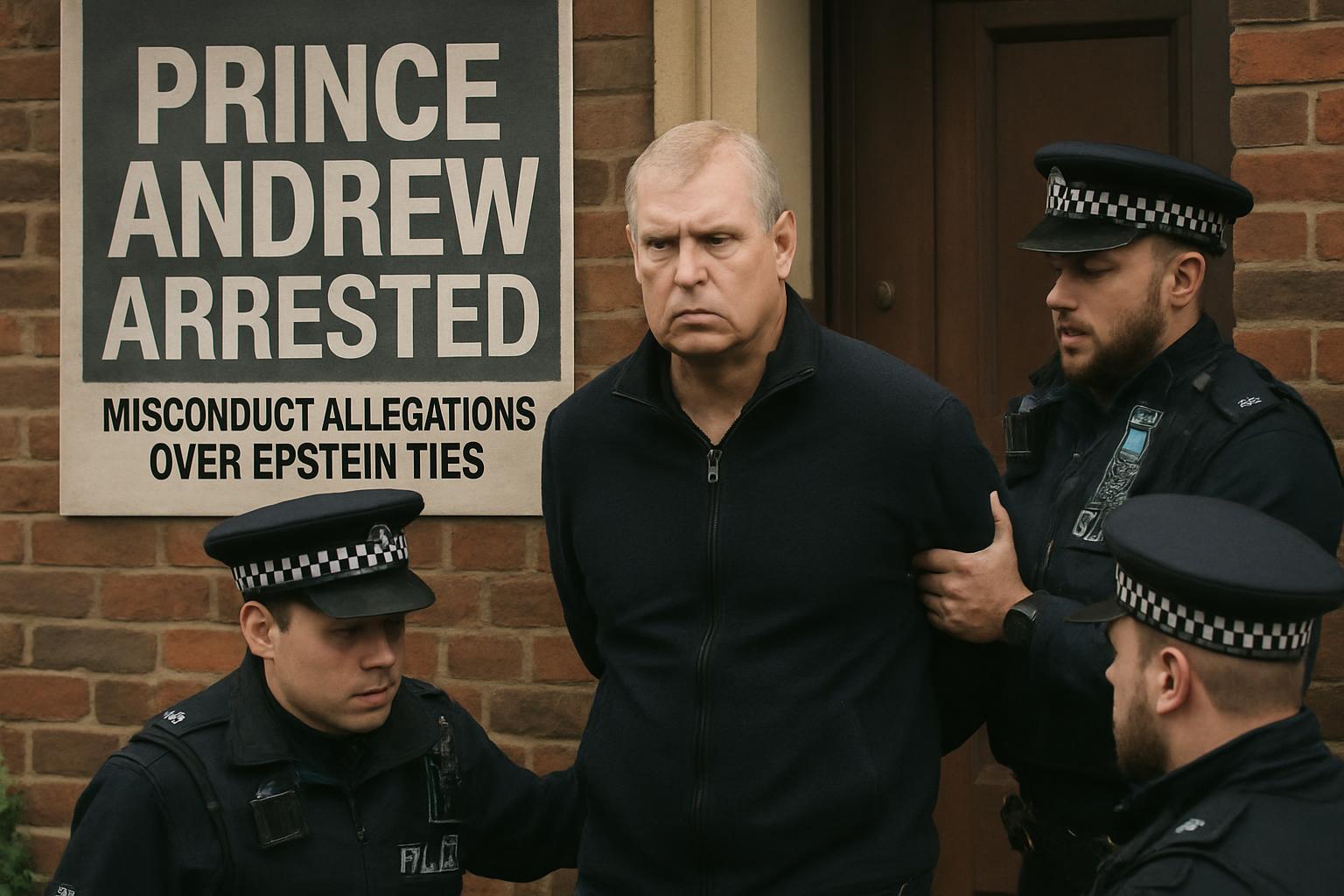
Andrew Mountbatten-Windsor Arrested Amid Misconduct Allegations
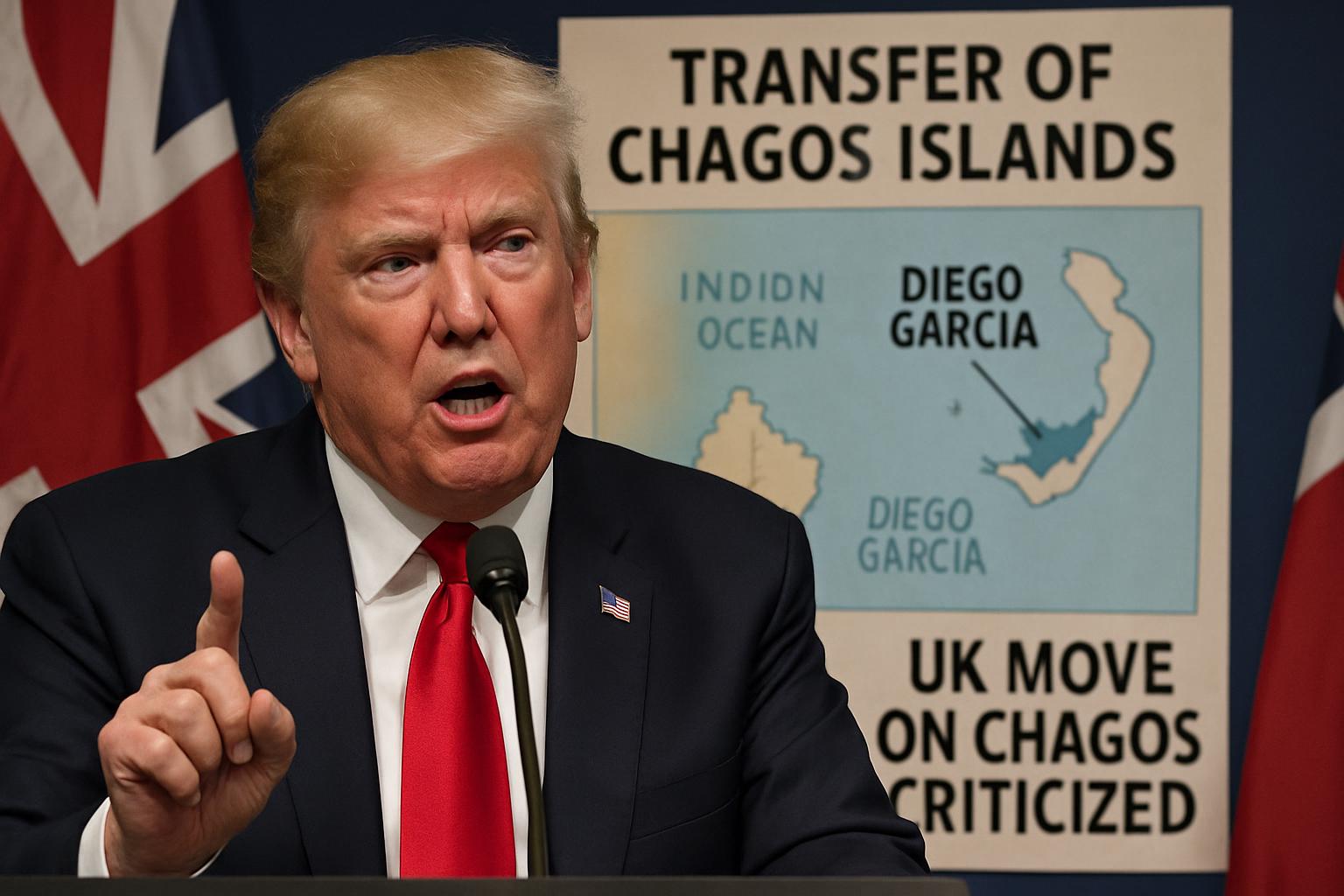
Trump Criticizes UK Plan to Transfer Chagos Islands to Mauritius

Breakthrough Drug Offers Hope for Children with Severe Epilepsy
Arrest of Andrew Mountbatten-Windsor Captured in Iconic Photograph
UK Denies US Use of Military Bases for Potential Iran Strikes Amid Chagos Islands Dispute
Andrew Mountbatten-Windsor's Arrest Sparks International Calls for Justice
Sky's Bid for ITV's Broadcasting Arm Raises Concerns Over UK Media Landscape
In This Article
 Ethan Brooks| Published
 HIGHLIGHTS
- Sky, owned by Comcast, has made a £1.6bn offer for ITV's broadcasting division, sparking significant interest and debate.
- The sale could impact ITV's public service obligations and its relationship with STV in Scotland, affecting regional programming.
- ITV's share price rose by 16% following the announcement, yet remains below theoretical valuations due to market uncertainties.
- Regulatory and political challenges loom, particularly concerning the consolidation of major UK broadcasters under US ownership.
- ITV and STV face declining advertising revenues amid competition from digital platforms like Netflix and YouTube.
Sky, the UK’s leading pay-TV provider, has made a £1.6 billion bid to acquire ITV's broadcasting division, a move that could reshape the British television industry. The offer, made by Sky's parent company Comcast, has sparked discussions about the future of ITV's public service obligations and its longstanding relationship with STV in Scotland.
Impact on Scottish Broadcasting
The potential sale of ITV's media and entertainment division, which includes popular channels like ITV1, ITV2, and ITV3, as well as the streaming service ITVX, could have significant implications for Scottish viewers. In central and northern Scotland, ITV1 is replaced by STV, which sources much of its content from ITV1 through an affiliation deal. This arrangement means that any changes in ITV's programming or budget could directly affect STV's offerings.
Financial and Market Considerations
Despite ITV's share price jumping 16% after the announcement, it remains below some analysts' valuations. The broadcasting division, which reported operating profits of £250 million last year, faces intense competition from digital giants like Netflix and Disney. Advertising revenue, a critical income stream for ITV, is projected to decline by 6% this year, reflecting broader economic challenges.
Regulatory and Political Hurdles
The proposed acquisition raises regulatory and political questions, particularly regarding the consolidation of major UK broadcasters under US ownership. The UK competition regulator is expected to scrutinize the deal closely, given the potential impact on the media landscape. Additionally, the political implications of a US company owning a significant portion of the UK’s free-to-air commercial broadcasting sector cannot be overlooked.
Challenges for Traditional TV
Both ITV and STV are grappling with declining audiences for traditional linear TV, as viewers increasingly turn to digital platforms. This shift has led to a drop in advertising revenue, further complicating the financial landscape for both broadcasters. Despite these challenges, linear TV remains a crucial medium for reaching mass audiences, particularly during major sporting events.
WHAT THIS MIGHT MEAN
If the acquisition proceeds, it could lead to a significant restructuring of the UK television market, potentially altering the balance between free-to-air and pay-TV services. Regulatory bodies may impose conditions to ensure fair competition and protect public service broadcasting. Politically, the deal could reignite debates about foreign ownership of UK media assets, especially in light of past controversies involving media consolidation. As the media landscape continues to evolve, ITV and STV will need to adapt their strategies to maintain relevance in a digital-first world.
Related Articles
Andrew Mountbatten-Windsor Arrested Amid Misconduct Allegations
Trump Criticizes UK Plan to Transfer Chagos Islands to Mauritius
Breakthrough Drug Offers Hope for Children with Severe Epilepsy
Arrest of Andrew Mountbatten-Windsor Captured in Iconic Photograph
UK Denies US Use of Military Bases for Potential Iran Strikes Amid Chagos Islands Dispute
Andrew Mountbatten-Windsor's Arrest Sparks International Calls for Justice