
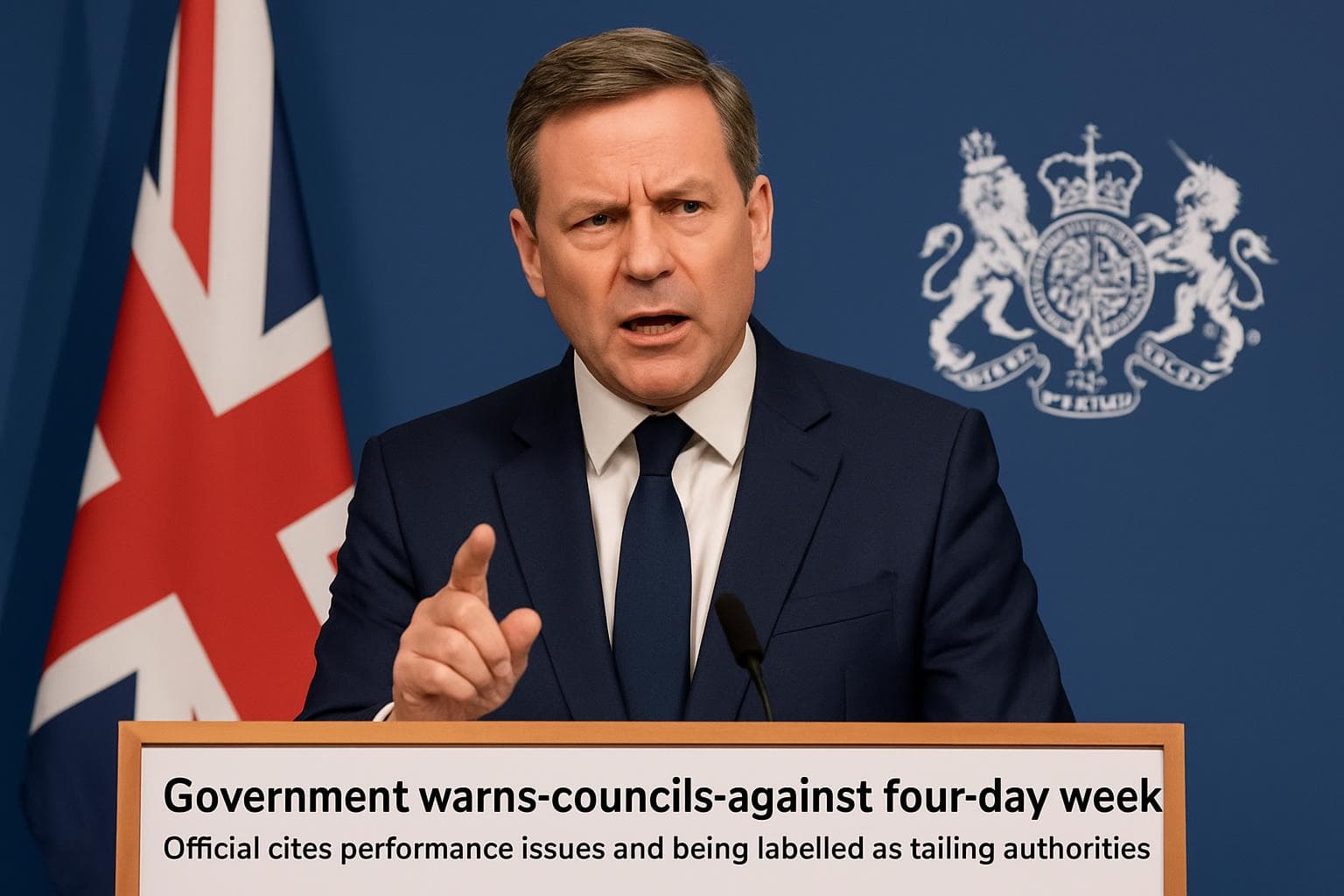
UK Government Warns Councils Against Four-Day Work Week Amid Performance Concerns
In This Article
HIGHLIGHTS
- Local Government Secretary Steve Reed has warned English councils against adopting a four-day work week, citing potential performance failures.
- South Cambridgeshire District Council is the first to permanently implement a four-day week, despite government disapproval.
- Reed's letter emphasizes that part-time work for full-time pay could indicate council failure, prompting possible government intervention.
- Critics argue a four-day week could harm productivity, while supporters highlight improved staff well-being and performance.
- The debate continues as the government updates its best value guidance for local authorities.
In a move that has sparked debate across England, Local Government Secretary Steve Reed has issued a stern warning to council leaders against adopting a four-day work week for their staff. Reed's letter, which was reported by The Telegraph, cautions that such a policy could lead to councils being labeled as failing authorities, potentially triggering government intervention.
Government's Stance on Work Week Policy
Reed's communication to the councils underscores the government's position that offering full-time pay for part-time work without compelling justification could be seen as a sign of failure. "I hope that makes my position on this matter and the government’s policy unambiguously clear to all councils," Reed stated, emphasizing the seriousness with which he views the issue.
The warning comes in the wake of South Cambridgeshire District Council's decision to permanently implement a four-day work week, a move that has drawn criticism from Reed. He pointed to a decline in the council's housing service performance, questioning how the authority plans to address these shortcomings.
Diverging Views on Productivity
The debate over a four-day work week is not new. Critics argue that reducing the work week could negatively impact productivity and economic growth. However, proponents, including the 4 Day Week Foundation, argue that the traditional five-day work week is outdated and that a shorter week could enhance performance and reduce costs. A recent trial in Scotland's public sector reported increased productivity and improved staff morale, with 98% of participants noting better motivation.
Future Guidance and Implications
The government is currently updating its best value guidance for local authorities, a document last revised under the Conservative government in 2024. This update could further clarify the government's stance on work week policies and set new standards for council performance.
As the debate continues, councils must weigh the potential benefits of a four-day work week against the risk of government intervention and the need to maintain high service standards for residents.
WHAT THIS MIGHT MEAN
The government's firm stance against a four-day work week could lead to increased scrutiny of councils that choose to adopt such policies. If more councils follow South Cambridgeshire's lead, it may prompt a broader reassessment of work week structures across the public sector. The updated best value guidance could either reinforce the government's position or provide more flexibility for councils to experiment with innovative work arrangements. Ultimately, the outcome of this debate could influence future labor policies and the balance between productivity and work-life balance in the UK.
Related Articles

Andrew Mountbatten-Windsor Arrested Amid Misconduct Allegations

Trump Criticizes UK Plan to Transfer Chagos Islands to Mauritius

Breakthrough Drug Offers Hope for Children with Severe Epilepsy

Arrest of Andrew Mountbatten-Windsor Captured in Iconic Photograph

UK Denies US Use of Military Bases for Potential Iran Strikes Amid Chagos Islands Dispute

Andrew Mountbatten-Windsor's Arrest Sparks International Calls for Justice
UK Government Warns Councils Against Four-Day Work Week Amid Performance Concerns
In This Article
 Ethan Brooks| Published
 HIGHLIGHTS
- Local Government Secretary Steve Reed has warned English councils against adopting a four-day work week, citing potential performance failures.
- South Cambridgeshire District Council is the first to permanently implement a four-day week, despite government disapproval.
- Reed's letter emphasizes that part-time work for full-time pay could indicate council failure, prompting possible government intervention.
- Critics argue a four-day week could harm productivity, while supporters highlight improved staff well-being and performance.
- The debate continues as the government updates its best value guidance for local authorities.
In a move that has sparked debate across England, Local Government Secretary Steve Reed has issued a stern warning to council leaders against adopting a four-day work week for their staff. Reed's letter, which was reported by The Telegraph, cautions that such a policy could lead to councils being labeled as failing authorities, potentially triggering government intervention.
Government's Stance on Work Week Policy
Reed's communication to the councils underscores the government's position that offering full-time pay for part-time work without compelling justification could be seen as a sign of failure. "I hope that makes my position on this matter and the government’s policy unambiguously clear to all councils," Reed stated, emphasizing the seriousness with which he views the issue.
The warning comes in the wake of South Cambridgeshire District Council's decision to permanently implement a four-day work week, a move that has drawn criticism from Reed. He pointed to a decline in the council's housing service performance, questioning how the authority plans to address these shortcomings.
Diverging Views on Productivity
The debate over a four-day work week is not new. Critics argue that reducing the work week could negatively impact productivity and economic growth. However, proponents, including the 4 Day Week Foundation, argue that the traditional five-day work week is outdated and that a shorter week could enhance performance and reduce costs. A recent trial in Scotland's public sector reported increased productivity and improved staff morale, with 98% of participants noting better motivation.
Future Guidance and Implications
The government is currently updating its best value guidance for local authorities, a document last revised under the Conservative government in 2024. This update could further clarify the government's stance on work week policies and set new standards for council performance.
As the debate continues, councils must weigh the potential benefits of a four-day work week against the risk of government intervention and the need to maintain high service standards for residents.
WHAT THIS MIGHT MEAN
The government's firm stance against a four-day work week could lead to increased scrutiny of councils that choose to adopt such policies. If more councils follow South Cambridgeshire's lead, it may prompt a broader reassessment of work week structures across the public sector. The updated best value guidance could either reinforce the government's position or provide more flexibility for councils to experiment with innovative work arrangements. Ultimately, the outcome of this debate could influence future labor policies and the balance between productivity and work-life balance in the UK.
Related Articles
Andrew Mountbatten-Windsor Arrested Amid Misconduct Allegations
Trump Criticizes UK Plan to Transfer Chagos Islands to Mauritius
Breakthrough Drug Offers Hope for Children with Severe Epilepsy
Arrest of Andrew Mountbatten-Windsor Captured in Iconic Photograph
UK Denies US Use of Military Bases for Potential Iran Strikes Amid Chagos Islands Dispute
Andrew Mountbatten-Windsor's Arrest Sparks International Calls for Justice