
UK Pushes for Reform of Human Rights Convention Amid Immigration Concerns
In This Article
HIGHLIGHTS
- UK Justice Secretary Shabana Mahmood advocates for reforming the European Convention on Human Rights (ECHR) to address modern challenges.
- Mahmood emphasizes the need to balance human rights with public safety, citing cases where foreign criminals avoid deportation using ECHR Article 8.
- The UK government is committed to the ECHR but seeks to clarify its application in domestic law, especially concerning immigration.
- Some Conservative leaders suggest the UK might need to leave the ECHR to regain control over immigration policies.
- A commission led by Kemi Badenoch is exploring the implications of potentially leaving the ECHR, with findings expected in the autumn.
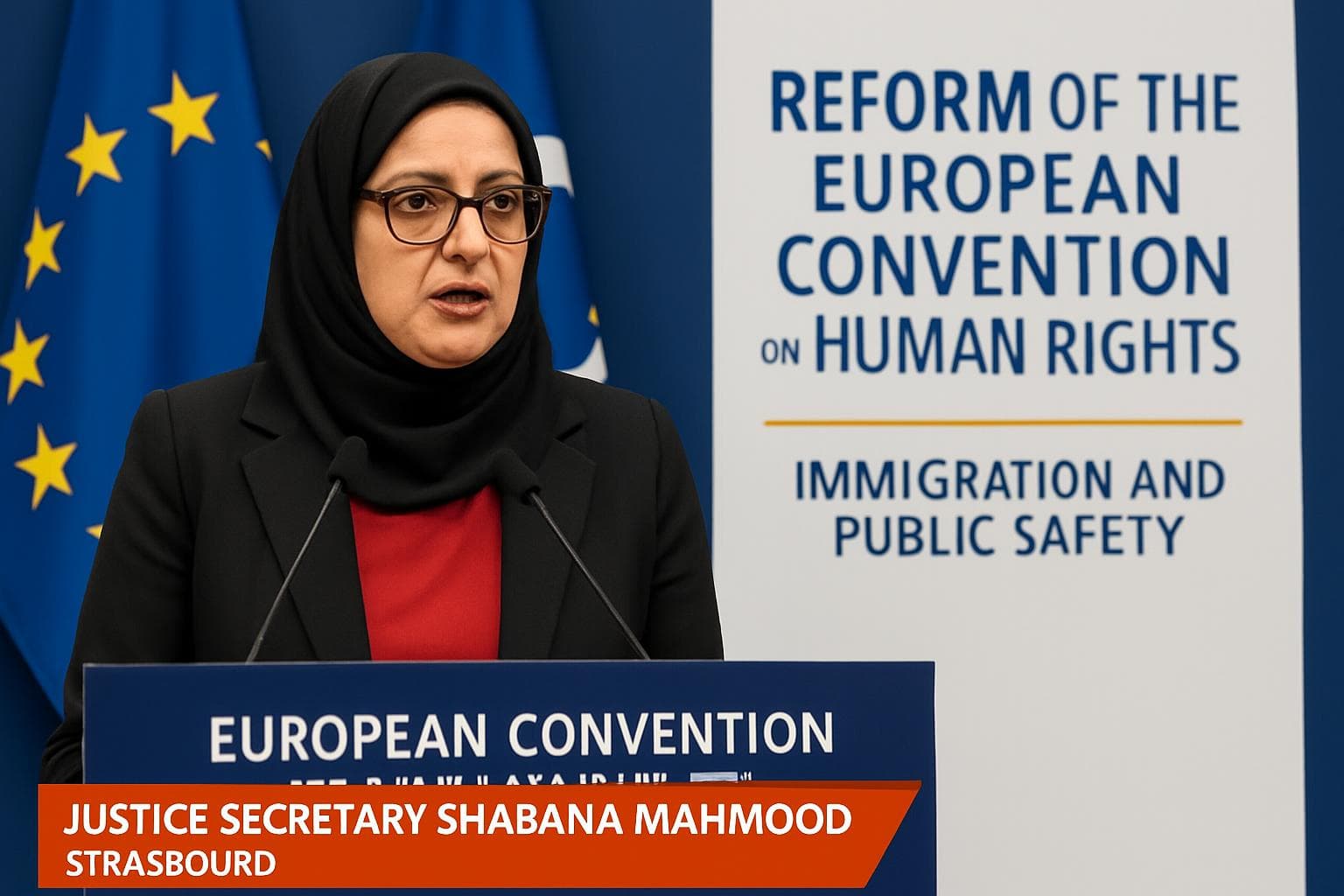
The UK government is advocating for reforms to the European Convention on Human Rights (ECHR) to better address contemporary issues, particularly in the realm of immigration and public safety. Justice Secretary Shabana Mahmood, speaking at the Council of Europe in Strasbourg, emphasized the need for the ECHR to evolve, stating that public confidence in the rule of law is waning when it appears to protect rule-breakers over law-abiding citizens.
Calls for Reform
Mahmood highlighted the challenges posed by ECHR Article 8, which protects the right to family life, noting that it has been used by foreign criminals to avoid deportation. She argued that while the UK remains committed to the ECHR, it is crucial to ensure that human rights laws do not become tools for evading justice. "Our convention was never meant to be frozen in time," Mahmood remarked, advocating for a dialogue on updating the convention to reflect new threats and realities.
Political and Legal Implications
The UK government is actively exploring how the ECHR is implemented domestically, with potential legislative changes on the horizon. This move comes amid pressure from some Conservative leaders, including Kemi Badenoch, who have suggested that the UK might need to leave the ECHR to regain control over its immigration system. Badenoch has initiated a commission to assess the consequences of such a departure, with a report expected in the autumn.
Broader European Context
The UK is not alone in its call for reform. An open letter from nine European countries, including Italy and Denmark, has also urged changes to the ECHR to facilitate the deportation of foreign criminals. Although the UK did not sign the letter, government sources indicate alignment with its sentiments. Mahmood reiterated that the UK's commitment to the ECHR is unwavering, but stressed that adaptation is necessary to maintain trust in human rights and the rule of law.
WHAT THIS MIGHT MEAN
The push for reforming the ECHR could lead to significant changes in how human rights are interpreted and applied across Europe. If the UK decides to leave the ECHR, it could set a precedent for other countries facing similar challenges, potentially leading to a broader reevaluation of human rights frameworks. However, such a move could also isolate the UK from its European partners and complicate international relations. The commission's findings in the autumn will be pivotal in shaping the UK's future approach to human rights and immigration policy.
Related Articles

UK Government to Reform Asylum Seeker Support and Employment Policies

UK-Iran Tensions: Starmer Defends Cautious Approach Amid Trump Criticism

Labour MP's Husband Arrested in UK-China Espionage Probe

Andrew Mountbatten-Windsor Arrested Amid Misconduct Allegations

Breakthrough Drug Offers Hope for Children with Severe Epilepsy

Conservatives Propose Interest Rate Cap on Student Loans Amid Growing Debt Concerns
UK Pushes for Reform of Human Rights Convention Amid Immigration Concerns
In This Article
 Ethan Brooks| Published
 HIGHLIGHTS
- UK Justice Secretary Shabana Mahmood advocates for reforming the European Convention on Human Rights (ECHR) to address modern challenges.
- Mahmood emphasizes the need to balance human rights with public safety, citing cases where foreign criminals avoid deportation using ECHR Article 8.
- The UK government is committed to the ECHR but seeks to clarify its application in domestic law, especially concerning immigration.
- Some Conservative leaders suggest the UK might need to leave the ECHR to regain control over immigration policies.
- A commission led by Kemi Badenoch is exploring the implications of potentially leaving the ECHR, with findings expected in the autumn.
The UK government is advocating for reforms to the European Convention on Human Rights (ECHR) to better address contemporary issues, particularly in the realm of immigration and public safety. Justice Secretary Shabana Mahmood, speaking at the Council of Europe in Strasbourg, emphasized the need for the ECHR to evolve, stating that public confidence in the rule of law is waning when it appears to protect rule-breakers over law-abiding citizens.
Calls for Reform
Mahmood highlighted the challenges posed by ECHR Article 8, which protects the right to family life, noting that it has been used by foreign criminals to avoid deportation. She argued that while the UK remains committed to the ECHR, it is crucial to ensure that human rights laws do not become tools for evading justice. "Our convention was never meant to be frozen in time," Mahmood remarked, advocating for a dialogue on updating the convention to reflect new threats and realities.
Political and Legal Implications
The UK government is actively exploring how the ECHR is implemented domestically, with potential legislative changes on the horizon. This move comes amid pressure from some Conservative leaders, including Kemi Badenoch, who have suggested that the UK might need to leave the ECHR to regain control over its immigration system. Badenoch has initiated a commission to assess the consequences of such a departure, with a report expected in the autumn.
Broader European Context
The UK is not alone in its call for reform. An open letter from nine European countries, including Italy and Denmark, has also urged changes to the ECHR to facilitate the deportation of foreign criminals. Although the UK did not sign the letter, government sources indicate alignment with its sentiments. Mahmood reiterated that the UK's commitment to the ECHR is unwavering, but stressed that adaptation is necessary to maintain trust in human rights and the rule of law.
WHAT THIS MIGHT MEAN
The push for reforming the ECHR could lead to significant changes in how human rights are interpreted and applied across Europe. If the UK decides to leave the ECHR, it could set a precedent for other countries facing similar challenges, potentially leading to a broader reevaluation of human rights frameworks. However, such a move could also isolate the UK from its European partners and complicate international relations. The commission's findings in the autumn will be pivotal in shaping the UK's future approach to human rights and immigration policy.
Related Articles
UK Government to Reform Asylum Seeker Support and Employment Policies
UK-Iran Tensions: Starmer Defends Cautious Approach Amid Trump Criticism
Labour MP's Husband Arrested in UK-China Espionage Probe
Andrew Mountbatten-Windsor Arrested Amid Misconduct Allegations
Breakthrough Drug Offers Hope for Children with Severe Epilepsy
Conservatives Propose Interest Rate Cap on Student Loans Amid Growing Debt Concerns