
Historic Return of White Storks to London Marks New Era for Urban Wildlife
In This Article
HIGHLIGHTS
- White storks are set to return to London after 600 years, with a reintroduction project at Eastbrookend Country Park in Dagenham.
- The project, supported by the London Wildlife Trust and Barking and Dagenham Council, is part of a broader rewilding effort funded by the Green Roots Fund.
- Beavers will also be reintroduced to the park in 2027, enhancing local biodiversity and ecosystem restoration.
- The initiative aims to inspire urban nature recovery and increase public engagement with wildlife in the capital.
- The project builds on the successful reintroduction of storks at the Knepp estate in West Sussex, where wild storks have been thriving since 2020.
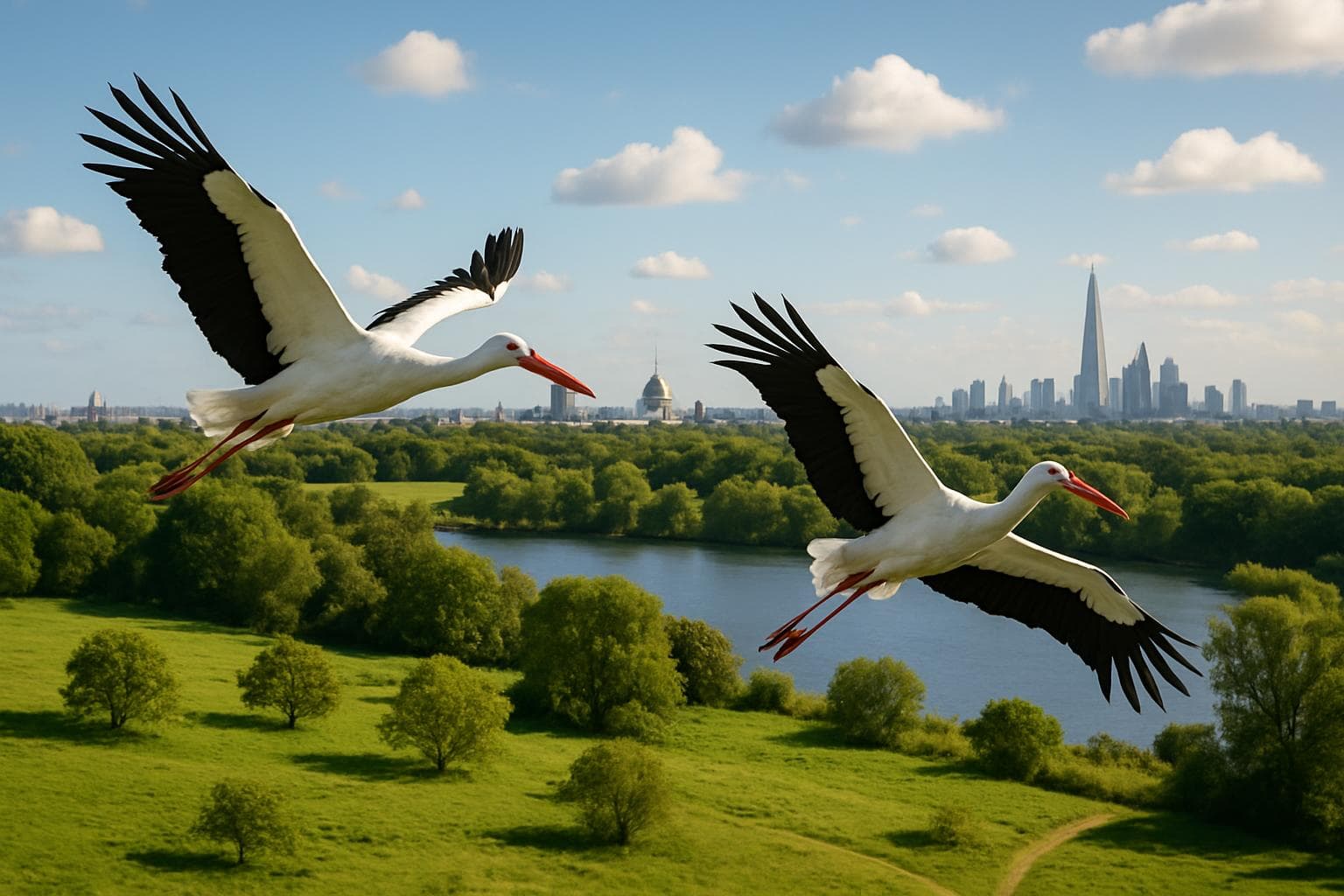
In a groundbreaking move for urban biodiversity, white storks are set to make a historic return to London after a 600-year absence. The reintroduction project, scheduled for October next year, will see these majestic birds take up residence at Eastbrookend Country Park in Dagenham. This initiative is part of a broader rewilding effort aimed at bringing charismatic wildlife back into the heart of the city.
Rewilding Efforts in East London
The project, a collaboration between the London Wildlife Trust and Barking and Dagenham Council, is backed by a £500,000 investment from the mayor of London's Green Roots Fund. This fund is part of a larger £12 million commitment to make London greener and more climate resilient over the next three years. Sam Davenport, director of nature recovery at the London Wildlife Trust, expressed hope that the reintroduction of white storks and beavers could inspire an ambitious future for nature recovery in the capital.
Building on Past Successes
The reintroduction of white storks in London builds on the successful efforts at the Knepp estate in West Sussex, where wild storks have been thriving since 2020. The birds, which nest on chimneys and treetops, have been extinct as breeding birds in Britain since 1416. The first captive-bred storks will be placed in a large aviary at Eastbrookend, where they will gradually acclimate to their new environment before being allowed to roam freely.
Enhancing Urban Biodiversity
In addition to the storks, beavers will be reintroduced to the park in 2027, further enhancing local biodiversity. These ecosystem engineers are expected to create new habitats that support a variety of wildlife, including invertebrates and amphibians. The project aims to foster local pride and engagement with nature, with a dedicated stork officer working with schools and the community to monitor and support the wildlife.
A Vision for the Future
Sir Sadiq Khan, the mayor of London, emphasized the importance of access to nature as a matter of social justice, stating, "Everyone deserves to enjoy nature, no matter where they live." The rewilding efforts in East London are a testament to this vision, aiming to transform urban areas into vibrant habitats for wildlife and people alike.
WHAT THIS MIGHT MEAN
The reintroduction of white storks and beavers to London marks a significant step forward in urban rewilding efforts. If successful, this project could serve as a model for other cities looking to enhance biodiversity and engage communities with nature. The presence of these species may also lead to increased tourism and educational opportunities, further boosting local economies. However, experts caution that restoring wild populations can take decades, requiring ongoing habitat restoration and community involvement. As the project progresses, it will be crucial to monitor its impact on local ecosystems and ensure that the benefits are shared equitably across the city.
Related Articles

Labour MP's Husband Arrested in UK-China Espionage Probe

Nottingham Attacks Inquiry: Families Demand Accountability and Truth

Global Counsel Faces Collapse Amidst Epstein Scandal Fallout

Rising Measles Cases in the UK Spark Urgent Vaccination Campaign

Bafta Film Awards 2026: A Night of Glamour and Identity Challenges

UK Police Intensify Investigation into Andrew Mountbatten-Windsor Amid Misconduct Allegations
Historic Return of White Storks to London Marks New Era for Urban Wildlife
In This Article
 Ethan Brooks| Published
 HIGHLIGHTS
- White storks are set to return to London after 600 years, with a reintroduction project at Eastbrookend Country Park in Dagenham.
- The project, supported by the London Wildlife Trust and Barking and Dagenham Council, is part of a broader rewilding effort funded by the Green Roots Fund.
- Beavers will also be reintroduced to the park in 2027, enhancing local biodiversity and ecosystem restoration.
- The initiative aims to inspire urban nature recovery and increase public engagement with wildlife in the capital.
- The project builds on the successful reintroduction of storks at the Knepp estate in West Sussex, where wild storks have been thriving since 2020.
In a groundbreaking move for urban biodiversity, white storks are set to make a historic return to London after a 600-year absence. The reintroduction project, scheduled for October next year, will see these majestic birds take up residence at Eastbrookend Country Park in Dagenham. This initiative is part of a broader rewilding effort aimed at bringing charismatic wildlife back into the heart of the city.
Rewilding Efforts in East London
The project, a collaboration between the London Wildlife Trust and Barking and Dagenham Council, is backed by a £500,000 investment from the mayor of London's Green Roots Fund. This fund is part of a larger £12 million commitment to make London greener and more climate resilient over the next three years. Sam Davenport, director of nature recovery at the London Wildlife Trust, expressed hope that the reintroduction of white storks and beavers could inspire an ambitious future for nature recovery in the capital.
Building on Past Successes
The reintroduction of white storks in London builds on the successful efforts at the Knepp estate in West Sussex, where wild storks have been thriving since 2020. The birds, which nest on chimneys and treetops, have been extinct as breeding birds in Britain since 1416. The first captive-bred storks will be placed in a large aviary at Eastbrookend, where they will gradually acclimate to their new environment before being allowed to roam freely.
Enhancing Urban Biodiversity
In addition to the storks, beavers will be reintroduced to the park in 2027, further enhancing local biodiversity. These ecosystem engineers are expected to create new habitats that support a variety of wildlife, including invertebrates and amphibians. The project aims to foster local pride and engagement with nature, with a dedicated stork officer working with schools and the community to monitor and support the wildlife.
A Vision for the Future
Sir Sadiq Khan, the mayor of London, emphasized the importance of access to nature as a matter of social justice, stating, "Everyone deserves to enjoy nature, no matter where they live." The rewilding efforts in East London are a testament to this vision, aiming to transform urban areas into vibrant habitats for wildlife and people alike.
WHAT THIS MIGHT MEAN
The reintroduction of white storks and beavers to London marks a significant step forward in urban rewilding efforts. If successful, this project could serve as a model for other cities looking to enhance biodiversity and engage communities with nature. The presence of these species may also lead to increased tourism and educational opportunities, further boosting local economies. However, experts caution that restoring wild populations can take decades, requiring ongoing habitat restoration and community involvement. As the project progresses, it will be crucial to monitor its impact on local ecosystems and ensure that the benefits are shared equitably across the city.
Related Articles
Labour MP's Husband Arrested in UK-China Espionage Probe
Nottingham Attacks Inquiry: Families Demand Accountability and Truth
Global Counsel Faces Collapse Amidst Epstein Scandal Fallout
Rising Measles Cases in the UK Spark Urgent Vaccination Campaign
Bafta Film Awards 2026: A Night of Glamour and Identity Challenges
UK Police Intensify Investigation into Andrew Mountbatten-Windsor Amid Misconduct Allegations