
York Minster Welcomes Back St William's Shrine After 500 Years
In This Article
HIGHLIGHTS
- Fragments of a 14th-century shrine dedicated to St William of York have returned to York Minster after nearly 500 years, marking a significant historical event.
- St William, a twice-serving Archbishop of York, was canonized in 1226 and is associated with several miracles, making his shrine a major pilgrimage site.
- The shrine was dismantled during the Reformation and its pieces were buried; they have now been digitally reconstructed for a new exhibition.
- The exhibition, marking the 800th anniversary of St William's canonization, includes a digital recreation of the shrine and other related artefacts.
- The exhibition aims to reflect on St William's legacy and the historical significance of York Minster as a pilgrimage site.
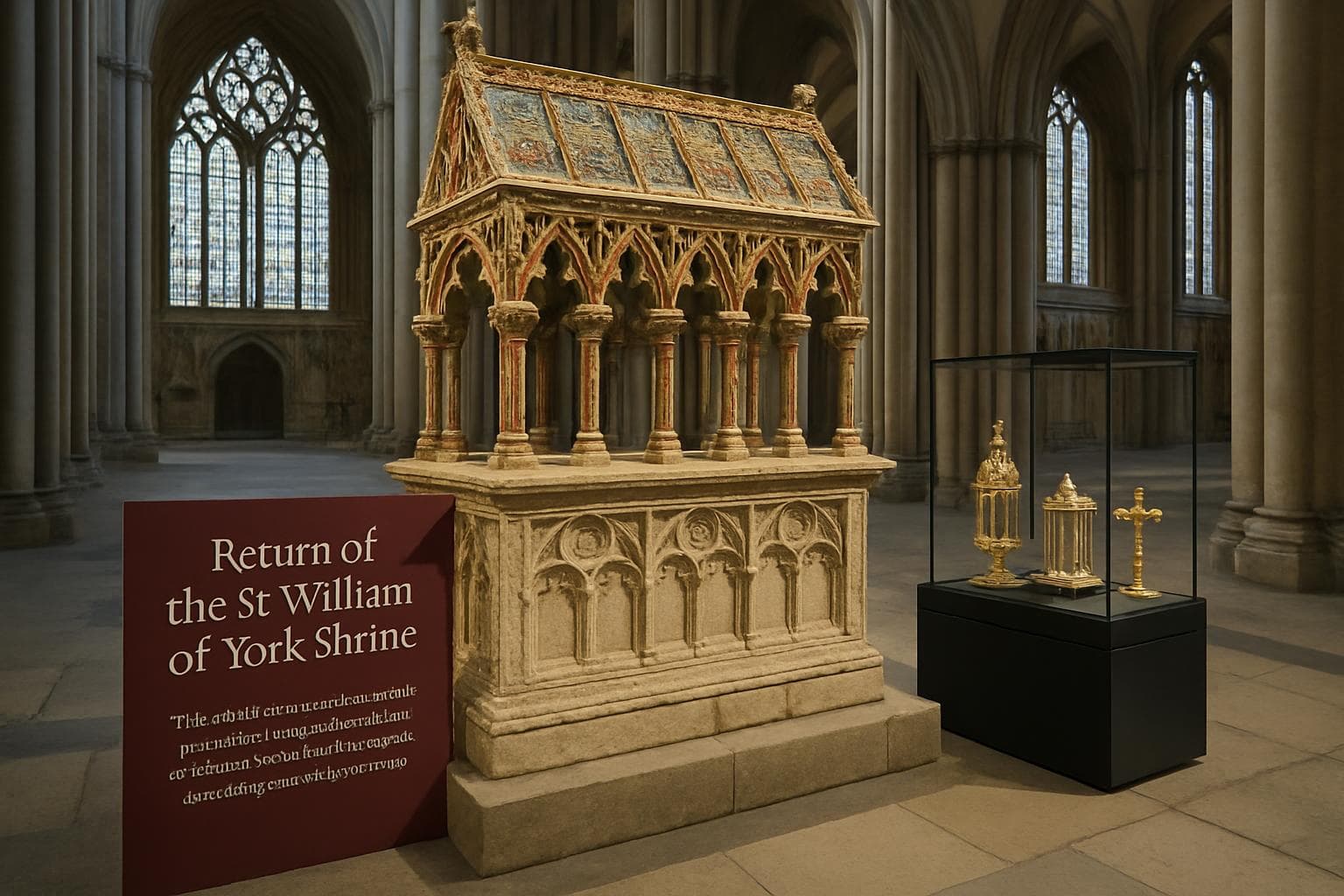
In a historic moment for York Minster, fragments of a medieval shrine dedicated to St William of York have been returned to the cathedral for the first time in nearly five centuries. The shrine, originally constructed in the 14th century, was dismantled and buried during the Reformation between 1538 and 1541. Now, these pieces have been loaned by the Yorkshire Museum and are featured in a new exhibition marking the 800th anniversary of St William's canonization.
A Saint's Legacy
St William, also known as William Fitzherbert, was twice appointed as the Archbishop of York in the 12th century. His life was marked by controversy and miracles, including the famous Ouse Bridge incident where he reportedly saved a crowd from drowning. Canonized in 1226, his shrine became a significant pilgrimage site, drawing visitors from across England.
Rediscovery and Reconstruction
The shrine's fragments, uncovered over the years, have been digitally reconstructed using advanced technology typically employed in video game design. This digital recreation allows visitors to visualize the shrine as it might have appeared centuries ago. Dr. Jennie England, research coordinator at York Minster, expressed excitement over the exhibition, noting the emotional impact of seeing the shrine pieces return to their original site.
Exhibition Highlights
The exhibition not only showcases the reconstructed shrine but also features other artefacts related to St William, including a 12th-century ivory casket and medieval manuscripts. England highlighted the significance of bringing together these diverse objects to reflect on the historical and cultural impact of St William and York Minster.
WHAT THIS MIGHT MEAN
The return of St William's shrine fragments and their digital reconstruction could reignite interest in York Minster as a historical and cultural landmark. This exhibition may attract both local and international visitors, boosting tourism and scholarly interest in medieval history and the Reformation period. Furthermore, the use of digital technology in historical exhibitions could set a precedent for other institutions seeking to engage modern audiences with the past. As the exhibition continues, it may also prompt further archaeological exploration in York, potentially uncovering more hidden treasures from the city's rich history.
Related Articles
York Minster Welcomes Back St William's Shrine After 500 Years
In This Article
 Ethan Brooks| Published
 HIGHLIGHTS
- Fragments of a 14th-century shrine dedicated to St William of York have returned to York Minster after nearly 500 years, marking a significant historical event.
- St William, a twice-serving Archbishop of York, was canonized in 1226 and is associated with several miracles, making his shrine a major pilgrimage site.
- The shrine was dismantled during the Reformation and its pieces were buried; they have now been digitally reconstructed for a new exhibition.
- The exhibition, marking the 800th anniversary of St William's canonization, includes a digital recreation of the shrine and other related artefacts.
- The exhibition aims to reflect on St William's legacy and the historical significance of York Minster as a pilgrimage site.
In a historic moment for York Minster, fragments of a medieval shrine dedicated to St William of York have been returned to the cathedral for the first time in nearly five centuries. The shrine, originally constructed in the 14th century, was dismantled and buried during the Reformation between 1538 and 1541. Now, these pieces have been loaned by the Yorkshire Museum and are featured in a new exhibition marking the 800th anniversary of St William's canonization.
A Saint's Legacy
St William, also known as William Fitzherbert, was twice appointed as the Archbishop of York in the 12th century. His life was marked by controversy and miracles, including the famous Ouse Bridge incident where he reportedly saved a crowd from drowning. Canonized in 1226, his shrine became a significant pilgrimage site, drawing visitors from across England.
Rediscovery and Reconstruction
The shrine's fragments, uncovered over the years, have been digitally reconstructed using advanced technology typically employed in video game design. This digital recreation allows visitors to visualize the shrine as it might have appeared centuries ago. Dr. Jennie England, research coordinator at York Minster, expressed excitement over the exhibition, noting the emotional impact of seeing the shrine pieces return to their original site.
Exhibition Highlights
The exhibition not only showcases the reconstructed shrine but also features other artefacts related to St William, including a 12th-century ivory casket and medieval manuscripts. England highlighted the significance of bringing together these diverse objects to reflect on the historical and cultural impact of St William and York Minster.
WHAT THIS MIGHT MEAN
The return of St William's shrine fragments and their digital reconstruction could reignite interest in York Minster as a historical and cultural landmark. This exhibition may attract both local and international visitors, boosting tourism and scholarly interest in medieval history and the Reformation period. Furthermore, the use of digital technology in historical exhibitions could set a precedent for other institutions seeking to engage modern audiences with the past. As the exhibition continues, it may also prompt further archaeological exploration in York, potentially uncovering more hidden treasures from the city's rich history.