
2025 Poised to Become UK's Hottest Year on Record Amid Climate Concerns
In This Article
HIGHLIGHTS
- The Met Office predicts 2025 could be the UK's hottest year on record, surpassing the 2022 record of 10.03°C.
- Persistent heat and lack of rainfall in 2025 led to droughts and wildfires, with temperatures peaking at 35.8°C.
- Climate change is driving the UK's warming trend, with the last two decades containing the ten warmest years on record.
- The Met Office notes that 2025's final temperature figures depend on the remaining days of December.
- If confirmed, 2025 would mark the sixth time this century that the UK has set a new annual temperature record.
The United Kingdom is on the brink of recording its hottest year since records began, according to the Met Office. With the average temperature for 2025 projected to reach approximately 10.05°C, this year could surpass the previous record of 10.03°C set in 2022. However, a cooler Christmas period could still influence the final outcome.
Heatwaves and Droughts Define 2025
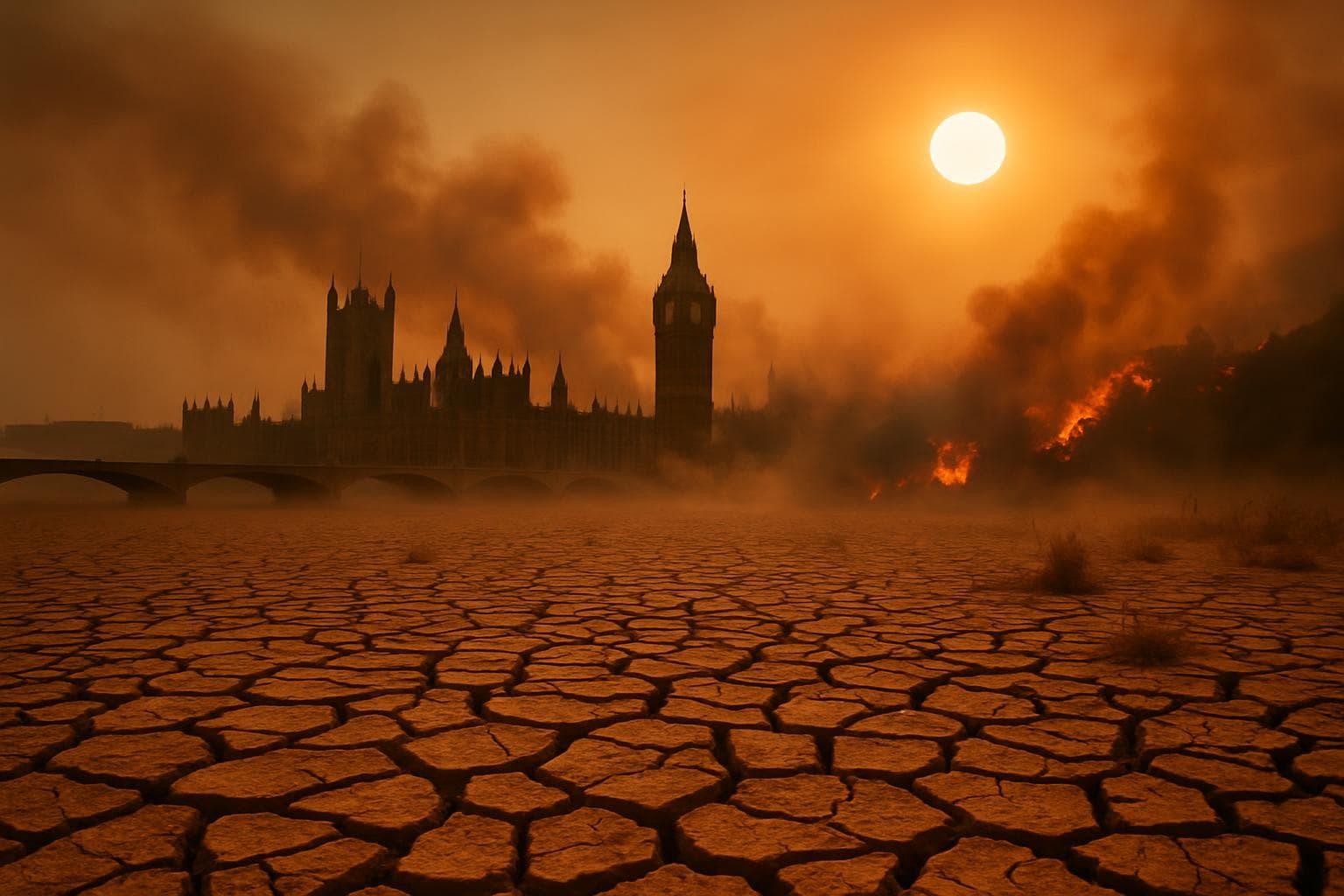
The year 2025 has been marked by persistent heat and a significant lack of rainfall, leading to droughts and wildfires across the UK. Temperatures soared to a peak of 35.8°C during the summer, with four separate heatwaves declared. These conditions have not only posed risks to vulnerable populations but have also impacted the agricultural sector, affecting crop viability.
Climate Change's Role in Rising Temperatures
Scientists at the Met Office, including Mike Kendon and Amy Doherty, emphasize that human-caused climate change is the primary driver of the UK's warming trend. Over the past four decades, the UK's annual temperature has risen by about 1°C. "The changes we are seeing are unprecedented in observational records back to the 19th century," Kendon stated, highlighting the extraordinary nature of current climate conditions.
Record-Breaking Trends
If 2025 is confirmed as the hottest year, it will be the sixth time this century that the UK has set a new annual temperature record. Notably, all of the UK's ten warmest years have occurred within the last two decades. The Met Office's projections are based on observed temperatures up to December 21, assuming the remaining days of the year follow the long-term December average.
WHAT THIS MIGHT MEAN
As the UK faces the likelihood of 2025 becoming its hottest year on record, the implications of climate change are increasingly evident. Experts warn that such trends are likely to continue, with future years potentially breaking new records. This persistent warming trend could lead to more frequent and severe weather events, challenging infrastructure and public health systems.
Politically, these developments may intensify calls for stronger climate action and policy changes aimed at reducing carbon emissions. The agricultural sector, in particular, may need to adapt to changing conditions, potentially altering crop choices and farming practices. As the UK grapples with these challenges, the need for comprehensive climate strategies becomes ever more pressing.
Related Articles

Saharan Dust to Illuminate UK Skies with Vivid Sunrises and Sunsets

Breakthrough Drug Offers Hope for Children with Severe Epilepsy

Trump Raises Import Tariffs to 15% After Supreme Court Setback

Arrest of Andrew Mountbatten-Windsor Captured in Iconic Photograph

UK Denies US Use of Military Bases for Potential Iran Strikes Amid Chagos Islands Dispute

Andrew Mountbatten-Windsor Arrested Amid Misconduct Allegations
2025 Poised to Become UK's Hottest Year on Record Amid Climate Concerns
In This Article
 Leila Hassan| Published
 HIGHLIGHTS
- The Met Office predicts 2025 could be the UK's hottest year on record, surpassing the 2022 record of 10.03°C.
- Persistent heat and lack of rainfall in 2025 led to droughts and wildfires, with temperatures peaking at 35.8°C.
- Climate change is driving the UK's warming trend, with the last two decades containing the ten warmest years on record.
- The Met Office notes that 2025's final temperature figures depend on the remaining days of December.
- If confirmed, 2025 would mark the sixth time this century that the UK has set a new annual temperature record.
The United Kingdom is on the brink of recording its hottest year since records began, according to the Met Office. With the average temperature for 2025 projected to reach approximately 10.05°C, this year could surpass the previous record of 10.03°C set in 2022. However, a cooler Christmas period could still influence the final outcome.
Heatwaves and Droughts Define 2025
The year 2025 has been marked by persistent heat and a significant lack of rainfall, leading to droughts and wildfires across the UK. Temperatures soared to a peak of 35.8°C during the summer, with four separate heatwaves declared. These conditions have not only posed risks to vulnerable populations but have also impacted the agricultural sector, affecting crop viability.
Climate Change's Role in Rising Temperatures
Scientists at the Met Office, including Mike Kendon and Amy Doherty, emphasize that human-caused climate change is the primary driver of the UK's warming trend. Over the past four decades, the UK's annual temperature has risen by about 1°C. "The changes we are seeing are unprecedented in observational records back to the 19th century," Kendon stated, highlighting the extraordinary nature of current climate conditions.
Record-Breaking Trends
If 2025 is confirmed as the hottest year, it will be the sixth time this century that the UK has set a new annual temperature record. Notably, all of the UK's ten warmest years have occurred within the last two decades. The Met Office's projections are based on observed temperatures up to December 21, assuming the remaining days of the year follow the long-term December average.
WHAT THIS MIGHT MEAN
As the UK faces the likelihood of 2025 becoming its hottest year on record, the implications of climate change are increasingly evident. Experts warn that such trends are likely to continue, with future years potentially breaking new records. This persistent warming trend could lead to more frequent and severe weather events, challenging infrastructure and public health systems.
Politically, these developments may intensify calls for stronger climate action and policy changes aimed at reducing carbon emissions. The agricultural sector, in particular, may need to adapt to changing conditions, potentially altering crop choices and farming practices. As the UK grapples with these challenges, the need for comprehensive climate strategies becomes ever more pressing.
Related Articles
Saharan Dust to Illuminate UK Skies with Vivid Sunrises and Sunsets
Breakthrough Drug Offers Hope for Children with Severe Epilepsy
Trump Raises Import Tariffs to 15% After Supreme Court Setback
Arrest of Andrew Mountbatten-Windsor Captured in Iconic Photograph
UK Denies US Use of Military Bases for Potential Iran Strikes Amid Chagos Islands Dispute
Andrew Mountbatten-Windsor Arrested Amid Misconduct Allegations