
Activists Acquitted in High-Profile Elbit Systems Break-In Case
In This Article
HIGHLIGHTS
- Six Palestine Action activists were acquitted of aggravated burglary charges related to a break-in at Elbit Systems' UK site.
- The jury could not reach verdicts on charges of criminal damage and violent disorder, leaving the possibility of a retrial.
- Samuel Corner remains in custody, accused of grievous bodily harm against a police officer, with no verdict reached on this charge.
- The activists claimed their actions were non-violent, despite allegations of using sledgehammers as weapons.
- The case highlighted the principle of "jury equity," allowing jurors to acquit based on conscience.
In a significant legal development, six activists from the group Palestine Action have been acquitted of aggravated burglary charges following a dramatic break-in at the UK subsidiary of the Israeli defence firm Elbit Systems. The incident, which took place on August 6, 2024, involved a prison van being driven into the factory's perimeter in Filton, near Bristol.
Legal Proceedings and Verdicts
The trial, held at Woolwich Crown Court, concluded with the jury unable to reach verdicts on several charges, including criminal damage and violent disorder. While Charlotte Head, Samuel Corner, Leona Kamio, Fatema Rajwani, Zoe Rogers, and Jordan Devlin were cleared of aggravated burglary, the possibility of a retrial looms over unresolved charges. Notably, Samuel Corner remains in custody, facing accusations of grievous bodily harm against police sergeant Kate Evans, a charge on which the jury also failed to reach a verdict.
Activists' Defense and Allegations
The activists, who have drawn comparisons to historical protest movements, maintained that their actions were non-violent, despite prosecutors alleging the use of sledgehammers as weapons against security personnel. Rajiv Menon KC, representing the defendants, argued that any violence was unplanned and that the activists were unprepared for the presence of security guards. The defence also pointed to missing CCTV footage and excessive force used by security.
Public Reaction and Jury Equity
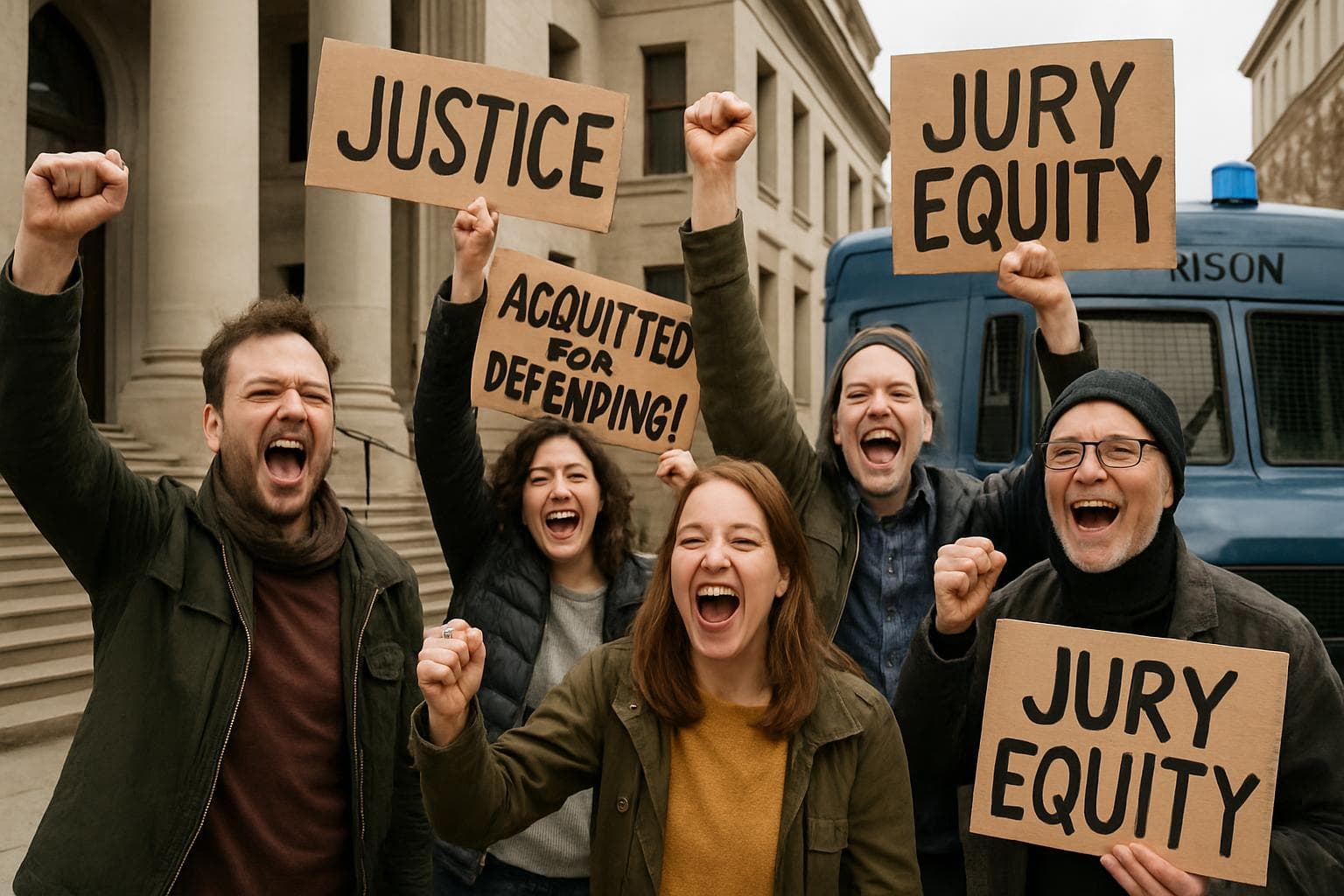
The case has sparked public interest, with around 100 supporters gathering outside the court to celebrate the activists' release. The trial also underscored the principle of "jury equity," allowing jurors to deliver verdicts based on moral grounds. Posters advocating this principle appeared near the court, emphasizing the jury's right to acquit based on conscience.
WHAT THIS MIGHT MEAN
The unresolved charges and potential for a retrial leave the future of the Palestine Action activists uncertain. If a retrial proceeds, it could further scrutinize the actions of both the activists and the security personnel involved. The case also raises broader questions about the role of protest in addressing controversial issues, such as arms manufacturing and international conflicts. Legal experts suggest that the principle of jury equity may continue to influence similar cases, potentially shaping the outcomes of future trials involving acts of civil disobedience.
Images from the Web


Related Articles

Palestine Action Activists to Face Retrial Over Elbit Systems Break-In

Calls for Action as Palestine Action Activists Face Retrial Amidst Protests

Activist's Trial Sparks Suffragette Comparison Amid UK Defense Firm Break-In

High Court Rules Palestine Action Ban Unlawful, Government to Appeal
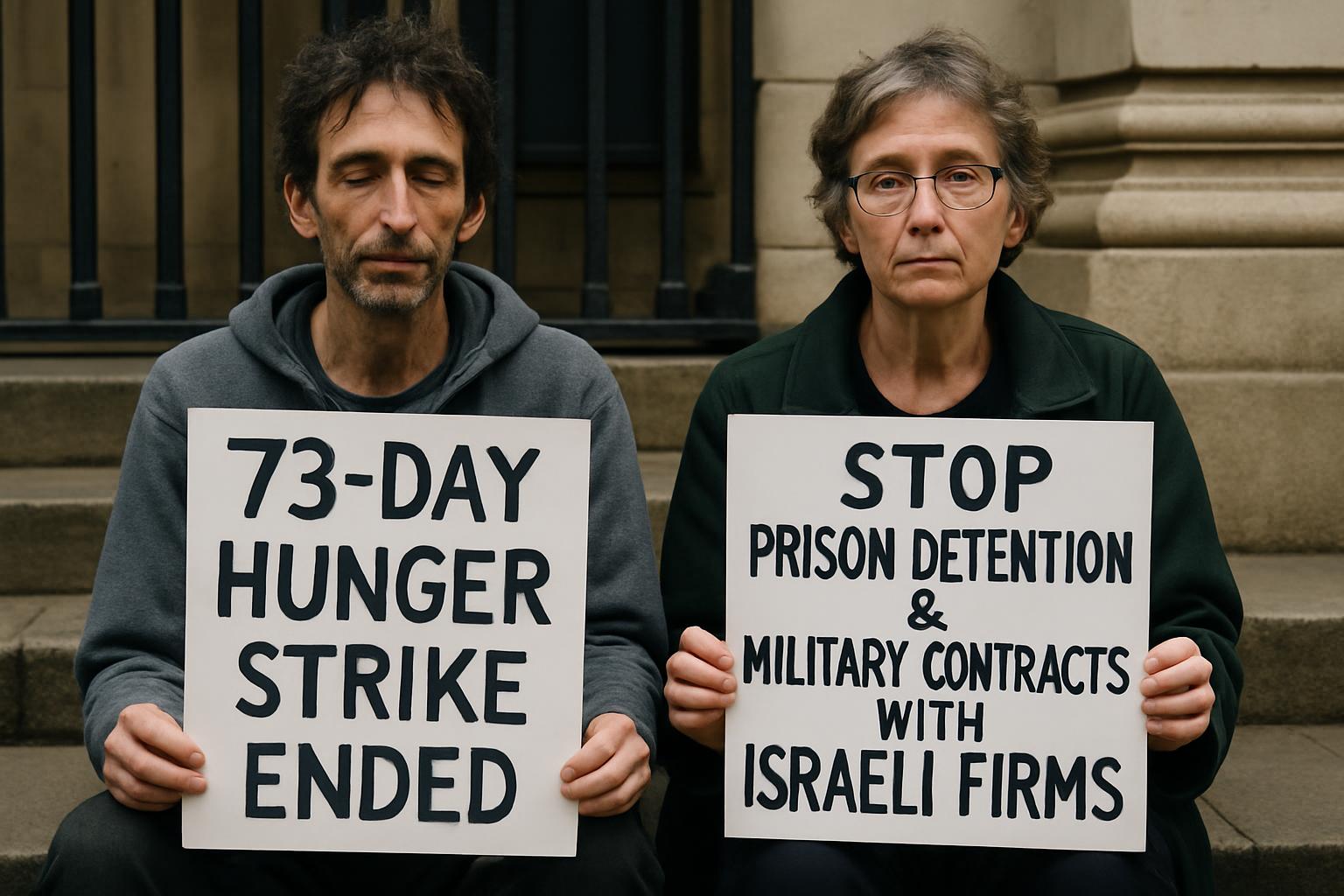
Palestine Action Hunger Strikers End Protest as UK Government Reconsiders Defence Contracts

Police Federation Chief Arrested Amid Fraud Investigation
Activists Acquitted in High-Profile Elbit Systems Break-In Case
In This Article
 Sofia Romano| Published
 HIGHLIGHTS
- Six Palestine Action activists were acquitted of aggravated burglary charges related to a break-in at Elbit Systems' UK site.
- The jury could not reach verdicts on charges of criminal damage and violent disorder, leaving the possibility of a retrial.
- Samuel Corner remains in custody, accused of grievous bodily harm against a police officer, with no verdict reached on this charge.
- The activists claimed their actions were non-violent, despite allegations of using sledgehammers as weapons.
- The case highlighted the principle of "jury equity," allowing jurors to acquit based on conscience.
In a significant legal development, six activists from the group Palestine Action have been acquitted of aggravated burglary charges following a dramatic break-in at the UK subsidiary of the Israeli defence firm Elbit Systems. The incident, which took place on August 6, 2024, involved a prison van being driven into the factory's perimeter in Filton, near Bristol.
Legal Proceedings and Verdicts
The trial, held at Woolwich Crown Court, concluded with the jury unable to reach verdicts on several charges, including criminal damage and violent disorder. While Charlotte Head, Samuel Corner, Leona Kamio, Fatema Rajwani, Zoe Rogers, and Jordan Devlin were cleared of aggravated burglary, the possibility of a retrial looms over unresolved charges. Notably, Samuel Corner remains in custody, facing accusations of grievous bodily harm against police sergeant Kate Evans, a charge on which the jury also failed to reach a verdict.
Activists' Defense and Allegations
The activists, who have drawn comparisons to historical protest movements, maintained that their actions were non-violent, despite prosecutors alleging the use of sledgehammers as weapons against security personnel. Rajiv Menon KC, representing the defendants, argued that any violence was unplanned and that the activists were unprepared for the presence of security guards. The defence also pointed to missing CCTV footage and excessive force used by security.
Public Reaction and Jury Equity
The case has sparked public interest, with around 100 supporters gathering outside the court to celebrate the activists' release. The trial also underscored the principle of "jury equity," allowing jurors to deliver verdicts based on moral grounds. Posters advocating this principle appeared near the court, emphasizing the jury's right to acquit based on conscience.
WHAT THIS MIGHT MEAN
The unresolved charges and potential for a retrial leave the future of the Palestine Action activists uncertain. If a retrial proceeds, it could further scrutinize the actions of both the activists and the security personnel involved. The case also raises broader questions about the role of protest in addressing controversial issues, such as arms manufacturing and international conflicts. Legal experts suggest that the principle of jury equity may continue to influence similar cases, potentially shaping the outcomes of future trials involving acts of civil disobedience.
Images from the Web
Related Articles
Palestine Action Activists to Face Retrial Over Elbit Systems Break-In
Calls for Action as Palestine Action Activists Face Retrial Amidst Protests
Activist's Trial Sparks Suffragette Comparison Amid UK Defense Firm Break-In
High Court Rules Palestine Action Ban Unlawful, Government to Appeal
Palestine Action Hunger Strikers End Protest as UK Government Reconsiders Defence Contracts
Police Federation Chief Arrested Amid Fraud Investigation