
Palestine Action Hunger Strikers End Protest as UK Government Reconsiders Defence Contracts
In This Article
HIGHLIGHTS
- Two Palestine Action activists, Heba Muraisi and Kamran Ahmed, ended their 73-day hunger strike in UK prisons.
- The hunger strike was part of a protest against prolonged pre-trial detention and the UK government's dealings with Elbit Systems.
- Human Rights Watch challenged the UK government's claim of non-intervention, suggesting legal avenues for bail facilitation.
- The UK Ministry of Defence's decision not to award a contract to Elbit Systems met one of the protesters' key demands.
- Prisoners for Palestine reported that all hunger strikers have begun medical refeeding, a critical process following prolonged fasting.
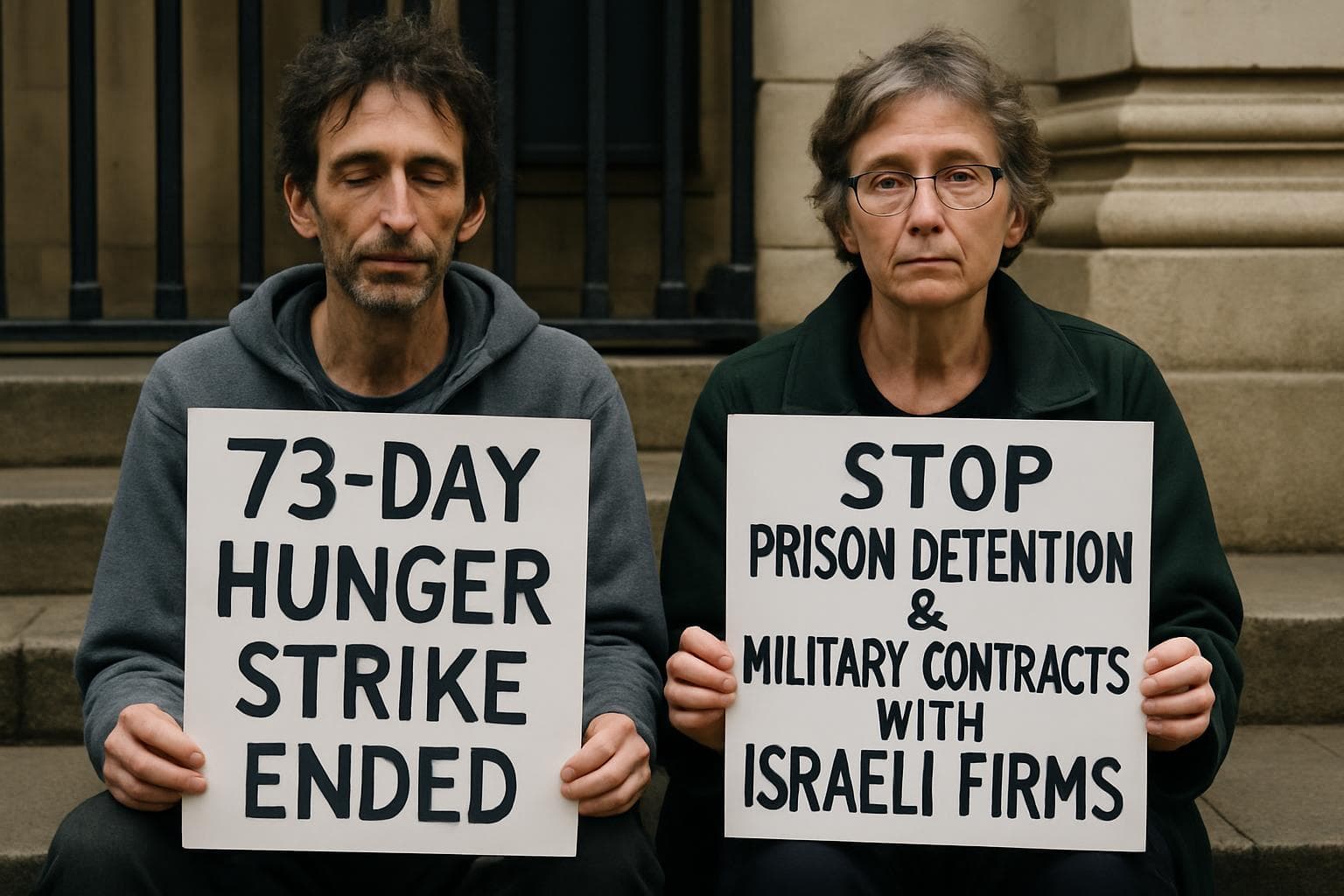
Two activists associated with Palestine Action, Heba Muraisi and Kamran Ahmed, have concluded their 73-day hunger strike in UK prisons, marking the end of a protest that highlighted issues of prolonged pre-trial detention and the UK’s military contracts with Israeli firms. The activists, detained on remand, were protesting against the lengthy wait for their trials, which are delayed due to significant court backlogs.
Protest and Demands
The hunger strike, which began in early November, was part of a broader campaign against the UK government's dealings with Elbit Systems, an Israeli arms company. The activists demanded the deproscription of Palestine Action, immediate bail, and improved prison conditions. Their protest gained significant attention, with Human Rights Watch urging the UK government to review the activists' detention conditions and consider facilitating bail.
Government Response and Legal Context
The UK Ministry of Justice maintained that bail decisions are judicial matters, not influenced by government ministers. However, Human Rights Watch argued that the attorney general could instruct prosecutors not to oppose bail applications, potentially expediting the process. Despite the government's stance, the Ministry of Defence's decision not to award a £2 billion contract to Elbit Systems was seen as a victory by the protesters.
Health and Safety Concerns
Concerns for the activists' health grew as the hunger strike continued, with Muraisi reportedly at risk of death. The activists have now begun medical refeeding, a delicate process overseen by healthcare professionals. The Ministry of Justice facilitated discussions between prison healthcare leaders and representatives of the hunger strikers to address prison conditions and treatment.
Impact and Future Actions
The protest has galvanized support, with Prisoners for Palestine noting an increase in direct action participation against the military-industrial complex. The group claims that the decision regarding Elbit Systems reflects a shift in official thinking, although they attribute the change to public pressure rather than government initiative.
WHAT THIS MIGHT MEAN
The conclusion of the hunger strike may lead to renewed scrutiny of the UK's pre-trial detention practices, particularly in cases involving political activism. Legal experts suggest that the government could face increased pressure to address court backlogs and ensure timely trials. The Ministry of Defence's decision regarding Elbit Systems might signal a cautious approach to future contracts with controversial firms, potentially influencing defense procurement policies. As public and international attention remains on the activists' cases, the UK government may need to balance legal integrity with human rights considerations in its judicial processes.
Related Articles

Police Federation Chief Arrested Amid Fraud Investigation

UK Reinforces Military Presence in Cyprus Amid Middle East Tensions

Canada and Australia Forge Strategic Partnership Amid Global Uncertainty

UK Government to Reform Asylum Seeker Support and Employment Policies

Middle East Conflict Drives UK Energy Prices to New Highs

UK Faces Dilemmas Amid Iran Conflict and China Spying Allegations
Palestine Action Hunger Strikers End Protest as UK Government Reconsiders Defence Contracts
In This Article
 Sofia Romano| Published
 HIGHLIGHTS
- Two Palestine Action activists, Heba Muraisi and Kamran Ahmed, ended their 73-day hunger strike in UK prisons.
- The hunger strike was part of a protest against prolonged pre-trial detention and the UK government's dealings with Elbit Systems.
- Human Rights Watch challenged the UK government's claim of non-intervention, suggesting legal avenues for bail facilitation.
- The UK Ministry of Defence's decision not to award a contract to Elbit Systems met one of the protesters' key demands.
- Prisoners for Palestine reported that all hunger strikers have begun medical refeeding, a critical process following prolonged fasting.
Two activists associated with Palestine Action, Heba Muraisi and Kamran Ahmed, have concluded their 73-day hunger strike in UK prisons, marking the end of a protest that highlighted issues of prolonged pre-trial detention and the UK’s military contracts with Israeli firms. The activists, detained on remand, were protesting against the lengthy wait for their trials, which are delayed due to significant court backlogs.
Protest and Demands
The hunger strike, which began in early November, was part of a broader campaign against the UK government's dealings with Elbit Systems, an Israeli arms company. The activists demanded the deproscription of Palestine Action, immediate bail, and improved prison conditions. Their protest gained significant attention, with Human Rights Watch urging the UK government to review the activists' detention conditions and consider facilitating bail.
Government Response and Legal Context
The UK Ministry of Justice maintained that bail decisions are judicial matters, not influenced by government ministers. However, Human Rights Watch argued that the attorney general could instruct prosecutors not to oppose bail applications, potentially expediting the process. Despite the government's stance, the Ministry of Defence's decision not to award a £2 billion contract to Elbit Systems was seen as a victory by the protesters.
Health and Safety Concerns
Concerns for the activists' health grew as the hunger strike continued, with Muraisi reportedly at risk of death. The activists have now begun medical refeeding, a delicate process overseen by healthcare professionals. The Ministry of Justice facilitated discussions between prison healthcare leaders and representatives of the hunger strikers to address prison conditions and treatment.
Impact and Future Actions
The protest has galvanized support, with Prisoners for Palestine noting an increase in direct action participation against the military-industrial complex. The group claims that the decision regarding Elbit Systems reflects a shift in official thinking, although they attribute the change to public pressure rather than government initiative.
WHAT THIS MIGHT MEAN
The conclusion of the hunger strike may lead to renewed scrutiny of the UK's pre-trial detention practices, particularly in cases involving political activism. Legal experts suggest that the government could face increased pressure to address court backlogs and ensure timely trials. The Ministry of Defence's decision regarding Elbit Systems might signal a cautious approach to future contracts with controversial firms, potentially influencing defense procurement policies. As public and international attention remains on the activists' cases, the UK government may need to balance legal integrity with human rights considerations in its judicial processes.
Related Articles
Police Federation Chief Arrested Amid Fraud Investigation
UK Reinforces Military Presence in Cyprus Amid Middle East Tensions
Canada and Australia Forge Strategic Partnership Amid Global Uncertainty
UK Government to Reform Asylum Seeker Support and Employment Policies
Middle East Conflict Drives UK Energy Prices to New Highs
UK Faces Dilemmas Amid Iran Conflict and China Spying Allegations