
UK Government Eases Deer Culling to Protect Woodlands and Farmland
In This Article
HIGHLIGHTS
- The UK government has unveiled a 10-year plan to address deer overpopulation, aiming to protect woodlands and farmland.
- New legislation will simplify deer culling, allowing night-time and closed-season shooting to manage deer populations effectively.
- Deer overpopulation has led to 33% of English woodlands being in an "unfavourable condition," up from 24% in the early 2000s.
- Animal welfare groups, like PETA, argue that culling is inhumane and advocate for alternative methods such as habitat modification.
- The plan includes identifying priority culling areas and revising grant systems to incentivize landowners to manage deer populations.
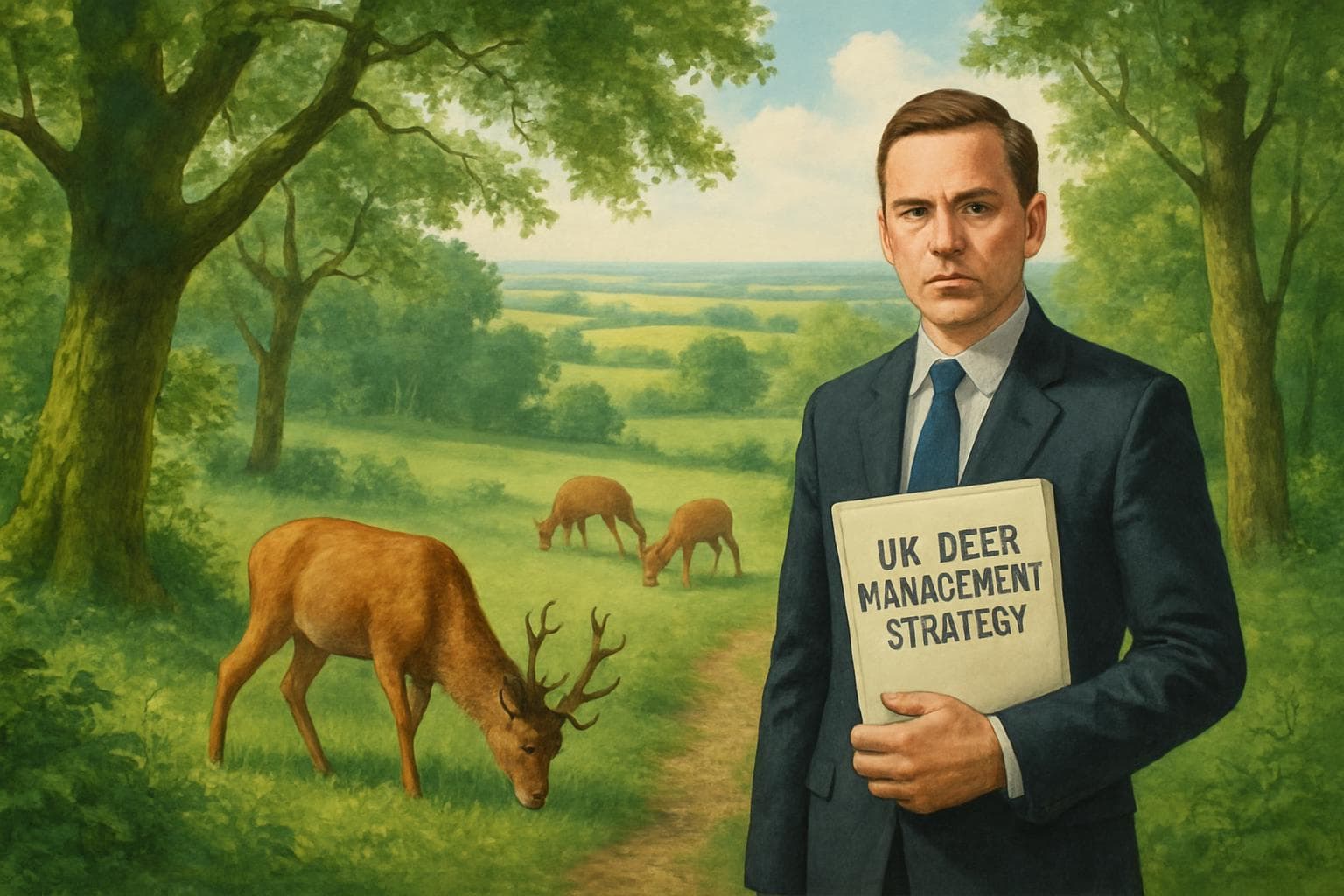
The UK government has announced a comprehensive 10-year strategy to tackle the burgeoning deer population in England, which poses a significant threat to woodlands and agricultural lands. With deer numbers now exceeding two million, the plan aims to streamline culling processes, allowing for more effective management of these animals.
Impact on Woodlands and Farmland
Deer overpopulation has severely impacted English woodlands, with 33% now classified as being in an "unfavourable condition." This marks a significant increase from 24% in the early 2000s. The animals' grazing habits damage young trees and crops, leading to substantial financial losses for farmers. Andrew Blenkiron, who manages the Elveden estate in Suffolk, reported annual crop damages costing up to £100,000 due to deer.
Legislative Changes and Culling Strategy
The new strategy will simplify the licensing process for deer culling, particularly for night-time and closed-season shooting. This move is designed to help landowners protect their crops more efficiently. Emma Dear, a principal officer at Natural England, emphasized the need for timely interventions to prevent ecological damage. The plan also includes revising the grant system to incentivize landowners to manage deer populations beyond wooded areas.
Opposition from Animal Welfare Groups
Despite the government's efforts, animal welfare organizations like PETA have criticized the culling approach, arguing it is inhumane and ineffective in the long term. They advocate for alternative methods such as habitat modification and limiting access to artificial food sources to control deer populations sustainably.
Historical Context and Species Involved
The UK is home to six deer species, with only red and roe deer being native. The absence of natural predators, such as wolves and lynx, has contributed to the unchecked growth of deer populations. The government aims to identify national priority areas for focused culling to mitigate the environmental impact.
WHAT THIS MIGHT MEAN
The government's new deer management strategy could lead to significant improvements in woodland health and agricultural productivity if implemented effectively. However, the plan may face challenges from animal rights groups and require careful balancing of ecological and ethical considerations. The success of this initiative will depend on collaboration between landowners, environmental agencies, and wildlife experts to ensure sustainable wildlife management practices are adopted. As the strategy unfolds, monitoring its impact on both deer populations and woodland regeneration will be crucial to achieving the desired environmental outcomes.
Related Articles

Middle East Conflict Drives UK Energy Prices to New Highs

Saharan Dust to Illuminate UK Skies with Vivid Sunrises and Sunsets

Government Announces £4 Billion Overhaul of SEND Support in England

UK Government Announces Major Overhaul of SEND System with £3.4 Billion Investment

Canada and Australia Forge Strategic Partnership Amid Global Uncertainty

UK Government to Reform Asylum Seeker Support and Employment Policies
UK Government Eases Deer Culling to Protect Woodlands and Farmland
In This Article
 Leila Hassan| Published
 HIGHLIGHTS
- The UK government has unveiled a 10-year plan to address deer overpopulation, aiming to protect woodlands and farmland.
- New legislation will simplify deer culling, allowing night-time and closed-season shooting to manage deer populations effectively.
- Deer overpopulation has led to 33% of English woodlands being in an "unfavourable condition," up from 24% in the early 2000s.
- Animal welfare groups, like PETA, argue that culling is inhumane and advocate for alternative methods such as habitat modification.
- The plan includes identifying priority culling areas and revising grant systems to incentivize landowners to manage deer populations.
The UK government has announced a comprehensive 10-year strategy to tackle the burgeoning deer population in England, which poses a significant threat to woodlands and agricultural lands. With deer numbers now exceeding two million, the plan aims to streamline culling processes, allowing for more effective management of these animals.
Impact on Woodlands and Farmland
Deer overpopulation has severely impacted English woodlands, with 33% now classified as being in an "unfavourable condition." This marks a significant increase from 24% in the early 2000s. The animals' grazing habits damage young trees and crops, leading to substantial financial losses for farmers. Andrew Blenkiron, who manages the Elveden estate in Suffolk, reported annual crop damages costing up to £100,000 due to deer.
Legislative Changes and Culling Strategy
The new strategy will simplify the licensing process for deer culling, particularly for night-time and closed-season shooting. This move is designed to help landowners protect their crops more efficiently. Emma Dear, a principal officer at Natural England, emphasized the need for timely interventions to prevent ecological damage. The plan also includes revising the grant system to incentivize landowners to manage deer populations beyond wooded areas.
Opposition from Animal Welfare Groups
Despite the government's efforts, animal welfare organizations like PETA have criticized the culling approach, arguing it is inhumane and ineffective in the long term. They advocate for alternative methods such as habitat modification and limiting access to artificial food sources to control deer populations sustainably.
Historical Context and Species Involved
The UK is home to six deer species, with only red and roe deer being native. The absence of natural predators, such as wolves and lynx, has contributed to the unchecked growth of deer populations. The government aims to identify national priority areas for focused culling to mitigate the environmental impact.
WHAT THIS MIGHT MEAN
The government's new deer management strategy could lead to significant improvements in woodland health and agricultural productivity if implemented effectively. However, the plan may face challenges from animal rights groups and require careful balancing of ecological and ethical considerations. The success of this initiative will depend on collaboration between landowners, environmental agencies, and wildlife experts to ensure sustainable wildlife management practices are adopted. As the strategy unfolds, monitoring its impact on both deer populations and woodland regeneration will be crucial to achieving the desired environmental outcomes.
Related Articles
Middle East Conflict Drives UK Energy Prices to New Highs
Saharan Dust to Illuminate UK Skies with Vivid Sunrises and Sunsets
Government Announces £4 Billion Overhaul of SEND Support in England
UK Government Announces Major Overhaul of SEND System with £3.4 Billion Investment
Canada and Australia Forge Strategic Partnership Amid Global Uncertainty
UK Government to Reform Asylum Seeker Support and Employment Policies