
BAE Systems Reports Record Sales Amid Worker Strikes and Calls for Defence Spending Clarity
In This Article
HIGHLIGHTS
- BAE Systems reported record sales of £30.7bn for 2025, with profits rising to £2.6bn, amid global increases in defence spending.
- Workers at BAE's Lancashire sites are striking over pay, demanding a 5.2% raise, while the company offers 3.7%.
- The Unite union criticizes BAE's profits as "obscene" and insists on fair compensation for its members.
- CEO Charles Woodburn urges the UK government to publish the delayed Defence Investment Plan to facilitate industry planning.
- BAE's order backlog reached a record £83.6bn, driven by heightened demand due to geopolitical tensions, notably the conflict in Ukraine.
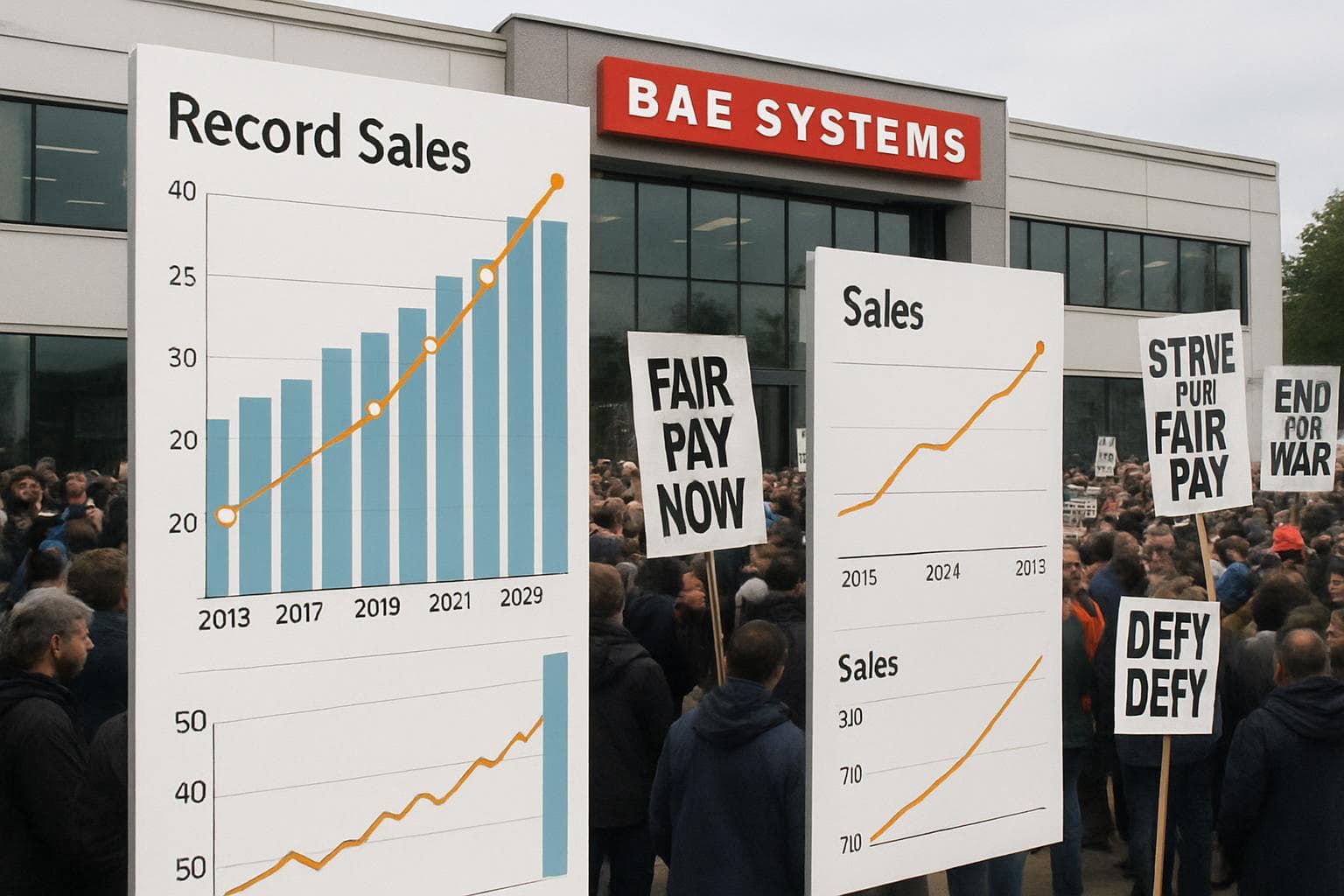
BAE Systems, Europe's largest defence contractor, has announced record financial results for 2025, with sales reaching £30.7bn, a 10% increase from the previous year. The company's profits before tax rose to £2.6bn, reflecting a surge in global defence spending amid escalating geopolitical tensions. Despite these financial successes, BAE faces ongoing worker strikes at its Lancashire sites over pay disputes.
Record Financial Performance
The defence giant's impressive financial performance is attributed to increased demand for military equipment, driven by global security challenges, including the ongoing conflict in Ukraine. BAE's order backlog has soared to a record £83.6bn, underscoring the heightened demand from NATO allies. CEO Charles Woodburn highlighted the company's strategic position to provide advanced defence systems and technologies, essential for national security.
Worker Strikes Over Pay Disputes
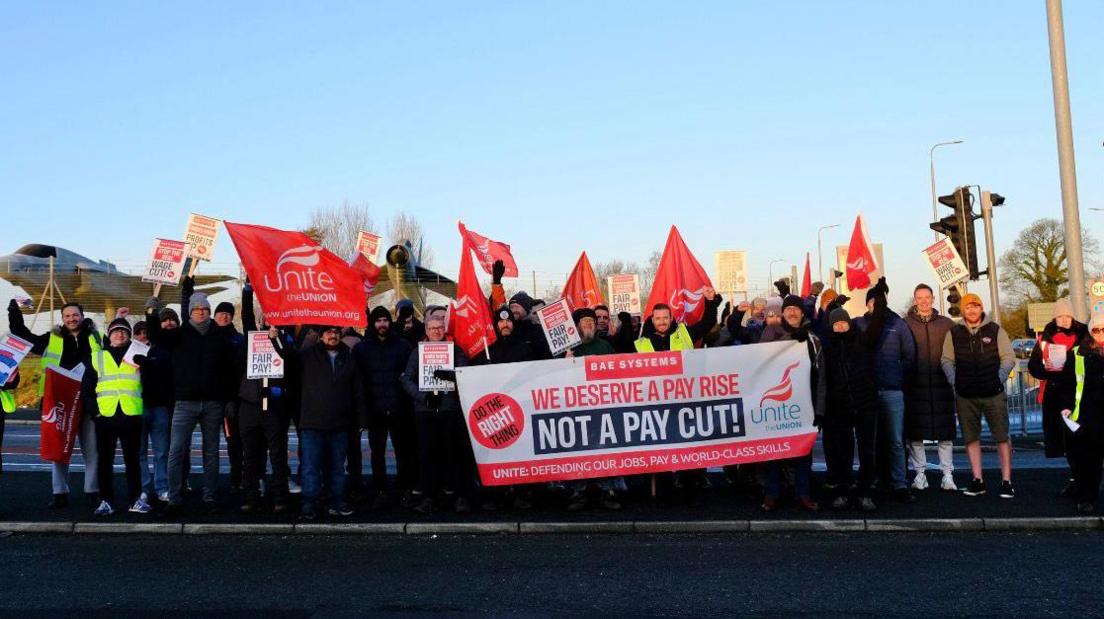
While BAE celebrates its financial achievements, it grapples with industrial action at its Lancashire factories. The Unite union, representing 5,000 workers, has criticized the company's profits as "obscene" and demands a 5.2% pay increase for its members. BAE has offered a 3.7% raise, arguing that it ensures market-leading pay while maintaining competitiveness. The strikes, which began on 2 February, are expected to continue until at least 20 February.
Call for Clarity on Defence Spending
In light of these developments, Woodburn has urged the UK government to expedite the publication of the Defence Investment Plan (DIP), which has been delayed. He emphasized the need for clarity to enable industry planning and investment. "Earlier clarity means that industry can make plans and invest," Woodburn stated, stressing the importance of a clear government signal to meet rising defence demands.
Geopolitical Tensions and Industry Outlook
The conflict in Ukraine has accelerated defence technology advancements, with BAE securing significant contracts, including a £4.6bn deal with Turkey for Typhoon fighter jets. As geopolitical tensions persist, BAE anticipates further profit growth of around 10% in 2026, reinforcing its role as a key player in the global defence sector.
WHAT THIS MIGHT MEAN
The ongoing worker strikes at BAE Systems could potentially disrupt production schedules, impacting the company's ability to meet its record order backlog. If the pay dispute remains unresolved, it may lead to prolonged industrial action, affecting both employee morale and operational efficiency. On the political front, the delayed Defence Investment Plan poses challenges for the defence industry, which requires clear government directives to align with national security priorities. As geopolitical tensions continue to rise, particularly in Eastern Europe, the demand for advanced military technologies is expected to grow, positioning BAE Systems for further expansion. However, the company must balance this growth with fair labor practices to maintain its workforce's support and ensure sustainable operations.
Images from the Web
Related Articles
Middle East Conflict Drives UK Energy Prices to New Highs

Brewdog's Tumultuous Sale: Job Losses and Investor Backlash
Russian LNG Tanker Sinks in Mediterranean Amid Accusations of Ukrainian Drone Attack

UK-Iran Tensions: Starmer Defends Cautious Approach Amid Trump Criticism
Spain's Sánchez Stands Firm Against Trump's Trade Threat Over Iran Stance

Government Announces £4 Billion Overhaul of SEND Support in England
BAE Systems Reports Record Sales Amid Worker Strikes and Calls for Defence Spending Clarity
In This Article
 Daniel Rivera| Published
 HIGHLIGHTS
- BAE Systems reported record sales of £30.7bn for 2025, with profits rising to £2.6bn, amid global increases in defence spending.
- Workers at BAE's Lancashire sites are striking over pay, demanding a 5.2% raise, while the company offers 3.7%.
- The Unite union criticizes BAE's profits as "obscene" and insists on fair compensation for its members.
- CEO Charles Woodburn urges the UK government to publish the delayed Defence Investment Plan to facilitate industry planning.
- BAE's order backlog reached a record £83.6bn, driven by heightened demand due to geopolitical tensions, notably the conflict in Ukraine.
BAE Systems, Europe's largest defence contractor, has announced record financial results for 2025, with sales reaching £30.7bn, a 10% increase from the previous year. The company's profits before tax rose to £2.6bn, reflecting a surge in global defence spending amid escalating geopolitical tensions. Despite these financial successes, BAE faces ongoing worker strikes at its Lancashire sites over pay disputes.
Record Financial Performance
The defence giant's impressive financial performance is attributed to increased demand for military equipment, driven by global security challenges, including the ongoing conflict in Ukraine. BAE's order backlog has soared to a record £83.6bn, underscoring the heightened demand from NATO allies. CEO Charles Woodburn highlighted the company's strategic position to provide advanced defence systems and technologies, essential for national security.
Worker Strikes Over Pay Disputes
While BAE celebrates its financial achievements, it grapples with industrial action at its Lancashire factories. The Unite union, representing 5,000 workers, has criticized the company's profits as "obscene" and demands a 5.2% pay increase for its members. BAE has offered a 3.7% raise, arguing that it ensures market-leading pay while maintaining competitiveness. The strikes, which began on 2 February, are expected to continue until at least 20 February.
Call for Clarity on Defence Spending
In light of these developments, Woodburn has urged the UK government to expedite the publication of the Defence Investment Plan (DIP), which has been delayed. He emphasized the need for clarity to enable industry planning and investment. "Earlier clarity means that industry can make plans and invest," Woodburn stated, stressing the importance of a clear government signal to meet rising defence demands.
Geopolitical Tensions and Industry Outlook
The conflict in Ukraine has accelerated defence technology advancements, with BAE securing significant contracts, including a £4.6bn deal with Turkey for Typhoon fighter jets. As geopolitical tensions persist, BAE anticipates further profit growth of around 10% in 2026, reinforcing its role as a key player in the global defence sector.
WHAT THIS MIGHT MEAN
The ongoing worker strikes at BAE Systems could potentially disrupt production schedules, impacting the company's ability to meet its record order backlog. If the pay dispute remains unresolved, it may lead to prolonged industrial action, affecting both employee morale and operational efficiency. On the political front, the delayed Defence Investment Plan poses challenges for the defence industry, which requires clear government directives to align with national security priorities. As geopolitical tensions continue to rise, particularly in Eastern Europe, the demand for advanced military technologies is expected to grow, positioning BAE Systems for further expansion. However, the company must balance this growth with fair labor practices to maintain its workforce's support and ensure sustainable operations.
Images from the Web
Related Articles
Middle East Conflict Drives UK Energy Prices to New Highs
Brewdog's Tumultuous Sale: Job Losses and Investor Backlash
Russian LNG Tanker Sinks in Mediterranean Amid Accusations of Ukrainian Drone Attack
UK-Iran Tensions: Starmer Defends Cautious Approach Amid Trump Criticism
Spain's Sánchez Stands Firm Against Trump's Trade Threat Over Iran Stance
Government Announces £4 Billion Overhaul of SEND Support in England