
Bayeux Tapestry to be Insured for £800m for British Museum Exhibition
In This Article
HIGHLIGHTS
- The Bayeux Tapestry will be insured for an estimated £800m under the UK Government Indemnity Scheme for its exhibition at the British Museum.
- The tapestry, depicting the 1066 Battle of Hastings, will be displayed in London from September 2026 to July 2027.
- Concerns have been raised by French experts about the tapestry's delicate condition and potential damage during transport.
- The loan is part of a cultural exchange, with the UK lending the Sutton Hoo artefacts and Lewis Chessmen to France.
- The Bayeux Museum in Normandy will undergo renovations, prompting the tapestry's temporary relocation.
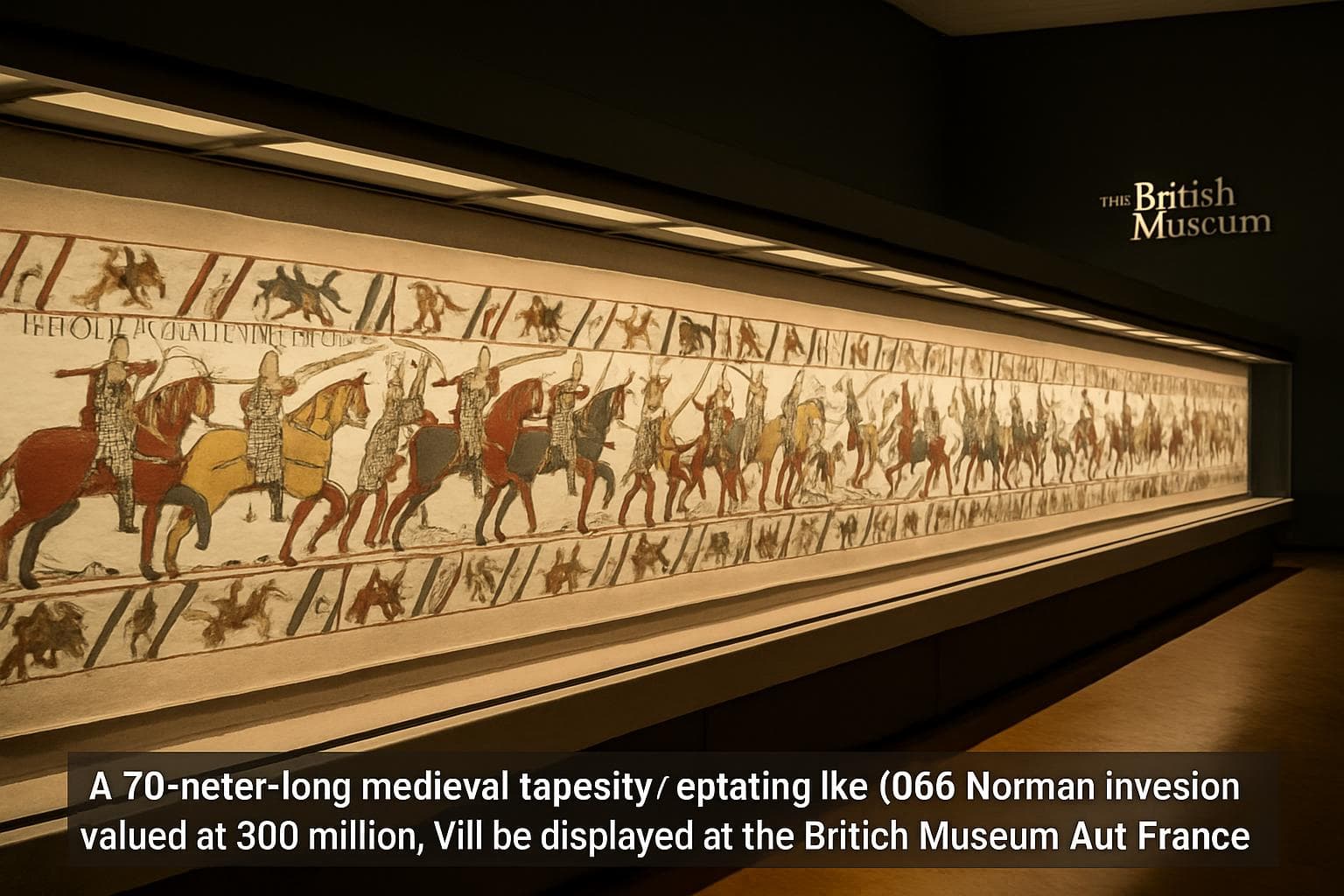
The historic Bayeux Tapestry, a masterpiece of medieval embroidery depicting the 1066 Norman invasion of England, is set to be insured for an estimated £800 million as it travels to the British Museum for a landmark exhibition. This significant cultural loan, facilitated by the UK Government Indemnity Scheme, will see the 70-meter-long tapestry displayed in London from September 2026 until July 2027, while its home, the Bayeux Museum in Normandy, undergoes renovations.
Cultural Heritage Loan and Insurance
The UK Treasury has provisionally approved the valuation for the tapestry's insurance, which will cover potential damage or loss during its transit from France and while on display. The Government Indemnity Scheme, established in 1980, allows museums to borrow high-value works without incurring prohibitive commercial insurance costs. A Treasury spokesperson emphasized the scheme's role in enabling public access to significant cultural objects, noting its annual savings of approximately £81 million for UK museums and galleries.
Concerns Over Tapestry's Condition
Despite the excitement surrounding the tapestry's return to the UK after more than 900 years, some French art and conservation experts have voiced concerns about its fragile state. They argue that the nearly 1,000-year-old artefact may suffer irreparable damage during transportation. However, French officials have dismissed these concerns, maintaining that the tapestry is fit for the journey.
Anglo-French Cultural Exchange
The loan of the Bayeux Tapestry is part of a broader cultural exchange agreement between the UK and France, announced by UK Prime Minister Keir Starmer and French President Emmanuel Macron. In return, the British Museum will lend significant artefacts, including the Sutton Hoo collection and the Lewis Chessmen, to France. This exchange underscores the enduring cultural ties between the two nations, rooted in a shared and often contested history.
WHAT THIS MIGHT MEAN
The exhibition of the Bayeux Tapestry at the British Museum is poised to be a major cultural event, drawing visitors eager to view this iconic piece of history. However, the concerns raised by French experts highlight the delicate balance between cultural exchange and preservation. Should any damage occur, it could strain Anglo-French relations and prompt a reevaluation of future loans of similarly fragile artefacts.
As the Bayeux Museum undergoes renovations, the temporary relocation of the tapestry offers an opportunity for both countries to showcase their commitment to preserving and sharing cultural heritage. The success of this exhibition could pave the way for further collaborations, enhancing mutual understanding and appreciation of shared history.
Related Articles

Trump Raises Import Tariffs to 15% After Supreme Court Setback

UK Denies US Use of Military Bases for Potential Iran Strikes Amid Chagos Islands Dispute

Antonia Romeo Appointed as First Female UK Cabinet Secretary Amid Controversy

Breakthrough Drug Offers Hope for Children with Severe Epilepsy

UK Faces Dilemmas Amid Iran Conflict and China Spying Allegations
Labour MP's Husband Arrested in UK-China Espionage Probe
Bayeux Tapestry to be Insured for £800m for British Museum Exhibition
In This Article
 Aya Nakamura| Published
 HIGHLIGHTS
- The Bayeux Tapestry will be insured for an estimated £800m under the UK Government Indemnity Scheme for its exhibition at the British Museum.
- The tapestry, depicting the 1066 Battle of Hastings, will be displayed in London from September 2026 to July 2027.
- Concerns have been raised by French experts about the tapestry's delicate condition and potential damage during transport.
- The loan is part of a cultural exchange, with the UK lending the Sutton Hoo artefacts and Lewis Chessmen to France.
- The Bayeux Museum in Normandy will undergo renovations, prompting the tapestry's temporary relocation.
The historic Bayeux Tapestry, a masterpiece of medieval embroidery depicting the 1066 Norman invasion of England, is set to be insured for an estimated £800 million as it travels to the British Museum for a landmark exhibition. This significant cultural loan, facilitated by the UK Government Indemnity Scheme, will see the 70-meter-long tapestry displayed in London from September 2026 until July 2027, while its home, the Bayeux Museum in Normandy, undergoes renovations.
Cultural Heritage Loan and Insurance
The UK Treasury has provisionally approved the valuation for the tapestry's insurance, which will cover potential damage or loss during its transit from France and while on display. The Government Indemnity Scheme, established in 1980, allows museums to borrow high-value works without incurring prohibitive commercial insurance costs. A Treasury spokesperson emphasized the scheme's role in enabling public access to significant cultural objects, noting its annual savings of approximately £81 million for UK museums and galleries.
Concerns Over Tapestry's Condition
Despite the excitement surrounding the tapestry's return to the UK after more than 900 years, some French art and conservation experts have voiced concerns about its fragile state. They argue that the nearly 1,000-year-old artefact may suffer irreparable damage during transportation. However, French officials have dismissed these concerns, maintaining that the tapestry is fit for the journey.
Anglo-French Cultural Exchange
The loan of the Bayeux Tapestry is part of a broader cultural exchange agreement between the UK and France, announced by UK Prime Minister Keir Starmer and French President Emmanuel Macron. In return, the British Museum will lend significant artefacts, including the Sutton Hoo collection and the Lewis Chessmen, to France. This exchange underscores the enduring cultural ties between the two nations, rooted in a shared and often contested history.
WHAT THIS MIGHT MEAN
The exhibition of the Bayeux Tapestry at the British Museum is poised to be a major cultural event, drawing visitors eager to view this iconic piece of history. However, the concerns raised by French experts highlight the delicate balance between cultural exchange and preservation. Should any damage occur, it could strain Anglo-French relations and prompt a reevaluation of future loans of similarly fragile artefacts.
As the Bayeux Museum undergoes renovations, the temporary relocation of the tapestry offers an opportunity for both countries to showcase their commitment to preserving and sharing cultural heritage. The success of this exhibition could pave the way for further collaborations, enhancing mutual understanding and appreciation of shared history.
Related Articles
Trump Raises Import Tariffs to 15% After Supreme Court Setback
UK Denies US Use of Military Bases for Potential Iran Strikes Amid Chagos Islands Dispute
Antonia Romeo Appointed as First Female UK Cabinet Secretary Amid Controversy
Breakthrough Drug Offers Hope for Children with Severe Epilepsy
UK Faces Dilemmas Amid Iran Conflict and China Spying Allegations
Labour MP's Husband Arrested in UK-China Espionage Probe