
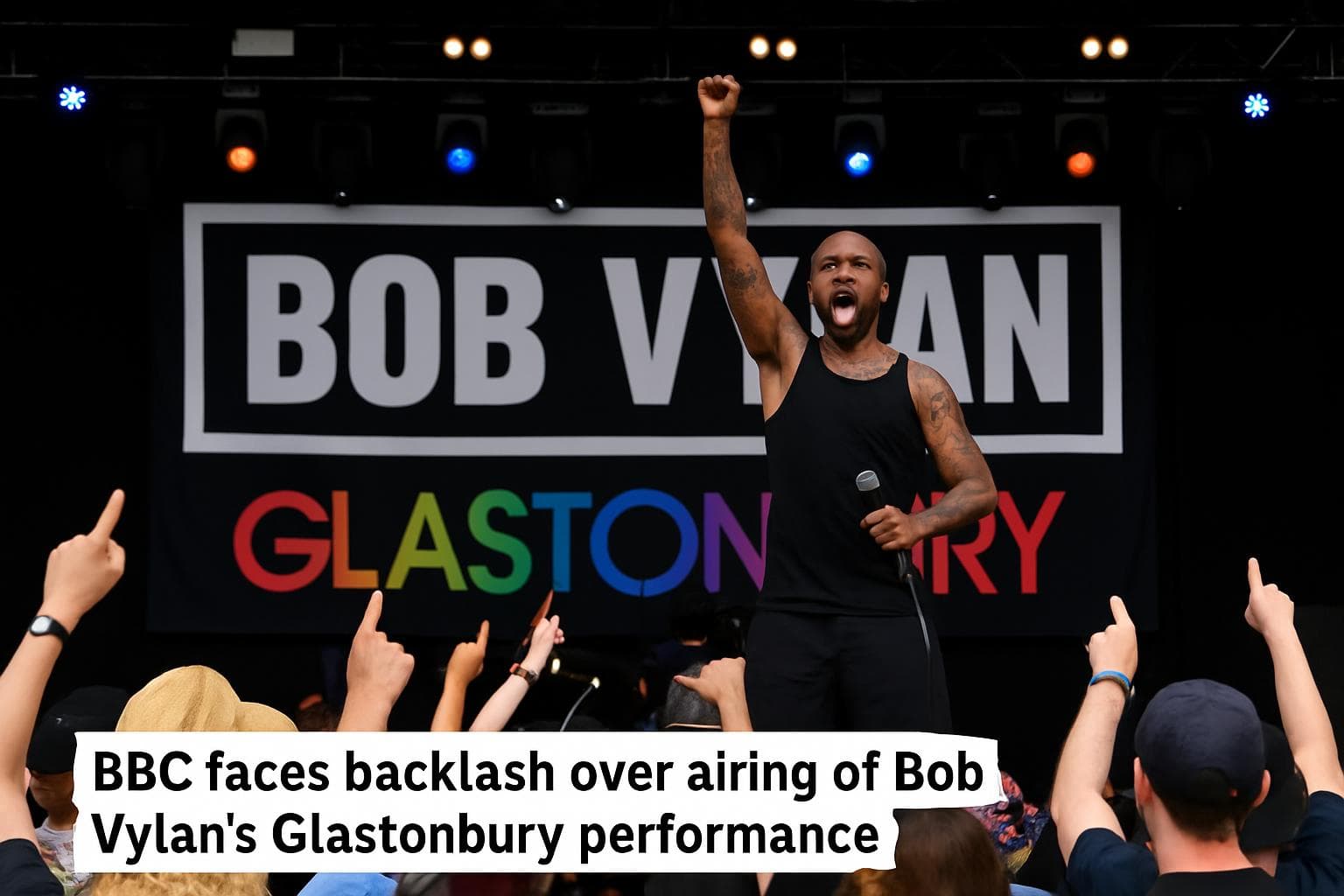
BBC Faces Backlash Over Bob Vylan's Controversial Glastonbury Performance
In This Article
HIGHLIGHTS
- The BBC faced criticism for broadcasting Bob Vylan's Glastonbury performance, which included chants deemed antisemitic.
- Ofcom and the UK government have questioned the BBC's decision to air the performance live, prompting a review of their live event guidelines.
- Avon and Somerset Police have launched a criminal investigation into the performances of Bob Vylan and Kneecap at the festival.
- The US has revoked Bob Vylan's visas, citing the band's glorification of violence and hatred.
- The controversy has sparked debate over freedom of expression and media responsibility in live broadcasts.
The BBC has come under fire for its live broadcast of Bob Vylan's performance at the Glastonbury Festival, which included chants that have been widely criticized as antisemitic. The punk-rap duo's set, which aired on Saturday, featured lead singer Bobby Vylan leading the crowd in chants of "death, death to the IDF [Israel Defense Forces]" and "from the river to sea, Palestine will be free." These comments have sparked a significant backlash, with the BBC admitting that it should have cut the live stream.
BBC Under Scrutiny
The broadcast regulator Ofcom has expressed concern over the BBC's decision to air the performance, stating that the corporation "clearly has questions to answer." The UK government has also questioned the BBC's editorial judgment, with Culture Secretary Lisa Nandy calling the broadcast "appalling and unacceptable." The BBC has since announced a review of its live event guidelines to prevent similar incidents in the future.
Criminal Investigation Launched
Avon and Somerset Police have initiated a criminal investigation into the performances of Bob Vylan and the Irish rap group Kneecap, who also performed at Glastonbury. The police are examining whether any comments made during the sets constitute a public order offense. A spokesperson for the police stated, "There is absolutely no place in society for hate."
International Repercussions
The controversy has extended beyond the UK, with the US revoking Bob Vylan's visas. US Deputy Secretary of State Christopher Landau stated, "Foreigners who glorify violence and hatred are not welcome visitors to our country." The band, who were set to tour the US later this year, have also been dropped by their talent agency.
Debate Over Freedom of Expression
The incident has ignited a broader debate about freedom of expression and the responsibilities of media outlets during live broadcasts. While some argue that the BBC should have exercised greater editorial control, others, like Herefordshire MP Ellie Chowns, suggest that the focus on the controversy distracts from more pressing issues, such as the ongoing violence in Gaza.
WHAT THIS MIGHT MEAN
Moving forward, the BBC's review of its live event guidelines could lead to stricter controls on what is broadcast, potentially impacting how live performances are covered in the future. The criminal investigation by Avon and Somerset Police may result in legal consequences for the artists involved, depending on the findings. Internationally, the revocation of Bob Vylan's US visas highlights the potential diplomatic implications of such controversies, particularly in how countries manage entry for foreign artists. As the debate over freedom of expression continues, media organizations may need to balance editorial freedom with the potential for incitement and public backlash.
Related Articles
UK Reinforces Military Presence in Cyprus Amid Middle East Tensions
UK-Iran Tensions: Starmer Defends Cautious Approach Amid Trump Criticism
Diplomatic Tensions Rise as Trump Criticizes Starmer's Iran Policy
Prince Andrew's Ties to Epstein Under Scrutiny Amid Calls for Inquiry
Government Criticized for Mishandling Maccabi Tel Aviv Fan Ban
Prince Andrew's Arrest Intensifies Scrutiny on Royal Succession and Prince William's Future Role
BBC Faces Backlash Over Bob Vylan's Controversial Glastonbury Performance
In This Article
 Ethan Brooks| Published
 HIGHLIGHTS
- The BBC faced criticism for broadcasting Bob Vylan's Glastonbury performance, which included chants deemed antisemitic.
- Ofcom and the UK government have questioned the BBC's decision to air the performance live, prompting a review of their live event guidelines.
- Avon and Somerset Police have launched a criminal investigation into the performances of Bob Vylan and Kneecap at the festival.
- The US has revoked Bob Vylan's visas, citing the band's glorification of violence and hatred.
- The controversy has sparked debate over freedom of expression and media responsibility in live broadcasts.
The BBC has come under fire for its live broadcast of Bob Vylan's performance at the Glastonbury Festival, which included chants that have been widely criticized as antisemitic. The punk-rap duo's set, which aired on Saturday, featured lead singer Bobby Vylan leading the crowd in chants of "death, death to the IDF [Israel Defense Forces]" and "from the river to sea, Palestine will be free." These comments have sparked a significant backlash, with the BBC admitting that it should have cut the live stream.
BBC Under Scrutiny
The broadcast regulator Ofcom has expressed concern over the BBC's decision to air the performance, stating that the corporation "clearly has questions to answer." The UK government has also questioned the BBC's editorial judgment, with Culture Secretary Lisa Nandy calling the broadcast "appalling and unacceptable." The BBC has since announced a review of its live event guidelines to prevent similar incidents in the future.
Criminal Investigation Launched
Avon and Somerset Police have initiated a criminal investigation into the performances of Bob Vylan and the Irish rap group Kneecap, who also performed at Glastonbury. The police are examining whether any comments made during the sets constitute a public order offense. A spokesperson for the police stated, "There is absolutely no place in society for hate."
International Repercussions
The controversy has extended beyond the UK, with the US revoking Bob Vylan's visas. US Deputy Secretary of State Christopher Landau stated, "Foreigners who glorify violence and hatred are not welcome visitors to our country." The band, who were set to tour the US later this year, have also been dropped by their talent agency.
Debate Over Freedom of Expression
The incident has ignited a broader debate about freedom of expression and the responsibilities of media outlets during live broadcasts. While some argue that the BBC should have exercised greater editorial control, others, like Herefordshire MP Ellie Chowns, suggest that the focus on the controversy distracts from more pressing issues, such as the ongoing violence in Gaza.
WHAT THIS MIGHT MEAN
Moving forward, the BBC's review of its live event guidelines could lead to stricter controls on what is broadcast, potentially impacting how live performances are covered in the future. The criminal investigation by Avon and Somerset Police may result in legal consequences for the artists involved, depending on the findings. Internationally, the revocation of Bob Vylan's US visas highlights the potential diplomatic implications of such controversies, particularly in how countries manage entry for foreign artists. As the debate over freedom of expression continues, media organizations may need to balance editorial freedom with the potential for incitement and public backlash.
Related Articles
UK Reinforces Military Presence in Cyprus Amid Middle East Tensions
UK-Iran Tensions: Starmer Defends Cautious Approach Amid Trump Criticism
Diplomatic Tensions Rise as Trump Criticizes Starmer's Iran Policy
Prince Andrew's Ties to Epstein Under Scrutiny Amid Calls for Inquiry
Government Criticized for Mishandling Maccabi Tel Aviv Fan Ban
Prince Andrew's Arrest Intensifies Scrutiny on Royal Succession and Prince William's Future Role