
BP Faces Profit Decline and Strategic Shift Amidst Oil Price Drop

In This Article
HIGHLIGHTS
- BP's annual profits fell to $7.5 billion in 2025, a decrease from $8.9 billion in 2024, due to a 20% drop in oil prices.
- The company suspended its share buyback program to strengthen its balance sheet, leading to a 6% drop in its share price.
- Meg O'Neill will become BP's new CEO in April, marking the first time a woman will lead a major global oil firm.
- BP's shift back to fossil fuels includes commissioning seven new oil and gas projects, despite previous commitments to renewable energy investments.
- The company faces pressure from shareholders to improve performance and adapt to declining fossil fuel demand.
BP has reported a significant decline in its annual profits for 2025, with figures dropping to $7.5 billion from $8.9 billion the previous year. This downturn is attributed to a 20% fall in global oil prices, which have impacted the oil giant's financial performance. In response, BP has decided to suspend its share buyback program, a move aimed at bolstering its balance sheet but which resulted in a 6% decrease in its share price.
Leadership Transition and Strategic Realignment
The company is on the brink of a leadership transition, with Meg O'Neill set to take over as CEO in April. O'Neill, formerly of Woodside Energy, will be the first woman to lead a major global oil company. Her appointment comes at a critical time as BP seeks to redefine its strategic vision amidst shareholder pressure and market challenges.
Return to Fossil Fuels
BP's recent strategic pivot involves a renewed focus on fossil fuel production, commissioning seven new oil and gas projects last year. This shift follows a period where the company had aimed to increase investments in renewable energy, a strategy that was reversed due to financial pressures and a $3.1 billion write-down in its renewables business.
Shareholder Expectations and Market Dynamics
Interim CEO Carol Howle emphasized BP's commitment to improving cashflows, shareholder returns, and cost efficiency. "We are in action and we can and will do better for our shareholders," Howle stated. Despite these assurances, BP continues to face scrutiny from activist shareholders advocating for a long-term strategy that addresses the anticipated decline in fossil fuel demand.
WHAT THIS MIGHT MEAN
As BP navigates this challenging period, the company's strategic decisions will be closely watched by investors and industry analysts. The appointment of Meg O'Neill as CEO could signal a new direction, potentially balancing traditional fossil fuel interests with sustainable energy initiatives. However, BP's ability to adapt to the evolving energy landscape will be crucial, especially as global demand for fossil fuels is expected to decline in the coming decades. The company's future performance will likely hinge on its capacity to innovate and respond to both market pressures and environmental imperatives.
Related Articles
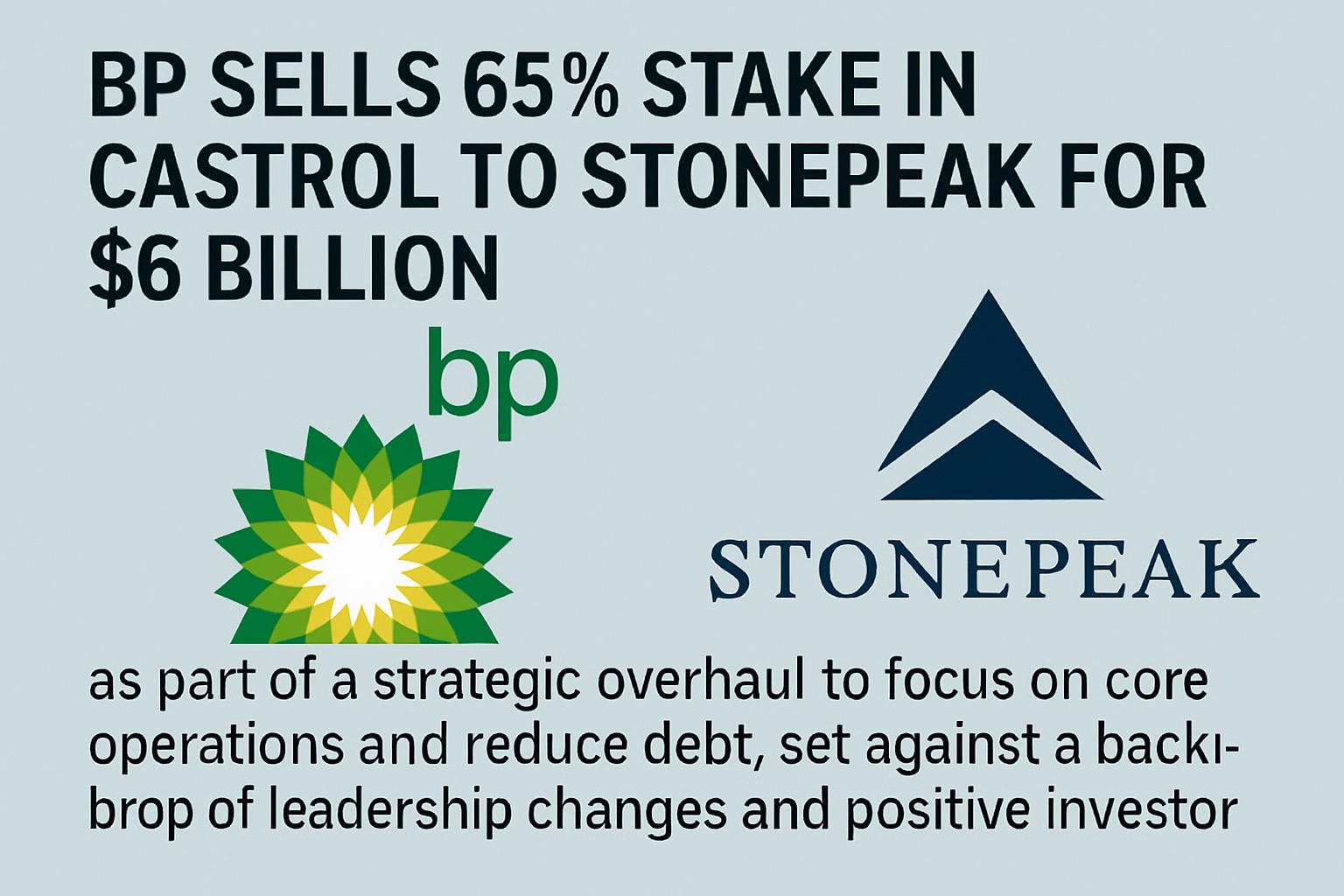
BP Sells Majority Stake in Castrol to Stonepeak for $6 Billion
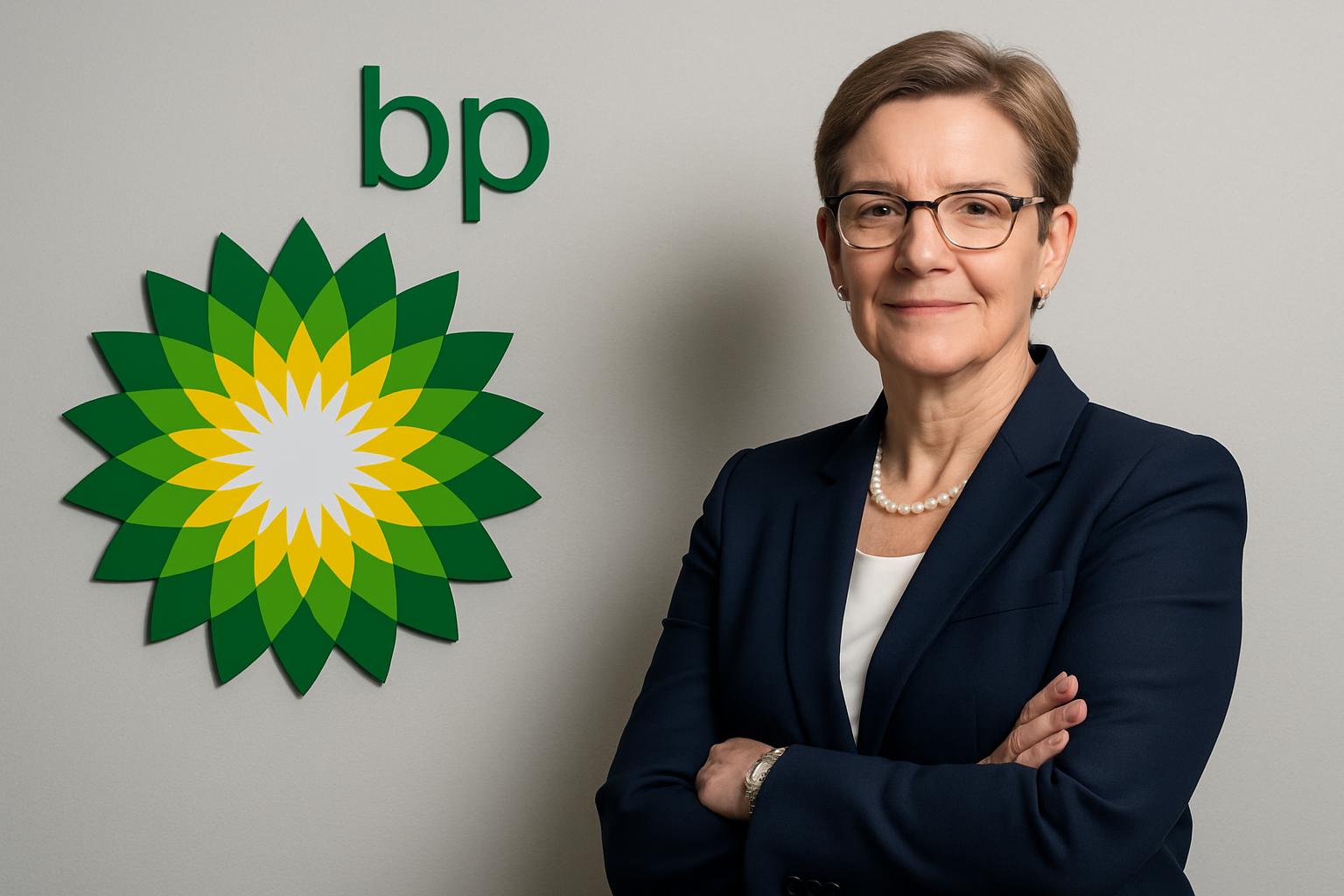
BP Appoints Meg O'Neill as CEO Amid Strategic Shift to Fossil Fuels

Nestlé CEO Dismissed Over Undisclosed Relationship, Philipp Navratil Named Successor
Nestlé CEO Dismissed Over Undisclosed Romantic Relationship

Nestlé CEO Dismissed Over Undisclosed Relationship, Philipp Navratil Appointed Successor

Nestlé CEO Dismissed Over Undisclosed Relationship, Philipp Navratil Steps In
BP Faces Profit Decline and Strategic Shift Amidst Oil Price Drop
In This Article
 Daniel Rivera| Published
 HIGHLIGHTS
- BP's annual profits fell to $7.5 billion in 2025, a decrease from $8.9 billion in 2024, due to a 20% drop in oil prices.
- The company suspended its share buyback program to strengthen its balance sheet, leading to a 6% drop in its share price.
- Meg O'Neill will become BP's new CEO in April, marking the first time a woman will lead a major global oil firm.
- BP's shift back to fossil fuels includes commissioning seven new oil and gas projects, despite previous commitments to renewable energy investments.
- The company faces pressure from shareholders to improve performance and adapt to declining fossil fuel demand.
BP has reported a significant decline in its annual profits for 2025, with figures dropping to $7.5 billion from $8.9 billion the previous year. This downturn is attributed to a 20% fall in global oil prices, which have impacted the oil giant's financial performance. In response, BP has decided to suspend its share buyback program, a move aimed at bolstering its balance sheet but which resulted in a 6% decrease in its share price.
Leadership Transition and Strategic Realignment
The company is on the brink of a leadership transition, with Meg O'Neill set to take over as CEO in April. O'Neill, formerly of Woodside Energy, will be the first woman to lead a major global oil company. Her appointment comes at a critical time as BP seeks to redefine its strategic vision amidst shareholder pressure and market challenges.
Return to Fossil Fuels
BP's recent strategic pivot involves a renewed focus on fossil fuel production, commissioning seven new oil and gas projects last year. This shift follows a period where the company had aimed to increase investments in renewable energy, a strategy that was reversed due to financial pressures and a $3.1 billion write-down in its renewables business.
Shareholder Expectations and Market Dynamics
Interim CEO Carol Howle emphasized BP's commitment to improving cashflows, shareholder returns, and cost efficiency. "We are in action and we can and will do better for our shareholders," Howle stated. Despite these assurances, BP continues to face scrutiny from activist shareholders advocating for a long-term strategy that addresses the anticipated decline in fossil fuel demand.
WHAT THIS MIGHT MEAN
As BP navigates this challenging period, the company's strategic decisions will be closely watched by investors and industry analysts. The appointment of Meg O'Neill as CEO could signal a new direction, potentially balancing traditional fossil fuel interests with sustainable energy initiatives. However, BP's ability to adapt to the evolving energy landscape will be crucial, especially as global demand for fossil fuels is expected to decline in the coming decades. The company's future performance will likely hinge on its capacity to innovate and respond to both market pressures and environmental imperatives.
Related Articles
BP Sells Majority Stake in Castrol to Stonepeak for $6 Billion
BP Appoints Meg O'Neill as CEO Amid Strategic Shift to Fossil Fuels
Nestlé CEO Dismissed Over Undisclosed Relationship, Philipp Navratil Named Successor
Nestlé CEO Dismissed Over Undisclosed Romantic Relationship
Nestlé CEO Dismissed Over Undisclosed Relationship, Philipp Navratil Appointed Successor
Nestlé CEO Dismissed Over Undisclosed Relationship, Philipp Navratil Steps In