
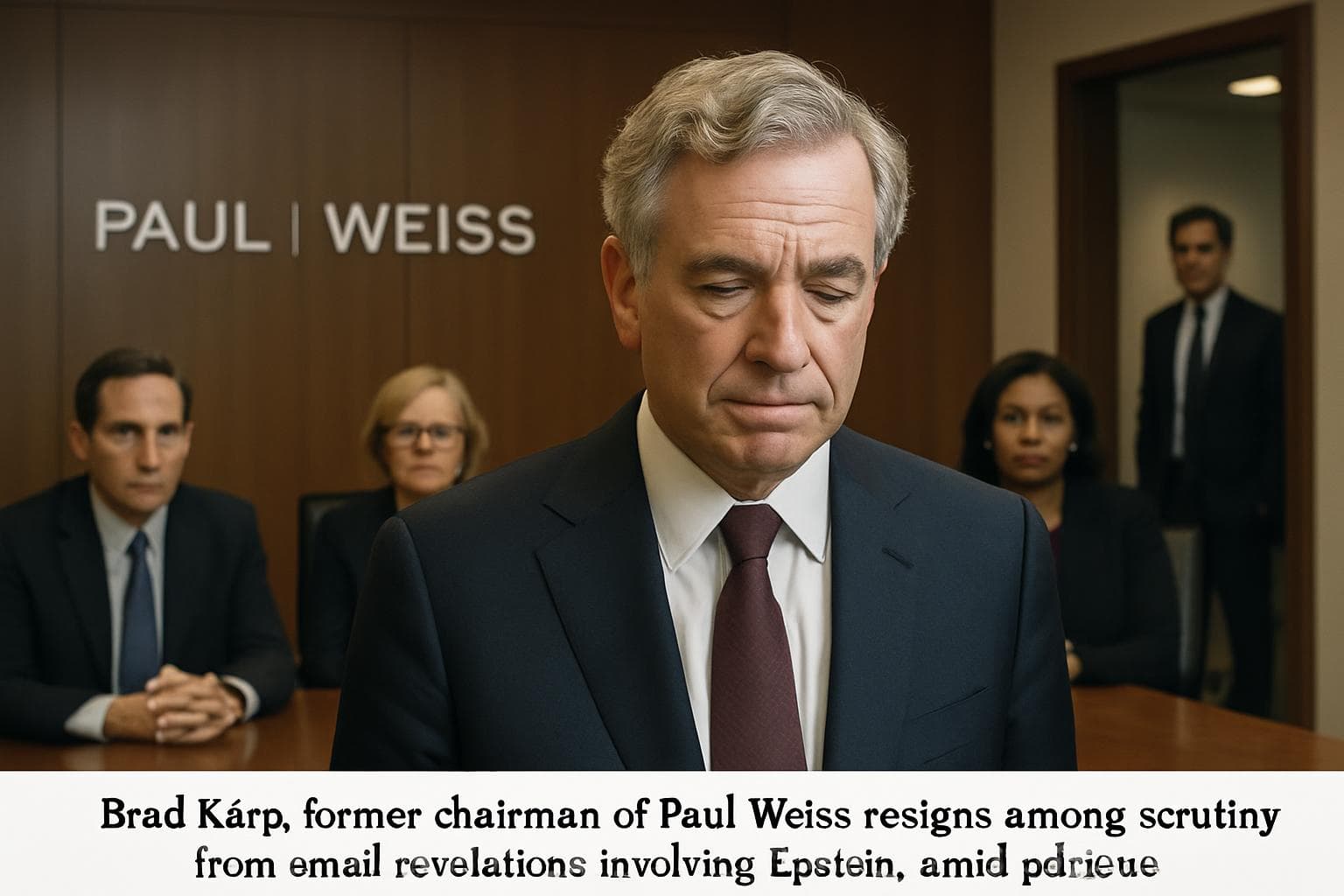
Brad Karp Steps Down from Paul Weiss Amid Epstein Email Revelations
In This Article
HIGHLIGHTS
- Brad Karp resigned as chairman of Paul Weiss following the release of emails with Jeffrey Epstein.
- The emails, part of DOJ's Epstein files, show Karp discussing Epstein's plea deal and seeking favors.
- Karp will remain at Paul Weiss, focusing on client services, while Scott Barshay takes over as chairman.
- Paul Weiss clarified that Karp did not witness or participate in any misconduct with Epstein.
- Karp's resignation follows a controversial legal services agreement with the Trump administration.
Brad Karp, the longtime chairman of the influential Wall Street law firm Paul Weiss, has resigned from his leadership position following the release of emails revealing his communications with the late Jeffrey Epstein. The emails, disclosed by the U.S. Department of Justice, have drawn scrutiny due to their content, which includes discussions about Epstein's plea deal and personal favors.
Resignation and Transition
Announcing his resignation on Wednesday, Karp cited recent media coverage as a distraction not in the firm's best interest. Despite stepping down, Karp will continue to serve Paul Weiss by focusing on client services. Scott Barshay, previously the chair of the firm's corporate practice, has been appointed as the new chairman. Barshay expressed confidence in the firm's continued success and acknowledged Karp's significant contributions over his four-decade tenure.
Email Revelations and Legal Context
The DOJ's release of millions of Epstein-related documents included numerous email exchanges between Karp and Epstein. These emails reportedly show Karp discussing Epstein's pre-existing plea deal and seeking assistance for his son in securing a role in a Woody Allen film production. Paul Weiss has emphasized that Karp did not witness or engage in any misconduct, stating that his interactions with Epstein were limited to a few social occasions and email exchanges, all of which Karp regrets.
Background and Controversies
Karp's resignation comes in the wake of a controversial agreement with the Trump administration, where Paul Weiss pledged $40 million in free legal services in exchange for the rescission of an executive order that restricted the firm's government access. This deal, along with Karp's past fundraising efforts for the Democratic Party, has placed him at the center of political and legal debates.
WHAT THIS MIGHT MEAN
The resignation of Brad Karp marks a significant shift in leadership at Paul Weiss, a firm renowned for its representation of major financial institutions. As Scott Barshay steps into the role of chairman, the firm may face challenges in maintaining its reputation amidst ongoing scrutiny of its past dealings. The release of the Epstein emails could lead to further investigations, potentially impacting other high-profile individuals linked to Epstein.
Legally, the implications of the DOJ's document release could extend beyond Karp, prompting a reevaluation of past plea deals and legal agreements associated with Epstein. Additionally, the firm's previous agreement with the Trump administration may continue to attract attention, especially in light of ongoing discussions about the intersection of legal services and political influence.
Related Articles

Global Counsel Enters Administration Amid Epstein Link Fallout

Global Counsel Faces Collapse Amidst Epstein Scandal Fallout

Tech Giants Pledge to Cover AI Data Center Energy Costs Amid Rising Electricity Concerns
Congress Subpoenas Attorney General Bondi in Epstein Investigation

James Talarico Secures Democratic Nomination in Texas Senate Race Amidst Republican Runoff

Prince Andrew's Ties to Epstein Under Scrutiny Amid Calls for Inquiry
Brad Karp Steps Down from Paul Weiss Amid Epstein Email Revelations
In This Article
 Daniel Rivera| Published
 HIGHLIGHTS
- Brad Karp resigned as chairman of Paul Weiss following the release of emails with Jeffrey Epstein.
- The emails, part of DOJ's Epstein files, show Karp discussing Epstein's plea deal and seeking favors.
- Karp will remain at Paul Weiss, focusing on client services, while Scott Barshay takes over as chairman.
- Paul Weiss clarified that Karp did not witness or participate in any misconduct with Epstein.
- Karp's resignation follows a controversial legal services agreement with the Trump administration.
Brad Karp, the longtime chairman of the influential Wall Street law firm Paul Weiss, has resigned from his leadership position following the release of emails revealing his communications with the late Jeffrey Epstein. The emails, disclosed by the U.S. Department of Justice, have drawn scrutiny due to their content, which includes discussions about Epstein's plea deal and personal favors.
Resignation and Transition
Announcing his resignation on Wednesday, Karp cited recent media coverage as a distraction not in the firm's best interest. Despite stepping down, Karp will continue to serve Paul Weiss by focusing on client services. Scott Barshay, previously the chair of the firm's corporate practice, has been appointed as the new chairman. Barshay expressed confidence in the firm's continued success and acknowledged Karp's significant contributions over his four-decade tenure.
Email Revelations and Legal Context
The DOJ's release of millions of Epstein-related documents included numerous email exchanges between Karp and Epstein. These emails reportedly show Karp discussing Epstein's pre-existing plea deal and seeking assistance for his son in securing a role in a Woody Allen film production. Paul Weiss has emphasized that Karp did not witness or engage in any misconduct, stating that his interactions with Epstein were limited to a few social occasions and email exchanges, all of which Karp regrets.
Background and Controversies
Karp's resignation comes in the wake of a controversial agreement with the Trump administration, where Paul Weiss pledged $40 million in free legal services in exchange for the rescission of an executive order that restricted the firm's government access. This deal, along with Karp's past fundraising efforts for the Democratic Party, has placed him at the center of political and legal debates.
WHAT THIS MIGHT MEAN
The resignation of Brad Karp marks a significant shift in leadership at Paul Weiss, a firm renowned for its representation of major financial institutions. As Scott Barshay steps into the role of chairman, the firm may face challenges in maintaining its reputation amidst ongoing scrutiny of its past dealings. The release of the Epstein emails could lead to further investigations, potentially impacting other high-profile individuals linked to Epstein.
Legally, the implications of the DOJ's document release could extend beyond Karp, prompting a reevaluation of past plea deals and legal agreements associated with Epstein. Additionally, the firm's previous agreement with the Trump administration may continue to attract attention, especially in light of ongoing discussions about the intersection of legal services and political influence.
Related Articles
Global Counsel Enters Administration Amid Epstein Link Fallout
Global Counsel Faces Collapse Amidst Epstein Scandal Fallout
Tech Giants Pledge to Cover AI Data Center Energy Costs Amid Rising Electricity Concerns
Congress Subpoenas Attorney General Bondi in Epstein Investigation
James Talarico Secures Democratic Nomination in Texas Senate Race Amidst Republican Runoff
Prince Andrew's Ties to Epstein Under Scrutiny Amid Calls for Inquiry