
Canadian Tourist's Death on K'gari Island Sparks Dingo Safety Concerns
In This Article
HIGHLIGHTS
- A 19-year-old Canadian woman was found dead on K'gari Island, surrounded by dingoes, prompting a police investigation.
- The incident occurred near the Maheno shipwreck, a popular tourist site, early on Monday morning.
- Police are awaiting a post-mortem to determine if the cause of death was drowning or a dingo attack.
- Campsites have been closed and patrols increased as authorities caution against approaching dingoes.
- Experts highlight the rising risk of dingo-human interactions due to increased tourism and risky behavior.
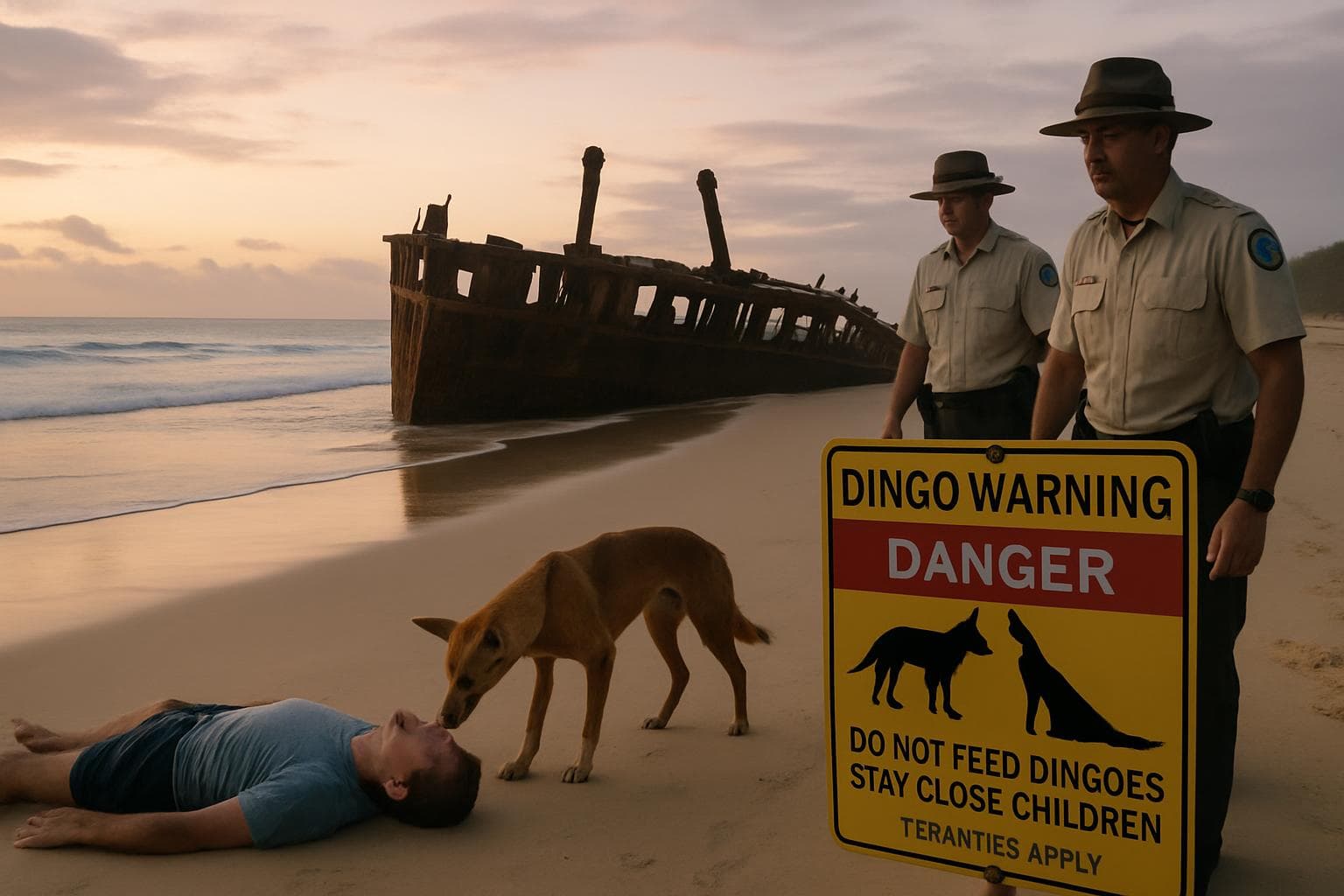
A tragic incident on K'gari Island, formerly known as Fraser Island, has raised alarms about wildlife safety after a 19-year-old Canadian woman was found dead, surrounded by a pack of dingoes. The discovery was made early Monday morning near the Maheno shipwreck, a well-known tourist attraction on the island off Queensland's eastern coast.
Incident Details and Investigation
The young woman, who had been working at a local backpacker's hostel for six weeks, informed friends she was heading for a morning swim around 5:00 AM. Her body was discovered approximately 75 minutes later by two men driving along the beach. Queensland police have confirmed that the body showed signs of being "touched and interfered with" by the dingoes, but the exact cause of death remains undetermined pending a post-mortem examination scheduled for Wednesday.
Safety Measures and Expert Insights
In response to the incident, authorities have closed two campsites and increased ranger patrols on the island. Experts warn that dingoes, while culturally significant to local First Nations people, are wild animals and should be treated with caution. Bradley Smith, a senior lecturer at Central Queensland University, noted that dingoes are often active at dawn and dusk, scavenging for food along the beaches. He emphasized the importance of respecting these predators and avoiding risky behaviors that might provoke interactions.
Rising Concerns Over Dingo-Human Interactions
The incident has reignited discussions about the safety of tourists on K'gari Island, which attracts approximately 400,000 visitors annually. Environmental anthropologist Georgette Leah Burns highlighted that while measures have been implemented since a fatal dingo attack in 2001, the increasing number of tourists and their interactions with dingoes continue to pose challenges. Both experts urge against sensationalism and stress the need for ongoing education and adherence to safety guidelines.
WHAT THIS MIGHT MEAN
As the investigation continues, the post-mortem results will be crucial in determining the cause of the Canadian tourist's death, potentially influencing future wildlife management policies on K'gari Island. Should the findings indicate a dingo attack, authorities may face pressure to implement stricter safety measures and increase public awareness campaigns. Conversely, if drowning is confirmed, attention may shift to the dangers of swimming in unpatrolled areas. In either scenario, the incident underscores the delicate balance between preserving natural habitats and ensuring tourist safety.
Related Articles

Queensland Man Faces 596 Child Abuse Charges in Global Online Grooming Case

Rajwinder Singh Convicted for 2018 Murder of Toyah Cordingley on Queensland Beach

Coroner Highlights Psychiatric Care Failures in Bondi Junction Stabbing Case

Rising Road Fatalities Highlight Global Safety Concerns
Canadian Backpacker Piper James Likely Drowned on K'Gari Island, Autopsy Reveals
Tragic Death of Canadian Backpacker on K'Gari Island Sparks Investigation
Canadian Tourist's Death on K'gari Island Sparks Dingo Safety Concerns
In This Article
 Sofia Romano| Published
 HIGHLIGHTS
- A 19-year-old Canadian woman was found dead on K'gari Island, surrounded by dingoes, prompting a police investigation.
- The incident occurred near the Maheno shipwreck, a popular tourist site, early on Monday morning.
- Police are awaiting a post-mortem to determine if the cause of death was drowning or a dingo attack.
- Campsites have been closed and patrols increased as authorities caution against approaching dingoes.
- Experts highlight the rising risk of dingo-human interactions due to increased tourism and risky behavior.
A tragic incident on K'gari Island, formerly known as Fraser Island, has raised alarms about wildlife safety after a 19-year-old Canadian woman was found dead, surrounded by a pack of dingoes. The discovery was made early Monday morning near the Maheno shipwreck, a well-known tourist attraction on the island off Queensland's eastern coast.
Incident Details and Investigation
The young woman, who had been working at a local backpacker's hostel for six weeks, informed friends she was heading for a morning swim around 5:00 AM. Her body was discovered approximately 75 minutes later by two men driving along the beach. Queensland police have confirmed that the body showed signs of being "touched and interfered with" by the dingoes, but the exact cause of death remains undetermined pending a post-mortem examination scheduled for Wednesday.
Safety Measures and Expert Insights
In response to the incident, authorities have closed two campsites and increased ranger patrols on the island. Experts warn that dingoes, while culturally significant to local First Nations people, are wild animals and should be treated with caution. Bradley Smith, a senior lecturer at Central Queensland University, noted that dingoes are often active at dawn and dusk, scavenging for food along the beaches. He emphasized the importance of respecting these predators and avoiding risky behaviors that might provoke interactions.
Rising Concerns Over Dingo-Human Interactions
The incident has reignited discussions about the safety of tourists on K'gari Island, which attracts approximately 400,000 visitors annually. Environmental anthropologist Georgette Leah Burns highlighted that while measures have been implemented since a fatal dingo attack in 2001, the increasing number of tourists and their interactions with dingoes continue to pose challenges. Both experts urge against sensationalism and stress the need for ongoing education and adherence to safety guidelines.
WHAT THIS MIGHT MEAN
As the investigation continues, the post-mortem results will be crucial in determining the cause of the Canadian tourist's death, potentially influencing future wildlife management policies on K'gari Island. Should the findings indicate a dingo attack, authorities may face pressure to implement stricter safety measures and increase public awareness campaigns. Conversely, if drowning is confirmed, attention may shift to the dangers of swimming in unpatrolled areas. In either scenario, the incident underscores the delicate balance between preserving natural habitats and ensuring tourist safety.
Related Articles
Queensland Man Faces 596 Child Abuse Charges in Global Online Grooming Case
Rajwinder Singh Convicted for 2018 Murder of Toyah Cordingley on Queensland Beach
Coroner Highlights Psychiatric Care Failures in Bondi Junction Stabbing Case
Rising Road Fatalities Highlight Global Safety Concerns
Canadian Backpacker Piper James Likely Drowned on K'Gari Island, Autopsy Reveals
Tragic Death of Canadian Backpacker on K'Gari Island Sparks Investigation