
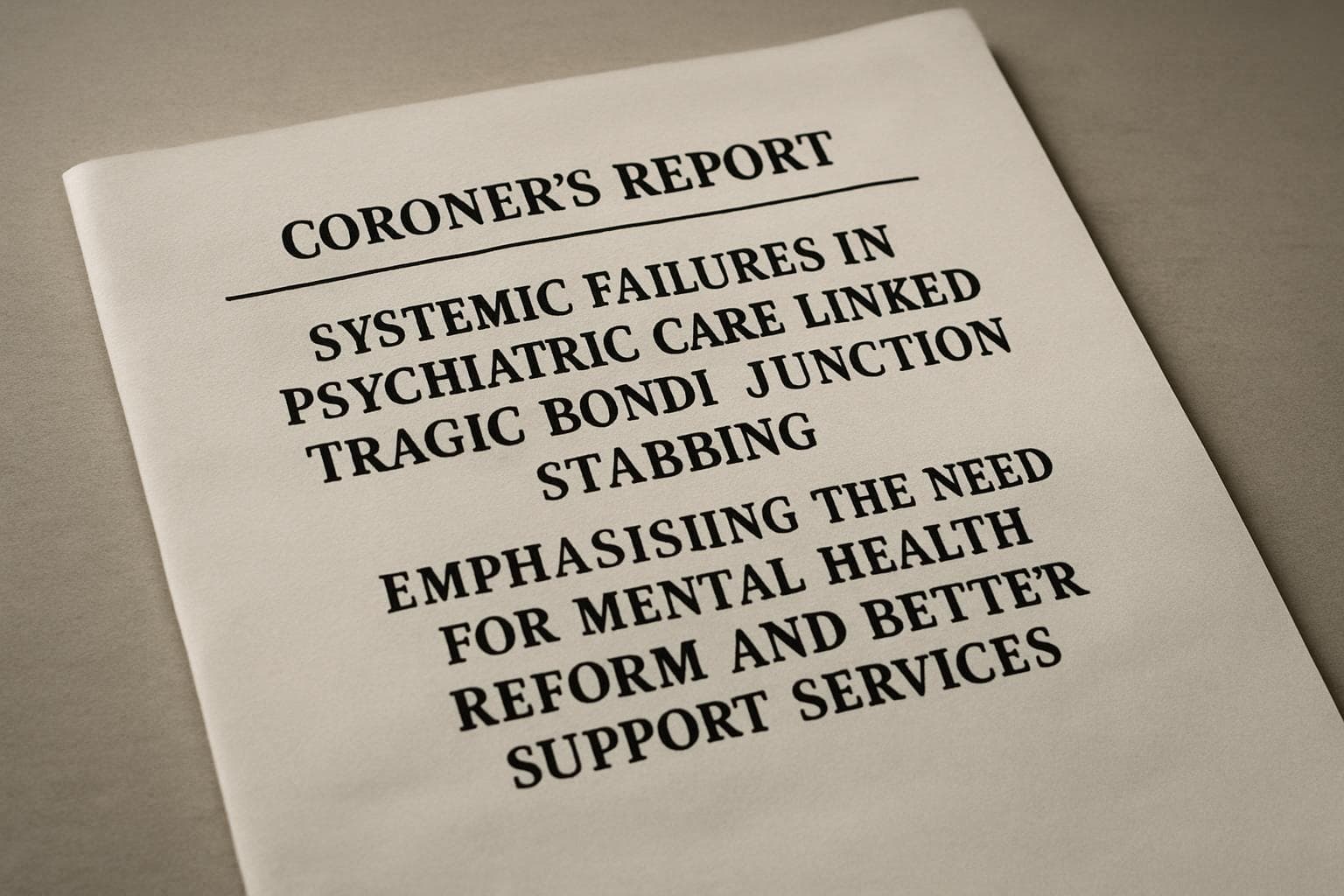
Coroner Highlights Psychiatric Care Failures in Bondi Junction Stabbing Case
In This Article
HIGHLIGHTS
- Joel Cauchi, diagnosed with schizophrenia, fatally stabbed six people at Bondi Junction in April 2024.
- Coroner Teresa O'Sullivan found major failings in Cauchi's psychiatric care, particularly by Dr. Andrea Boros-Lavack.
- The coroner's report, delayed due to a separate attack, recommends mental health system reforms in New South Wales.
- Families of victims and the coroner call for an investigation into Boros-Lavack's care by Queensland health authorities.
- The inquest highlighted systemic issues in mental health services, urging government action for better support.
In a comprehensive report released on Thursday, New South Wales Coroner Teresa O'Sullivan identified significant lapses in psychiatric care preceding the tragic Bondi Junction stabbing incident in April 2024. The attack, carried out by Joel Cauchi, resulted in the deaths of six individuals and injuries to ten others, including a baby. Cauchi, who had been diagnosed with schizophrenia, was shot dead by police during the incident.
Psychiatric Care Under Scrutiny
The coroner's findings, detailed in an 837-page report, pointed to a "major failing" by Cauchi's former psychiatrist, Dr. Andrea Boros-Lavack. Despite providing "exemplary" care from 2012 to 2019, Boros-Lavack did not adequately respond to warnings of Cauchi's potential relapse, a decision that O'Sullivan described as a critical oversight. The coroner recommended that Boros-Lavack be referred to Queensland health authorities for further investigation.
Systemic Failures and Recommendations
The inquest also shed light on broader systemic issues within the New South Wales mental health system. O'Sullivan urged the government to establish better accommodation and support services for individuals experiencing mental health challenges and homelessness. She emphasized the need for a realistic timeline to enhance mental health outreach services, which have seen a decline in recent years.
Personal Impact and Calls for Reform
Families of the victims, who gathered to hear the coroner's findings, expressed their grief and called for meaningful reforms. Noel McLaughlin, husband of victim Jade Young, shared the profound impact of his wife's loss, underscoring the human cost of systemic failures. The coroner's report aims to prevent future tragedies by advocating for comprehensive changes in mental health care.
WHAT THIS MIGHT MEAN
The coroner's recommendations could prompt significant reforms in New South Wales' mental health system, potentially leading to improved support and resources for individuals with mental health issues. If implemented, these changes may help prevent similar tragedies in the future. The investigation into Dr. Boros-Lavack's care could also set a precedent for accountability in psychiatric treatment, emphasizing the importance of proactive and responsive care. As the government considers these recommendations, the focus will likely be on balancing immediate interventions with long-term systemic improvements.
Images from the Web


Related Articles

Queensland Man Faces 596 Child Abuse Charges in Global Online Grooming Case

NSW Manhunt Intensifies After Triple Shooting in Lake Cargelligo
Tragedy Strikes Lake Cargelligo: Three Dead in NSW Shooting as Gunman Remains at Large

Canadian Tourist's Death on K'gari Island Sparks Dingo Safety Concerns

Sydney Harbour Shark Attack Leaves Boy in Critical Condition
Tragic Shark Attack Claims Life of 12-Year-Old in Sydney
Coroner Highlights Psychiatric Care Failures in Bondi Junction Stabbing Case
In This Article
 Sofia Romano| Published
 HIGHLIGHTS
- Joel Cauchi, diagnosed with schizophrenia, fatally stabbed six people at Bondi Junction in April 2024.
- Coroner Teresa O'Sullivan found major failings in Cauchi's psychiatric care, particularly by Dr. Andrea Boros-Lavack.
- The coroner's report, delayed due to a separate attack, recommends mental health system reforms in New South Wales.
- Families of victims and the coroner call for an investigation into Boros-Lavack's care by Queensland health authorities.
- The inquest highlighted systemic issues in mental health services, urging government action for better support.
In a comprehensive report released on Thursday, New South Wales Coroner Teresa O'Sullivan identified significant lapses in psychiatric care preceding the tragic Bondi Junction stabbing incident in April 2024. The attack, carried out by Joel Cauchi, resulted in the deaths of six individuals and injuries to ten others, including a baby. Cauchi, who had been diagnosed with schizophrenia, was shot dead by police during the incident.
Psychiatric Care Under Scrutiny
The coroner's findings, detailed in an 837-page report, pointed to a "major failing" by Cauchi's former psychiatrist, Dr. Andrea Boros-Lavack. Despite providing "exemplary" care from 2012 to 2019, Boros-Lavack did not adequately respond to warnings of Cauchi's potential relapse, a decision that O'Sullivan described as a critical oversight. The coroner recommended that Boros-Lavack be referred to Queensland health authorities for further investigation.
Systemic Failures and Recommendations
The inquest also shed light on broader systemic issues within the New South Wales mental health system. O'Sullivan urged the government to establish better accommodation and support services for individuals experiencing mental health challenges and homelessness. She emphasized the need for a realistic timeline to enhance mental health outreach services, which have seen a decline in recent years.
Personal Impact and Calls for Reform
Families of the victims, who gathered to hear the coroner's findings, expressed their grief and called for meaningful reforms. Noel McLaughlin, husband of victim Jade Young, shared the profound impact of his wife's loss, underscoring the human cost of systemic failures. The coroner's report aims to prevent future tragedies by advocating for comprehensive changes in mental health care.
WHAT THIS MIGHT MEAN
The coroner's recommendations could prompt significant reforms in New South Wales' mental health system, potentially leading to improved support and resources for individuals with mental health issues. If implemented, these changes may help prevent similar tragedies in the future. The investigation into Dr. Boros-Lavack's care could also set a precedent for accountability in psychiatric treatment, emphasizing the importance of proactive and responsive care. As the government considers these recommendations, the focus will likely be on balancing immediate interventions with long-term systemic improvements.
Images from the Web
Related Articles
Queensland Man Faces 596 Child Abuse Charges in Global Online Grooming Case
NSW Manhunt Intensifies After Triple Shooting in Lake Cargelligo
Tragedy Strikes Lake Cargelligo: Three Dead in NSW Shooting as Gunman Remains at Large
Canadian Tourist's Death on K'gari Island Sparks Dingo Safety Concerns
Sydney Harbour Shark Attack Leaves Boy in Critical Condition
Tragic Shark Attack Claims Life of 12-Year-Old in Sydney