
Court Halts Burial of Former Zambian President Amid Ongoing Feud
In This Article
HIGHLIGHTS
- A South African court halted the burial of former Zambian President Edgar Lungu, following a legal dispute between his family and the Zambian government.
- The Zambian government insists on a state funeral in Zambia, citing legal precedents, while Lungu's family prefers a private ceremony in South Africa.
- The Pretoria High Court has scheduled a full hearing for August 4, 2025, to resolve the burial dispute.
- The feud between Lungu and his successor, President Hakainde Hichilema, continues posthumously, affecting funeral arrangements.
- Lungu's family has until July 11 to file opposing papers against the government's motion for repatriation.
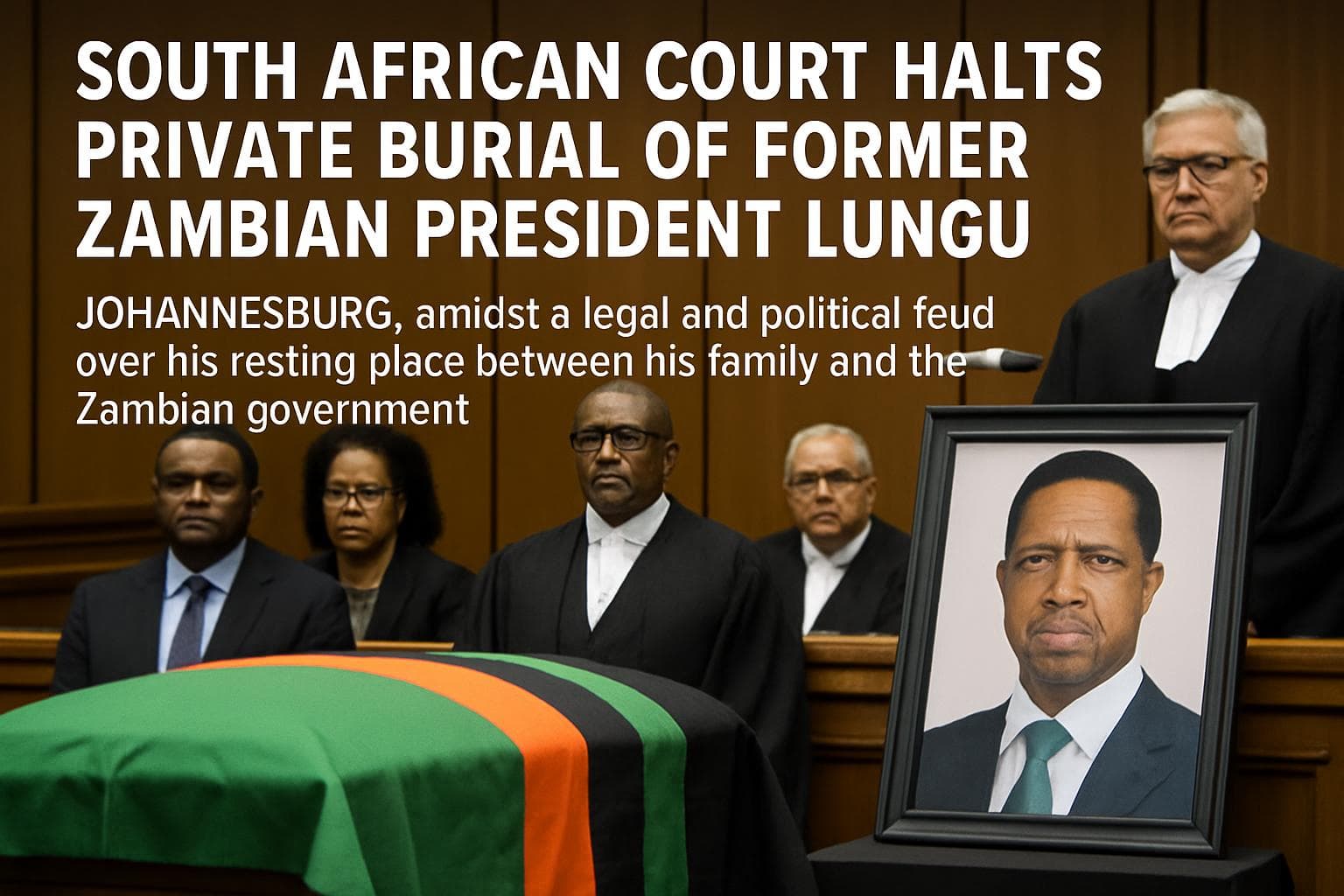
A South African court has intervened in the burial plans of former Zambian President Edgar Lungu, halting a private ceremony in Johannesburg just as it was about to commence. This legal intervention is the latest development in a contentious dispute between Lungu's family and the Zambian government over his final resting place.
Legal Battle Over Burial Rights
The Pretoria High Court's decision came after an urgent application by Zambia's attorney general, Mulilo D Kabesha, who argued that Lungu, as a former head of state, should be accorded a state funeral in Zambia. The court has set a hearing for August 4, 2025, to address the matter, with Lungu's family given until July 11 to submit their opposing arguments.
A Feud That Transcends Death
The dispute is rooted in a long-standing feud between Lungu and his successor, President Hakainde Hichilema. Lungu, who led Zambia from 2015 to 2021, had reportedly expressed a wish that Hichilema not attend his funeral. This personal request has clashed with the government's stance that former presidents are national figures whose funerals should be state affairs. The government cites the precedent set by the burial of Zambia's founding President Kenneth Kaunda, who was laid to rest at a national cemetery despite his family's wishes.
Political and Legal Implications
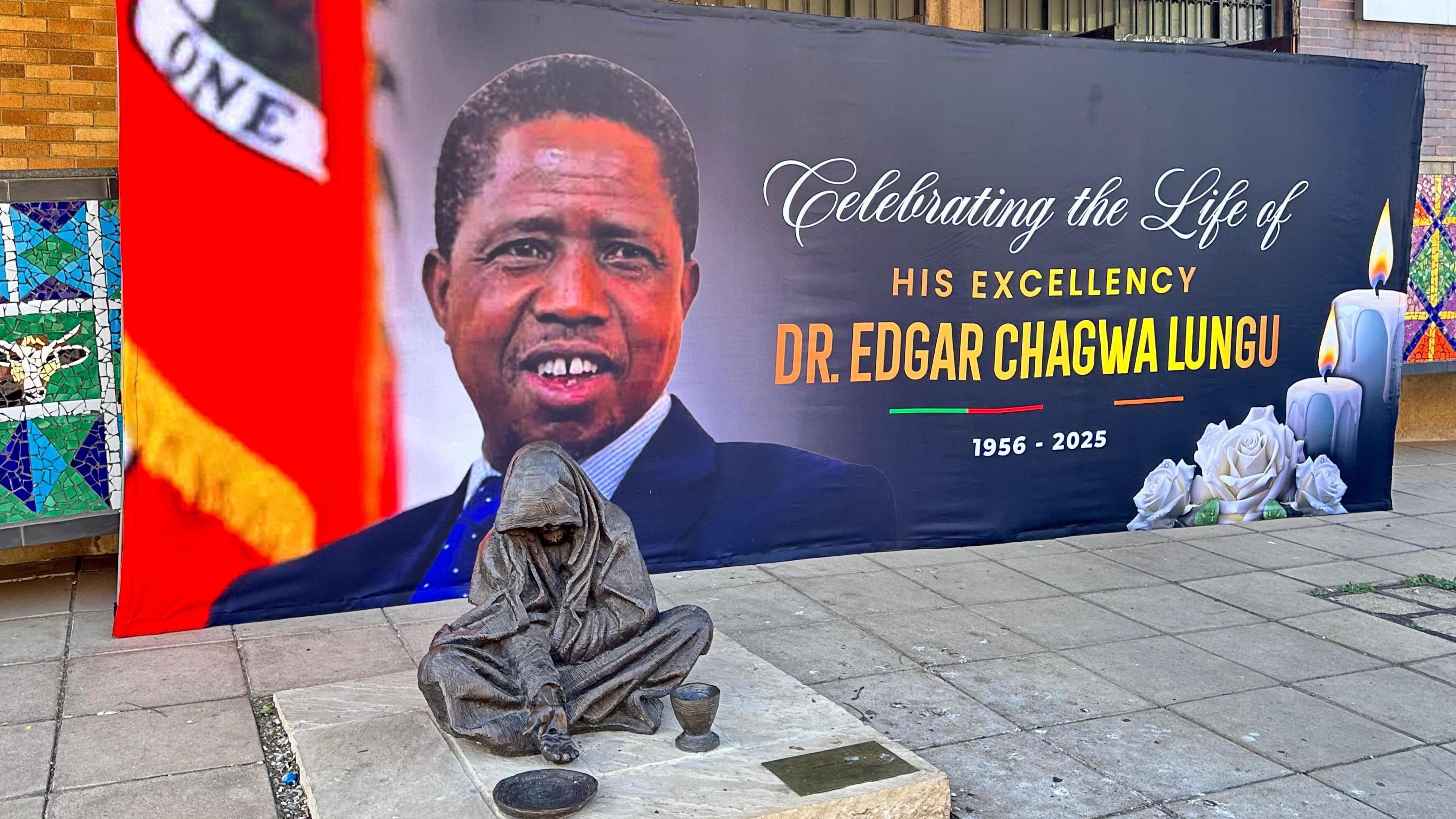
The ongoing legal wrangle has left mourners in limbo, with Lungu's family visibly upset by the court's decision. The Zambian government maintains that national interests should prevail over personal wishes, emphasizing the legal requirement for state funerals with full military honors. This stance is supported by a previous court ruling that declared former presidents as "national property."
A Legacy of Controversy
Lungu's presidency was marked by controversy, including a bitter electoral defeat to Hichilema in 2021 and accusations of political persecution. His family, including his wife Esther Lungu, has faced various legal challenges, further complicating the narrative surrounding his legacy. Despite these controversies, the question of where Lungu will be laid to rest remains unresolved, with significant political and legal implications for Zambia.
WHAT THIS MIGHT MEAN
The upcoming court hearing in August could set a significant precedent for how Zambia handles the funerals of its former leaders. If the court sides with the government, it may reinforce the notion that state interests supersede personal wishes in matters of national significance. Conversely, a ruling in favor of Lungu's family could empower future leaders and their families to assert more control over personal and familial decisions. The outcome may also influence the ongoing political dynamics between President Hichilema and Lungu's supporters, potentially impacting Zambia's political landscape.
Images from the Web
Related Articles
Mass Shooting in South Africa Leaves Nine Dead in Bekkersdal Tavern Attack
South African Radio Presenter Among Five Charged in Russia Recruitment Plot
South Africa Responds to Trump's G20 Exclusion Amid Diplomatic Strain
G20 Summit Concludes in South Africa Amid US Boycott and Diplomatic Tensions

Keir Starmer Advocates for UK Business at G20 Summit Amid Trump's Controversial Absence
South Africa Probes Mysterious Arrival of Palestinians Amidst Humanitarian Concerns
Court Halts Burial of Former Zambian President Amid Ongoing Feud
In This Article
 James Okoro| Published
 HIGHLIGHTS
- A South African court halted the burial of former Zambian President Edgar Lungu, following a legal dispute between his family and the Zambian government.
- The Zambian government insists on a state funeral in Zambia, citing legal precedents, while Lungu's family prefers a private ceremony in South Africa.
- The Pretoria High Court has scheduled a full hearing for August 4, 2025, to resolve the burial dispute.
- The feud between Lungu and his successor, President Hakainde Hichilema, continues posthumously, affecting funeral arrangements.
- Lungu's family has until July 11 to file opposing papers against the government's motion for repatriation.
A South African court has intervened in the burial plans of former Zambian President Edgar Lungu, halting a private ceremony in Johannesburg just as it was about to commence. This legal intervention is the latest development in a contentious dispute between Lungu's family and the Zambian government over his final resting place.
Legal Battle Over Burial Rights
The Pretoria High Court's decision came after an urgent application by Zambia's attorney general, Mulilo D Kabesha, who argued that Lungu, as a former head of state, should be accorded a state funeral in Zambia. The court has set a hearing for August 4, 2025, to address the matter, with Lungu's family given until July 11 to submit their opposing arguments.
A Feud That Transcends Death
The dispute is rooted in a long-standing feud between Lungu and his successor, President Hakainde Hichilema. Lungu, who led Zambia from 2015 to 2021, had reportedly expressed a wish that Hichilema not attend his funeral. This personal request has clashed with the government's stance that former presidents are national figures whose funerals should be state affairs. The government cites the precedent set by the burial of Zambia's founding President Kenneth Kaunda, who was laid to rest at a national cemetery despite his family's wishes.
Political and Legal Implications
The ongoing legal wrangle has left mourners in limbo, with Lungu's family visibly upset by the court's decision. The Zambian government maintains that national interests should prevail over personal wishes, emphasizing the legal requirement for state funerals with full military honors. This stance is supported by a previous court ruling that declared former presidents as "national property."
A Legacy of Controversy
Lungu's presidency was marked by controversy, including a bitter electoral defeat to Hichilema in 2021 and accusations of political persecution. His family, including his wife Esther Lungu, has faced various legal challenges, further complicating the narrative surrounding his legacy. Despite these controversies, the question of where Lungu will be laid to rest remains unresolved, with significant political and legal implications for Zambia.
WHAT THIS MIGHT MEAN
The upcoming court hearing in August could set a significant precedent for how Zambia handles the funerals of its former leaders. If the court sides with the government, it may reinforce the notion that state interests supersede personal wishes in matters of national significance. Conversely, a ruling in favor of Lungu's family could empower future leaders and their families to assert more control over personal and familial decisions. The outcome may also influence the ongoing political dynamics between President Hichilema and Lungu's supporters, potentially impacting Zambia's political landscape.
Images from the Web
Related Articles
Mass Shooting in South Africa Leaves Nine Dead in Bekkersdal Tavern Attack
South African Radio Presenter Among Five Charged in Russia Recruitment Plot
South Africa Responds to Trump's G20 Exclusion Amid Diplomatic Strain
G20 Summit Concludes in South Africa Amid US Boycott and Diplomatic Tensions
Keir Starmer Advocates for UK Business at G20 Summit Amid Trump's Controversial Absence
South Africa Probes Mysterious Arrival of Palestinians Amidst Humanitarian Concerns