
G20 Summit Concludes in South Africa Amid US Boycott and Diplomatic Tensions
In This Article
HIGHLIGHTS
- The G20 summit in South Africa concluded with a declaration on multilateral cooperation, despite a US boycott.
- US President Donald Trump abstained from the summit over discredited claims of discrimination against South Africa's white minority.
- South African President Cyril Ramaphosa emphasized the importance of unity in addressing global challenges.
- The summit addressed issues such as climate change, gender equality, and conflicts in Ukraine, Sudan, and the Democratic Republic of Congo.
- The ceremonial handover of the G20 presidency to the US was postponed due to protocol disagreements.
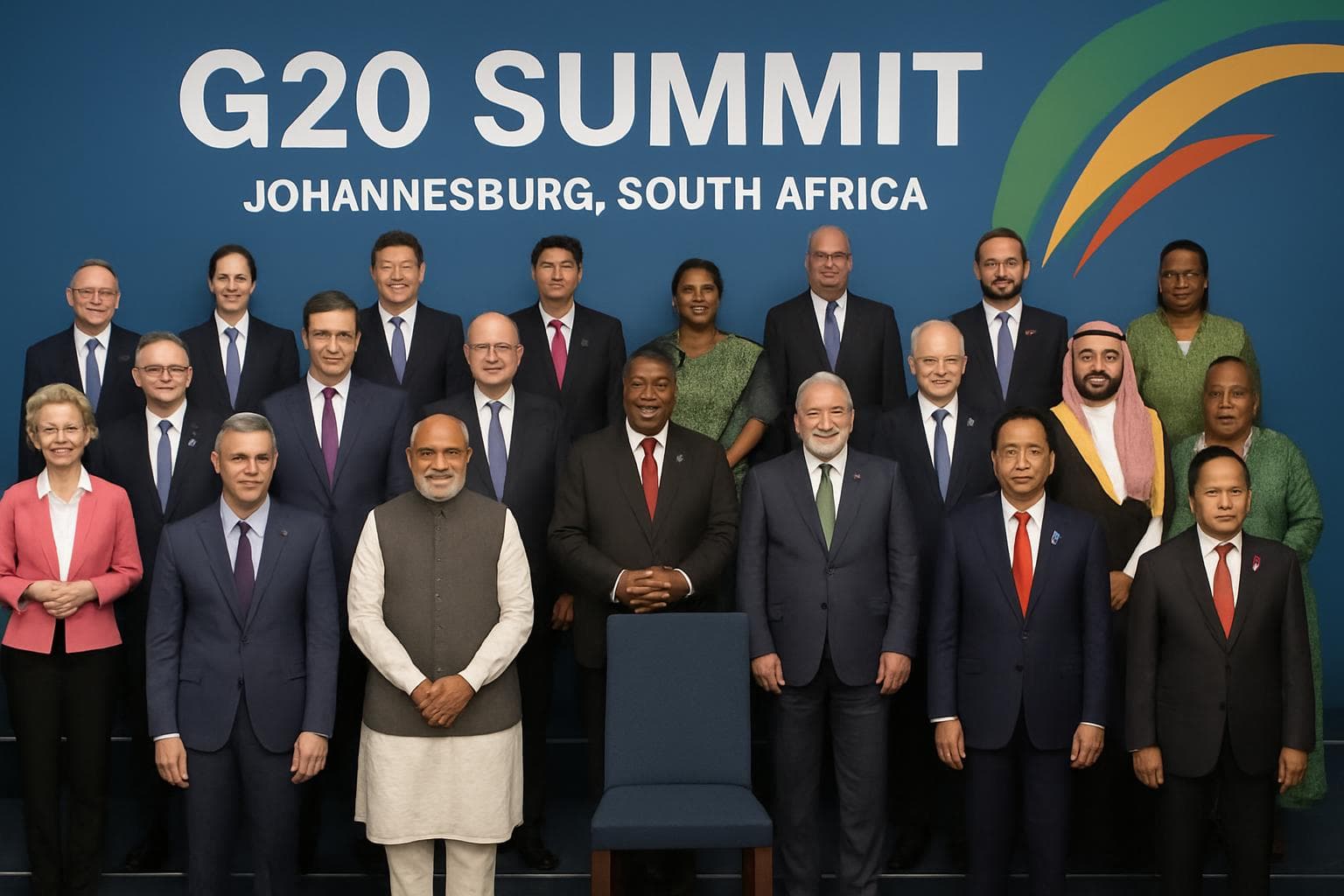
The G20 summit, hosted for the first time in Africa, wrapped up in Johannesburg with a focus on multilateral cooperation, despite the notable absence of the United States. The summit, which gathered leaders from the world's major economies, ended with a joint declaration addressing pressing global issues such as climate change and economic inequality.
US Boycott and Diplomatic Disputes
The US boycott, led by President Donald Trump, stemmed from unfounded allegations of discrimination against South Africa's white minority. Trump's decision to abstain from the summit drew criticism from several leaders, including German Chancellor Fredriech Merz, who described it as a "not good decision." The absence of the US was further complicated by a diplomatic row over the ceremonial handover of the G20 presidency, which South Africa proposed to conduct with a junior official, contrary to US expectations.
Focus on Global Challenges
Despite these tensions, South African President Cyril Ramaphosa highlighted the summit's success in fostering multilateralism. "We’ve met in the face of significant challenges and demonstrated our ability to come together," Ramaphosa stated. The G20 declaration underscored commitments to tackle climate change and promote gender equality, areas where the US has shown reluctance under Trump's administration.
Addressing Global Conflicts
The summit also brought attention to ongoing conflicts, including those in Ukraine, Sudan, and the Democratic Republic of Congo. The inclusion of Sudan was particularly significant, marking a shift in international focus towards the region's prolonged conflict. Sudanese journalist Saeed Abdalla noted the importance of this development, emphasizing the need for a comprehensive peace process.
Future Prospects and Challenges
The G20 presidency is set to transition to the US, with the next summit scheduled for 2026 at Trump's golf resort in Florida. However, the handover has been delayed due to protocol disagreements, leaving the transition process uncertain. South Africa's foreign minister, Ronald Lamola, stated, "From us, the ball has moved. We are done. It’s up to them."
WHAT THIS MIGHT MEAN
The US boycott of the G20 summit and the subsequent diplomatic tensions could have lasting implications for international diplomacy. The delayed handover of the presidency may strain US-South Africa relations and impact future G20 collaborations. Experts suggest that the US's absence could weaken its influence in shaping global economic policies, particularly in areas like climate change and conflict resolution. As the world navigates these challenges, the emphasis on multilateral cooperation remains crucial for addressing global issues effectively.
Related Articles
Cuba Faces Widespread Blackout Amid Deepening Fuel Crisis

UK Faces Dilemmas Amid Iran Conflict and China Spying Allegations

Google Faces Legal Battle Over AI Chatbot's Alleged Role in Tragic Death
China Sets Lowest GDP Growth Target in Decades Amid Economic Challenges

Tech Giants Pledge to Cover AI Data Center Energy Costs Amid Rising Electricity Concerns

Congress Subpoenas Attorney General Bondi in Epstein Investigation
G20 Summit Concludes in South Africa Amid US Boycott and Diplomatic Tensions
In This Article
 James Okoro| Published
 HIGHLIGHTS
- The G20 summit in South Africa concluded with a declaration on multilateral cooperation, despite a US boycott.
- US President Donald Trump abstained from the summit over discredited claims of discrimination against South Africa's white minority.
- South African President Cyril Ramaphosa emphasized the importance of unity in addressing global challenges.
- The summit addressed issues such as climate change, gender equality, and conflicts in Ukraine, Sudan, and the Democratic Republic of Congo.
- The ceremonial handover of the G20 presidency to the US was postponed due to protocol disagreements.
The G20 summit, hosted for the first time in Africa, wrapped up in Johannesburg with a focus on multilateral cooperation, despite the notable absence of the United States. The summit, which gathered leaders from the world's major economies, ended with a joint declaration addressing pressing global issues such as climate change and economic inequality.
US Boycott and Diplomatic Disputes
The US boycott, led by President Donald Trump, stemmed from unfounded allegations of discrimination against South Africa's white minority. Trump's decision to abstain from the summit drew criticism from several leaders, including German Chancellor Fredriech Merz, who described it as a "not good decision." The absence of the US was further complicated by a diplomatic row over the ceremonial handover of the G20 presidency, which South Africa proposed to conduct with a junior official, contrary to US expectations.
Focus on Global Challenges
Despite these tensions, South African President Cyril Ramaphosa highlighted the summit's success in fostering multilateralism. "We’ve met in the face of significant challenges and demonstrated our ability to come together," Ramaphosa stated. The G20 declaration underscored commitments to tackle climate change and promote gender equality, areas where the US has shown reluctance under Trump's administration.
Addressing Global Conflicts
The summit also brought attention to ongoing conflicts, including those in Ukraine, Sudan, and the Democratic Republic of Congo. The inclusion of Sudan was particularly significant, marking a shift in international focus towards the region's prolonged conflict. Sudanese journalist Saeed Abdalla noted the importance of this development, emphasizing the need for a comprehensive peace process.
Future Prospects and Challenges
The G20 presidency is set to transition to the US, with the next summit scheduled for 2026 at Trump's golf resort in Florida. However, the handover has been delayed due to protocol disagreements, leaving the transition process uncertain. South Africa's foreign minister, Ronald Lamola, stated, "From us, the ball has moved. We are done. It’s up to them."
WHAT THIS MIGHT MEAN
The US boycott of the G20 summit and the subsequent diplomatic tensions could have lasting implications for international diplomacy. The delayed handover of the presidency may strain US-South Africa relations and impact future G20 collaborations. Experts suggest that the US's absence could weaken its influence in shaping global economic policies, particularly in areas like climate change and conflict resolution. As the world navigates these challenges, the emphasis on multilateral cooperation remains crucial for addressing global issues effectively.
Related Articles
Cuba Faces Widespread Blackout Amid Deepening Fuel Crisis
UK Faces Dilemmas Amid Iran Conflict and China Spying Allegations
Google Faces Legal Battle Over AI Chatbot's Alleged Role in Tragic Death
China Sets Lowest GDP Growth Target in Decades Amid Economic Challenges
Tech Giants Pledge to Cover AI Data Center Energy Costs Amid Rising Electricity Concerns
Congress Subpoenas Attorney General Bondi in Epstein Investigation