
Tech Giants Pledge to Cover AI Data Center Energy Costs Amid Rising Electricity Concerns
In This Article
HIGHLIGHTS
- Leading tech firms, including Google and Meta, pledged to cover electricity costs for AI data centers to alleviate rising utility bills.
- The "Ratepayer Protection Pledge" was signed at the White House amid concerns about data centers' impact on US electricity costs.
- The pledge includes commitments to build or buy new power generation capacity and negotiate rate structures with utility companies.
- Analysts question the enforceability of the pledge and its potential impact on reducing electricity costs for consumers.
- Rising natural gas prices and geopolitical tensions may complicate efforts to stabilize electricity costs.
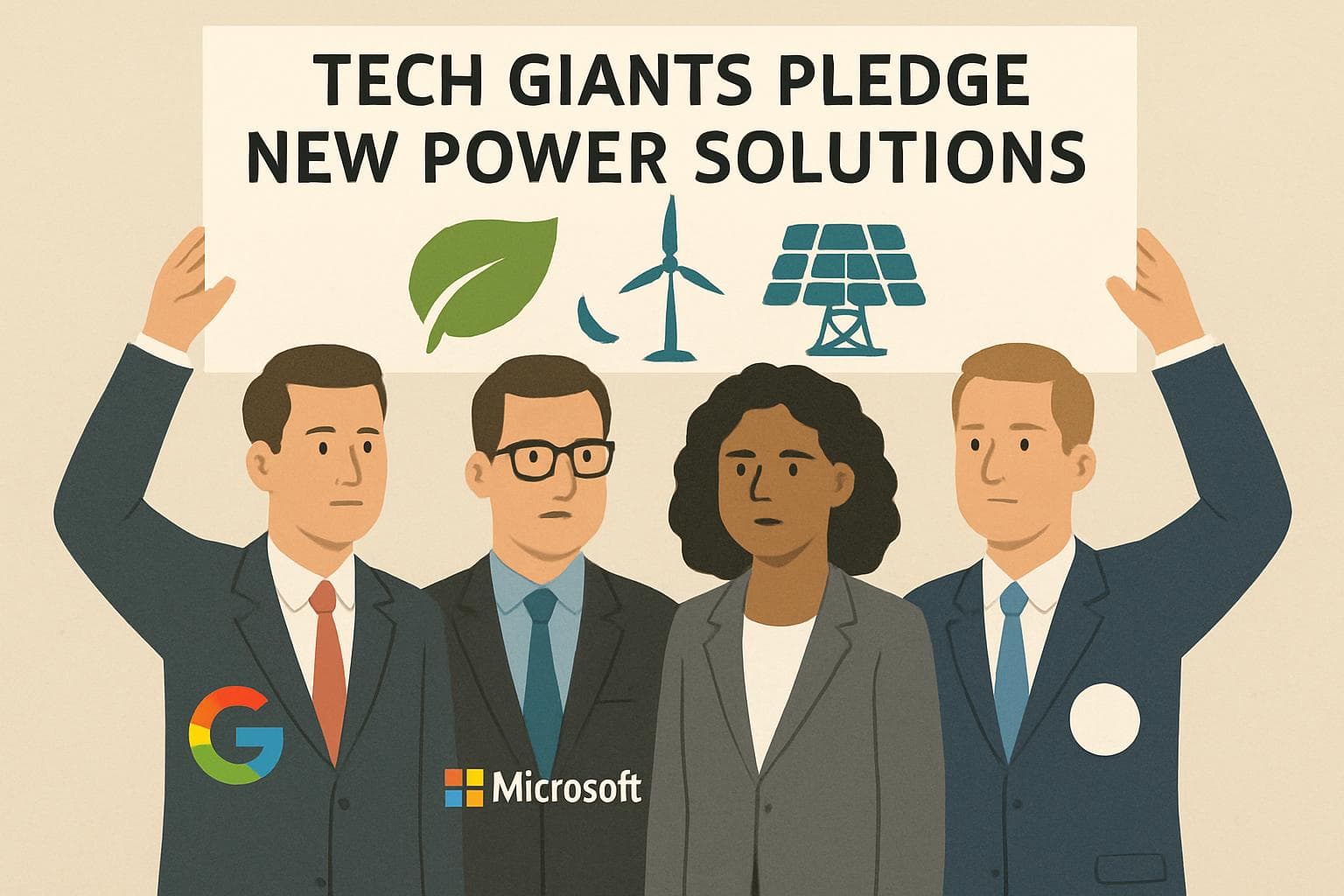
In a significant move to address escalating electricity costs, major technology firms, including Google, Microsoft, Meta, and Amazon, have committed to covering the energy expenses for their artificial intelligence data centers. This pledge, announced at a White House event, aims to mitigate the financial burden on American households and small businesses amid growing scrutiny over the energy consumption of data centers.
Commitment to Energy Responsibility
The "Ratepayer Protection Pledge," unveiled by President Donald Trump, requires tech companies to either build or procure new power generation capacity specifically for their data centers. This initiative is part of a broader strategy to prevent data centers from driving up electricity costs, a pressing issue as the administration seeks to curb inflation. "This is a historic win for countless American families," Trump stated, emphasizing the pledge's potential to strengthen the US electricity grid.
Challenges and Skepticism
Despite the ambitious commitments, questions remain about the enforceability of the pledge. John Quigley, a senior fellow at the Kleinman Center for Energy Policy, expressed doubts about the agreement's practical impact, citing the complex layers of government and regulatory bodies involved. Furthermore, the rising prices of natural gas, a key component of US electricity generation, pose additional challenges. The natural gas industry's increased exports have contributed to higher domestic utility bills, complicating efforts to stabilize costs.
Local Community Engagement
The pledge also includes commitments from tech firms to engage with local communities, ensuring that new data center projects are developed with local input and support. This approach aims to counteract previous opposition to data center developments, which were often rejected due to their significant energy demands. A Trump administration official highlighted the importance of community involvement, stating, "There will be no new data center development without local communities understanding this pledge."
WHAT THIS MIGHT MEAN
As the tech industry continues to expand its AI capabilities, the success of the "Ratepayer Protection Pledge" will largely depend on the ability of tech firms to deliver on their commitments. The pledge's impact on electricity costs will be closely monitored, particularly as geopolitical tensions and natural gas prices remain volatile. Experts suggest that a shift towards renewable energy sources, such as solar and wind, could offer a more sustainable solution to the energy demands of data centers. However, the current policy focus on fossil fuels may delay such transitions, potentially prolonging the strain on the US electricity grid. As the November midterm elections approach, energy affordability will likely remain a critical issue for voters, influencing both political and economic landscapes.
Related Articles

Google Faces Legal Battle Over AI Chatbot's Alleged Role in Tragic Death

UK-Iran Tensions: Starmer Defends Cautious Approach Amid Trump Criticism

Spain's Sánchez Stands Firm Against Trump's Trade Threat Over Iran Stance

Diplomatic Tensions Rise as Trump Criticizes Starmer's Iran Policy

Canada and Australia Forge Strategic Partnership Amid Global Uncertainty

Congress Subpoenas Attorney General Bondi in Epstein Investigation
Tech Giants Pledge to Cover AI Data Center Energy Costs Amid Rising Electricity Concerns
In This Article
 Himanshu Kaushik| Published
 HIGHLIGHTS
- Leading tech firms, including Google and Meta, pledged to cover electricity costs for AI data centers to alleviate rising utility bills.
- The "Ratepayer Protection Pledge" was signed at the White House amid concerns about data centers' impact on US electricity costs.
- The pledge includes commitments to build or buy new power generation capacity and negotiate rate structures with utility companies.
- Analysts question the enforceability of the pledge and its potential impact on reducing electricity costs for consumers.
- Rising natural gas prices and geopolitical tensions may complicate efforts to stabilize electricity costs.
In a significant move to address escalating electricity costs, major technology firms, including Google, Microsoft, Meta, and Amazon, have committed to covering the energy expenses for their artificial intelligence data centers. This pledge, announced at a White House event, aims to mitigate the financial burden on American households and small businesses amid growing scrutiny over the energy consumption of data centers.
Commitment to Energy Responsibility
The "Ratepayer Protection Pledge," unveiled by President Donald Trump, requires tech companies to either build or procure new power generation capacity specifically for their data centers. This initiative is part of a broader strategy to prevent data centers from driving up electricity costs, a pressing issue as the administration seeks to curb inflation. "This is a historic win for countless American families," Trump stated, emphasizing the pledge's potential to strengthen the US electricity grid.
Challenges and Skepticism
Despite the ambitious commitments, questions remain about the enforceability of the pledge. John Quigley, a senior fellow at the Kleinman Center for Energy Policy, expressed doubts about the agreement's practical impact, citing the complex layers of government and regulatory bodies involved. Furthermore, the rising prices of natural gas, a key component of US electricity generation, pose additional challenges. The natural gas industry's increased exports have contributed to higher domestic utility bills, complicating efforts to stabilize costs.
Local Community Engagement
The pledge also includes commitments from tech firms to engage with local communities, ensuring that new data center projects are developed with local input and support. This approach aims to counteract previous opposition to data center developments, which were often rejected due to their significant energy demands. A Trump administration official highlighted the importance of community involvement, stating, "There will be no new data center development without local communities understanding this pledge."
WHAT THIS MIGHT MEAN
As the tech industry continues to expand its AI capabilities, the success of the "Ratepayer Protection Pledge" will largely depend on the ability of tech firms to deliver on their commitments. The pledge's impact on electricity costs will be closely monitored, particularly as geopolitical tensions and natural gas prices remain volatile. Experts suggest that a shift towards renewable energy sources, such as solar and wind, could offer a more sustainable solution to the energy demands of data centers. However, the current policy focus on fossil fuels may delay such transitions, potentially prolonging the strain on the US electricity grid. As the November midterm elections approach, energy affordability will likely remain a critical issue for voters, influencing both political and economic landscapes.
Related Articles
Google Faces Legal Battle Over AI Chatbot's Alleged Role in Tragic Death
UK-Iran Tensions: Starmer Defends Cautious Approach Amid Trump Criticism
Spain's Sánchez Stands Firm Against Trump's Trade Threat Over Iran Stance
Diplomatic Tensions Rise as Trump Criticizes Starmer's Iran Policy
Canada and Australia Forge Strategic Partnership Amid Global Uncertainty
Congress Subpoenas Attorney General Bondi in Epstein Investigation