
Congress Subpoenas Attorney General Bondi in Epstein Investigation
In This Article
HIGHLIGHTS
- The House Oversight Committee voted 24-19 to subpoena Attorney General Pam Bondi regarding the Jeffrey Epstein investigation.
- Republican Nancy Mace led the motion, criticizing the Department of Justice for a perceived cover-up in handling Epstein files.
- Bipartisan support emerged as five Republicans joined Democrats in demanding transparency from the DOJ.
- Millions of documents have been released, but lawmakers claim critical information, including videos and logs, is still missing.
- The DOJ faces scrutiny for releasing survivor names and redacting potential perpetrators' identities without explanation.
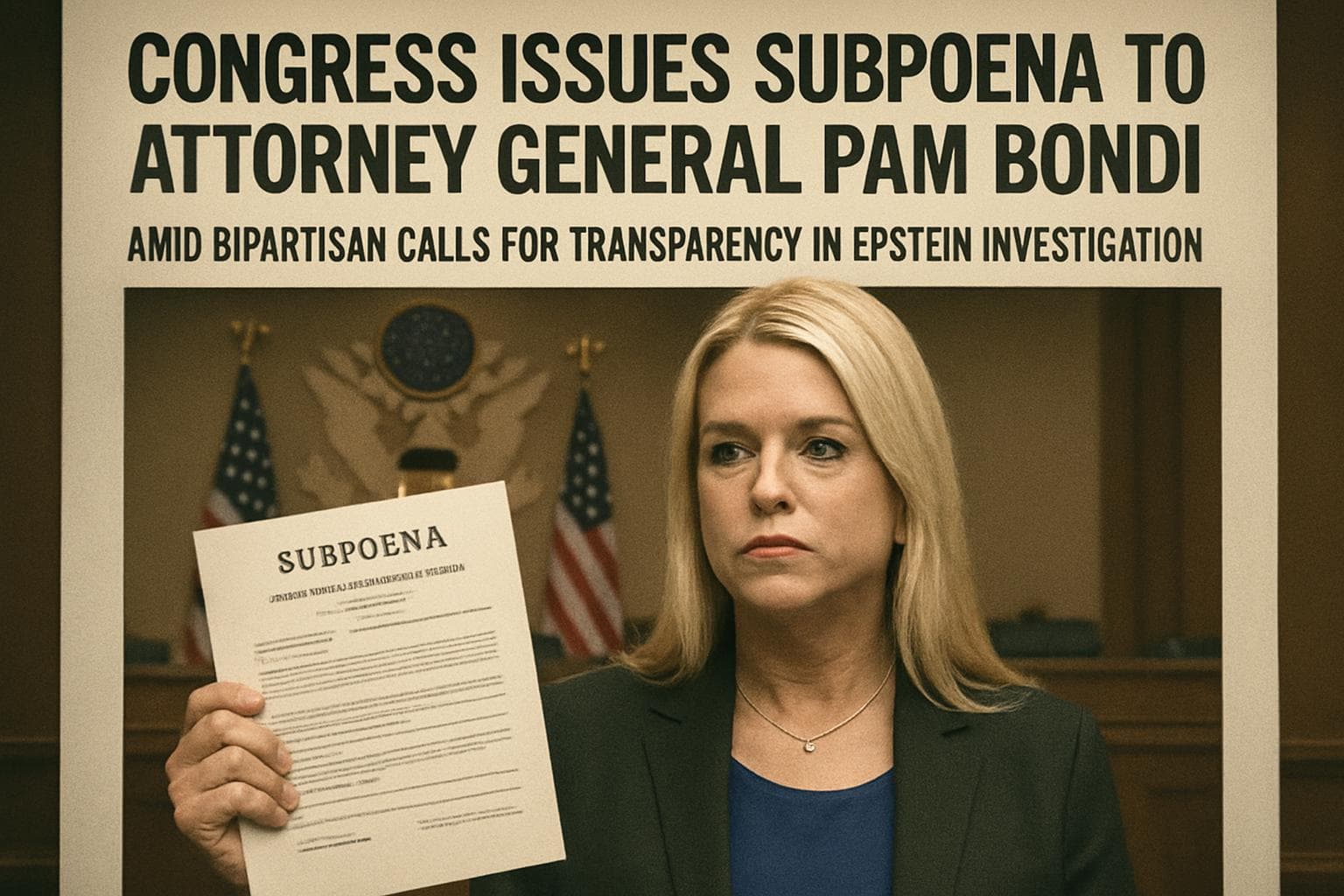
In a significant development in the ongoing Jeffrey Epstein investigation, the House Oversight Committee has voted to subpoena U.S. Attorney General Pam Bondi. The motion, introduced by Republican Representative Nancy Mace, passed with a 24-19 vote, reflecting bipartisan concern over the Department of Justice's handling of the Epstein files.
Bipartisan Demand for Transparency
The decision to summon Bondi comes amid mounting criticism from both sides of the political aisle. Lawmakers have accused the Department of Justice (DOJ) of a "cover-up" in its management of the Epstein investigation, particularly concerning the release of documents. Mace, a vocal critic despite her support for President Trump, emphasized the need for accountability, stating, "The American people want answers on the Epstein files, and so do we."
Missing Information and Legal Concerns
The DOJ has released millions of documents related to Epstein, yet lawmakers argue that crucial information remains undisclosed. Mace highlighted the absence of videos, audio, and logs, asserting that "millions more documents" are still withheld. The DOJ, however, maintains that withheld documents are either duplicates, privileged, or part of ongoing investigations.
Political Tensions and Legal Implications
The subpoena of Bondi underscores the political tensions surrounding the case. In a previous hearing, Bondi faced criticism for her aggressive defense of the DOJ's actions and her praise of Trump's economic policies, rather than addressing the core issues of the investigation. The DOJ's release of survivor names and redaction of potential perpetrators' identities has further fueled bipartisan frustration.
High-Profile Testimonies
The investigation has already seen testimonies from notable figures, including former President Bill Clinton and former Secretary of State Hillary Clinton. While neither has been accused of wrongdoing, their involvement highlights the extensive reach of Epstein's network.
WHAT THIS MIGHT MEAN
The subpoena of Attorney General Pam Bondi could lead to increased transparency in the Epstein investigation, potentially uncovering new information about the case. If Bondi testifies, it may pressure the DOJ to release additional documents and clarify its redaction policies. Politically, this development could strengthen bipartisan efforts to hold the Epstein network accountable, as suggested by Democratic Representative Ro Khanna's call for cross-party collaboration. As the investigation progresses, the DOJ's handling of sensitive information will likely remain under intense scrutiny, with potential legal and political ramifications for those involved.
Related Articles

Senate Blocks Resolution to Limit Trump's Military Actions in Iran

Tech Giants Pledge to Cover AI Data Center Energy Costs Amid Rising Electricity Concerns

Cuba Faces Widespread Blackout Amid Deepening Fuel Crisis

UK Faces Dilemmas Amid Iran Conflict and China Spying Allegations

UK-Iran Tensions: Starmer Defends Cautious Approach Amid Trump Criticism

Spain's Sánchez Stands Firm Against Trump's Trade Threat Over Iran Stance
Congress Subpoenas Attorney General Bondi in Epstein Investigation
In This Article
 Alex Carter| Published
 HIGHLIGHTS
- The House Oversight Committee voted 24-19 to subpoena Attorney General Pam Bondi regarding the Jeffrey Epstein investigation.
- Republican Nancy Mace led the motion, criticizing the Department of Justice for a perceived cover-up in handling Epstein files.
- Bipartisan support emerged as five Republicans joined Democrats in demanding transparency from the DOJ.
- Millions of documents have been released, but lawmakers claim critical information, including videos and logs, is still missing.
- The DOJ faces scrutiny for releasing survivor names and redacting potential perpetrators' identities without explanation.
In a significant development in the ongoing Jeffrey Epstein investigation, the House Oversight Committee has voted to subpoena U.S. Attorney General Pam Bondi. The motion, introduced by Republican Representative Nancy Mace, passed with a 24-19 vote, reflecting bipartisan concern over the Department of Justice's handling of the Epstein files.
Bipartisan Demand for Transparency
The decision to summon Bondi comes amid mounting criticism from both sides of the political aisle. Lawmakers have accused the Department of Justice (DOJ) of a "cover-up" in its management of the Epstein investigation, particularly concerning the release of documents. Mace, a vocal critic despite her support for President Trump, emphasized the need for accountability, stating, "The American people want answers on the Epstein files, and so do we."
Missing Information and Legal Concerns
The DOJ has released millions of documents related to Epstein, yet lawmakers argue that crucial information remains undisclosed. Mace highlighted the absence of videos, audio, and logs, asserting that "millions more documents" are still withheld. The DOJ, however, maintains that withheld documents are either duplicates, privileged, or part of ongoing investigations.
Political Tensions and Legal Implications
The subpoena of Bondi underscores the political tensions surrounding the case. In a previous hearing, Bondi faced criticism for her aggressive defense of the DOJ's actions and her praise of Trump's economic policies, rather than addressing the core issues of the investigation. The DOJ's release of survivor names and redaction of potential perpetrators' identities has further fueled bipartisan frustration.
High-Profile Testimonies
The investigation has already seen testimonies from notable figures, including former President Bill Clinton and former Secretary of State Hillary Clinton. While neither has been accused of wrongdoing, their involvement highlights the extensive reach of Epstein's network.
WHAT THIS MIGHT MEAN
The subpoena of Attorney General Pam Bondi could lead to increased transparency in the Epstein investigation, potentially uncovering new information about the case. If Bondi testifies, it may pressure the DOJ to release additional documents and clarify its redaction policies. Politically, this development could strengthen bipartisan efforts to hold the Epstein network accountable, as suggested by Democratic Representative Ro Khanna's call for cross-party collaboration. As the investigation progresses, the DOJ's handling of sensitive information will likely remain under intense scrutiny, with potential legal and political ramifications for those involved.
Related Articles
Senate Blocks Resolution to Limit Trump's Military Actions in Iran
Tech Giants Pledge to Cover AI Data Center Energy Costs Amid Rising Electricity Concerns
Cuba Faces Widespread Blackout Amid Deepening Fuel Crisis
UK Faces Dilemmas Amid Iran Conflict and China Spying Allegations
UK-Iran Tensions: Starmer Defends Cautious Approach Amid Trump Criticism
Spain's Sánchez Stands Firm Against Trump's Trade Threat Over Iran Stance