
Senate Blocks Resolution to Limit Trump's Military Actions in Iran
In This Article
HIGHLIGHTS
- The US Senate rejected a resolution to limit President Trump's military actions in Iran, with a 53-47 vote largely along party lines.
- The resolution aimed to require congressional approval for continued military engagement, highlighting ongoing debates over presidential war powers.
- The conflict has resulted in significant casualties, including six US service members, and has expanded to include strikes in Lebanon and the Gulf.
- Legal experts and some lawmakers argue the Trump administration's actions may violate both US constitutional and international laws.
- The House of Representatives is set to vote on the resolution, facing significant challenges in passing it.
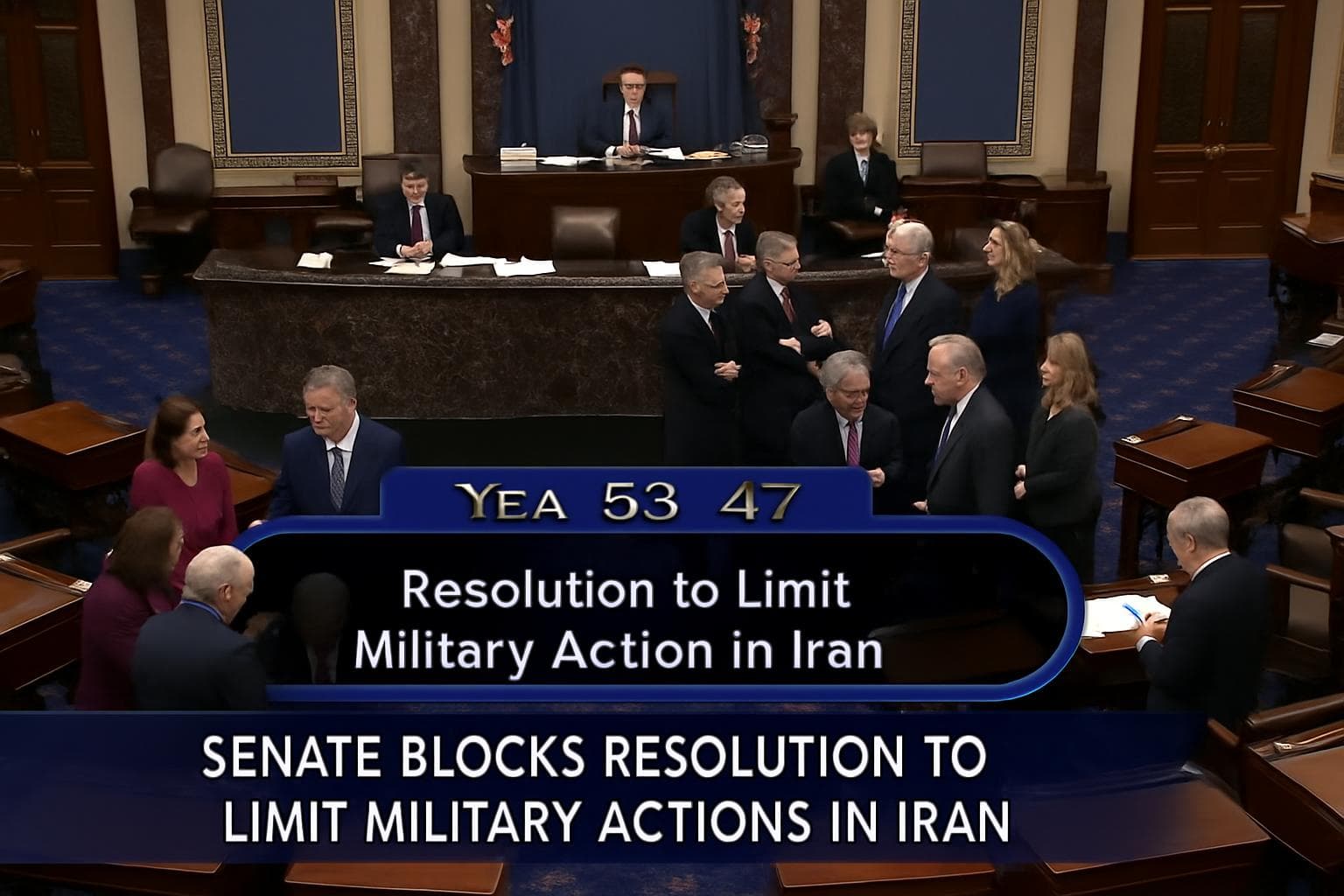
In a closely watched vote, the US Senate on Wednesday rejected a bipartisan resolution intended to curtail President Donald Trump's ability to conduct military operations in Iran without congressional approval. The measure, which failed with a 53-47 vote, underscores the ongoing partisan divide over the president's war powers and the broader implications of US military involvement in the Middle East.
Partisan Divide and Congressional Authority
The resolution, introduced by Democratic Senator Tim Kaine, sought to end US military engagement in Iran unless Congress explicitly authorized further action. Despite support from some Republicans, including Senator Rand Paul of Kentucky, the majority of the GOP stood by the president, arguing that his actions were within his rights as commander-in-chief. Democratic Senator Chris Murphy emphasized the need for congressional oversight to prevent repeating past military misadventures in the region.
Escalating Conflict and Legal Concerns
The conflict, which began with US and Israeli strikes on Iranian targets, has since expanded, involving retaliatory attacks by Iran on US and allied positions. The violence has claimed hundreds of lives, including six US service members, and displaced thousands in Lebanon. Legal scholars and some lawmakers have raised concerns about the legality of the Trump administration's actions, citing potential violations of both the US Constitution and international law.
Broader Implications and Future Steps
As the resolution moves to the House of Representatives, it faces an uphill battle. The Trump administration maintains that its actions are justified, citing threats from Iran and the need to protect American interests. Secretary of State Marco Rubio has defended the administration's stance, pointing to Israel's involvement as a catalyst for the US strikes.
WHAT THIS MIGHT MEAN
The rejection of the resolution by the Senate leaves the Trump administration with broad authority to continue its military campaign in Iran. However, the ongoing conflict poses significant risks, including further destabilization of the region and potential escalation into a broader war. Legal challenges may arise, questioning the administration's justification for military action without explicit congressional approval. As the situation develops, the international community will closely monitor the US's next steps, with potential implications for global security and diplomatic relations.
Related Articles

Intensified US-Israel Strikes on Iran Spark Global Outcry

Spain's Sánchez Stands Firm Against Trump's Trade Threat Over Iran Stance

US and Israel Intensify Military Campaign as Iran's Capabilities Dwindle

UK-Iran Tensions: Starmer Defends Cautious Approach Amid Trump Criticism

Iran Postpones Khamenei Funeral Amid Escalating US-Israeli Strikes

Middle East Conflict Drives UK Energy Prices to New Highs
Senate Blocks Resolution to Limit Trump's Military Actions in Iran
In This Article
 Ethan Brooks| Published
 HIGHLIGHTS
- The US Senate rejected a resolution to limit President Trump's military actions in Iran, with a 53-47 vote largely along party lines.
- The resolution aimed to require congressional approval for continued military engagement, highlighting ongoing debates over presidential war powers.
- The conflict has resulted in significant casualties, including six US service members, and has expanded to include strikes in Lebanon and the Gulf.
- Legal experts and some lawmakers argue the Trump administration's actions may violate both US constitutional and international laws.
- The House of Representatives is set to vote on the resolution, facing significant challenges in passing it.
In a closely watched vote, the US Senate on Wednesday rejected a bipartisan resolution intended to curtail President Donald Trump's ability to conduct military operations in Iran without congressional approval. The measure, which failed with a 53-47 vote, underscores the ongoing partisan divide over the president's war powers and the broader implications of US military involvement in the Middle East.
Partisan Divide and Congressional Authority
The resolution, introduced by Democratic Senator Tim Kaine, sought to end US military engagement in Iran unless Congress explicitly authorized further action. Despite support from some Republicans, including Senator Rand Paul of Kentucky, the majority of the GOP stood by the president, arguing that his actions were within his rights as commander-in-chief. Democratic Senator Chris Murphy emphasized the need for congressional oversight to prevent repeating past military misadventures in the region.
Escalating Conflict and Legal Concerns
The conflict, which began with US and Israeli strikes on Iranian targets, has since expanded, involving retaliatory attacks by Iran on US and allied positions. The violence has claimed hundreds of lives, including six US service members, and displaced thousands in Lebanon. Legal scholars and some lawmakers have raised concerns about the legality of the Trump administration's actions, citing potential violations of both the US Constitution and international law.
Broader Implications and Future Steps
As the resolution moves to the House of Representatives, it faces an uphill battle. The Trump administration maintains that its actions are justified, citing threats from Iran and the need to protect American interests. Secretary of State Marco Rubio has defended the administration's stance, pointing to Israel's involvement as a catalyst for the US strikes.
WHAT THIS MIGHT MEAN
The rejection of the resolution by the Senate leaves the Trump administration with broad authority to continue its military campaign in Iran. However, the ongoing conflict poses significant risks, including further destabilization of the region and potential escalation into a broader war. Legal challenges may arise, questioning the administration's justification for military action without explicit congressional approval. As the situation develops, the international community will closely monitor the US's next steps, with potential implications for global security and diplomatic relations.
Related Articles
Intensified US-Israel Strikes on Iran Spark Global Outcry
Spain's Sánchez Stands Firm Against Trump's Trade Threat Over Iran Stance
US and Israel Intensify Military Campaign as Iran's Capabilities Dwindle
UK-Iran Tensions: Starmer Defends Cautious Approach Amid Trump Criticism
Iran Postpones Khamenei Funeral Amid Escalating US-Israeli Strikes
Middle East Conflict Drives UK Energy Prices to New Highs