
US and Israel Intensify Military Campaign as Iran's Capabilities Dwindle
In This Article
HIGHLIGHTS
- The US and Israel have launched over 2,000 strikes against Iran, significantly depleting Iran's missile and drone capabilities.
- Iran's missile launches have decreased by 86% since the conflict began, and its drone launches have dropped by 73%.
- The US claims to have achieved air superiority over Iran, with plans to expand operations deeper into Iranian territory.
- Over 1,000 Iranian civilians, including 180 children, have been killed, raising concerns about the humanitarian impact.
- The Pentagon asserts that Iran's military capabilities are rapidly diminishing, with its navy largely destroyed and senior leadership in hiding.
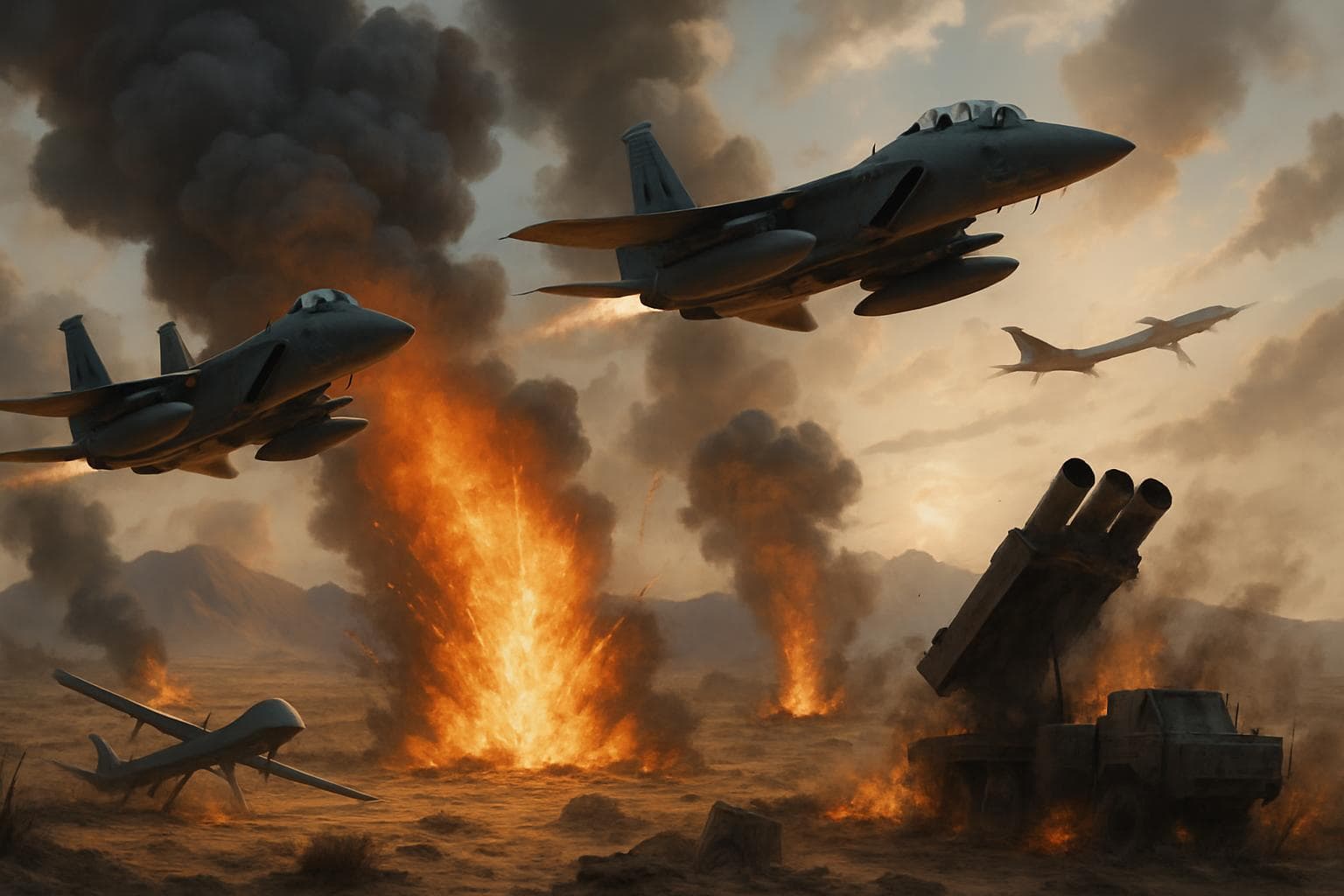
The ongoing military conflict between the US, Israel, and Iran has seen a significant escalation, with the US and Israel conducting over 2,000 airstrikes since the joint operation began. This aggressive campaign has severely impacted Iran's military capabilities, particularly its missile and drone stockpiles.
Depletion of Iranian Military Resources
According to US Central Command, Iran's ballistic missile launches have plummeted by 86% since the onset of hostilities, while drone launches have decreased by 73%. The Tel Aviv-based Institute for National Security Studies (INSS) reports that Iran initially launched 571 missiles and 1,391 drones, but these numbers have sharply declined. The US and Israel's airstrikes have targeted Iran's missile and drone launchers, as well as its production facilities, aiming to further degrade Iran's ability to sustain military operations.
US and Israeli Air Superiority
Pentagon chief Pete Hegseth announced that the US would soon have uncontested control over Iranian airspace, asserting that Iran's military capabilities are "evaporating by the hour." The US has established air superiority along Iran's southern coast and plans to extend operations further inland. General Dan Caine, chairman of the joint chiefs of staff, highlighted that Iran's navy has been largely destroyed, and its senior leadership is either killed or in hiding.
Humanitarian Concerns and Civilian Casualties
The conflict has resulted in significant civilian casualties, with human rights monitors reporting over 1,000 Iranian deaths, including 180 children. The bombing of Shajareh Tayyebeh school, which resulted in the deaths of numerous schoolgirls, has drawn international condemnation. Hegseth stated that an investigation is underway but maintained that US forces do not target civilian sites.
Strategic Shifts and Future Operations
The US military strategy is transitioning from using expensive standoff munitions to deploying cheaper GPS and laser-guided bombs directly over Iranian territory. Hegseth emphasized the US's "nearly unlimited stockpile" of these weapons, suggesting a sustained military presence in the region.
WHAT THIS MIGHT MEAN
As the conflict progresses, the US and Israel's continued airstrikes could further weaken Iran's military infrastructure, potentially leading to a shift in regional power dynamics. However, the humanitarian toll raises ethical concerns and could provoke international backlash. The reduction in Iran's military capabilities may force it to seek alternative strategies, possibly involving asymmetric warfare or diplomatic negotiations. The situation remains fluid, with the potential for escalation or resolution hinging on both military developments and diplomatic efforts.
Related Articles
Intensified US-Israel Strikes on Iran Spark Global Outcry
Iran Postpones Khamenei Funeral Amid Escalating US-Israeli Strikes
Senate Blocks Resolution to Limit Trump's Military Actions in Iran

Middle East Conflict Drives UK Energy Prices to New Highs

UK-Iran Tensions: Starmer Defends Cautious Approach Amid Trump Criticism

Spain's Sánchez Stands Firm Against Trump's Trade Threat Over Iran Stance
US and Israel Intensify Military Campaign as Iran's Capabilities Dwindle
In This Article
 Ethan Brooks| Published
 HIGHLIGHTS
- The US and Israel have launched over 2,000 strikes against Iran, significantly depleting Iran's missile and drone capabilities.
- Iran's missile launches have decreased by 86% since the conflict began, and its drone launches have dropped by 73%.
- The US claims to have achieved air superiority over Iran, with plans to expand operations deeper into Iranian territory.
- Over 1,000 Iranian civilians, including 180 children, have been killed, raising concerns about the humanitarian impact.
- The Pentagon asserts that Iran's military capabilities are rapidly diminishing, with its navy largely destroyed and senior leadership in hiding.
The ongoing military conflict between the US, Israel, and Iran has seen a significant escalation, with the US and Israel conducting over 2,000 airstrikes since the joint operation began. This aggressive campaign has severely impacted Iran's military capabilities, particularly its missile and drone stockpiles.
Depletion of Iranian Military Resources
According to US Central Command, Iran's ballistic missile launches have plummeted by 86% since the onset of hostilities, while drone launches have decreased by 73%. The Tel Aviv-based Institute for National Security Studies (INSS) reports that Iran initially launched 571 missiles and 1,391 drones, but these numbers have sharply declined. The US and Israel's airstrikes have targeted Iran's missile and drone launchers, as well as its production facilities, aiming to further degrade Iran's ability to sustain military operations.
US and Israeli Air Superiority
Pentagon chief Pete Hegseth announced that the US would soon have uncontested control over Iranian airspace, asserting that Iran's military capabilities are "evaporating by the hour." The US has established air superiority along Iran's southern coast and plans to extend operations further inland. General Dan Caine, chairman of the joint chiefs of staff, highlighted that Iran's navy has been largely destroyed, and its senior leadership is either killed or in hiding.
Humanitarian Concerns and Civilian Casualties
The conflict has resulted in significant civilian casualties, with human rights monitors reporting over 1,000 Iranian deaths, including 180 children. The bombing of Shajareh Tayyebeh school, which resulted in the deaths of numerous schoolgirls, has drawn international condemnation. Hegseth stated that an investigation is underway but maintained that US forces do not target civilian sites.
Strategic Shifts and Future Operations
The US military strategy is transitioning from using expensive standoff munitions to deploying cheaper GPS and laser-guided bombs directly over Iranian territory. Hegseth emphasized the US's "nearly unlimited stockpile" of these weapons, suggesting a sustained military presence in the region.
WHAT THIS MIGHT MEAN
As the conflict progresses, the US and Israel's continued airstrikes could further weaken Iran's military infrastructure, potentially leading to a shift in regional power dynamics. However, the humanitarian toll raises ethical concerns and could provoke international backlash. The reduction in Iran's military capabilities may force it to seek alternative strategies, possibly involving asymmetric warfare or diplomatic negotiations. The situation remains fluid, with the potential for escalation or resolution hinging on both military developments and diplomatic efforts.
Related Articles
Intensified US-Israel Strikes on Iran Spark Global Outcry
Iran Postpones Khamenei Funeral Amid Escalating US-Israeli Strikes
Senate Blocks Resolution to Limit Trump's Military Actions in Iran
Middle East Conflict Drives UK Energy Prices to New Highs
UK-Iran Tensions: Starmer Defends Cautious Approach Amid Trump Criticism
Spain's Sánchez Stands Firm Against Trump's Trade Threat Over Iran Stance