
UK-Iran Tensions: Starmer Defends Cautious Approach Amid Trump Criticism
In This Article
HIGHLIGHTS
- UK Prime Minister Keir Starmer defended his decision to allow US use of British bases only for defensive strikes on Iran, emphasizing the need for a lawful basis.
- US President Donald Trump criticized Starmer for not permitting initial offensive strikes, straining the "special relationship" between the US and UK.
- Conservative leader Kemi Badenoch accused Starmer of inaction, urging more aggressive measures against Iran following attacks on British bases.
- Former NATO commander Gen Sir Richard Shirreff supported Starmer's cautious approach, warning against entering a conflict without a clear strategy.
- The UK has been deploying military resources, including radar systems and F-35 jets, to protect British nationals and support US operations in the region.
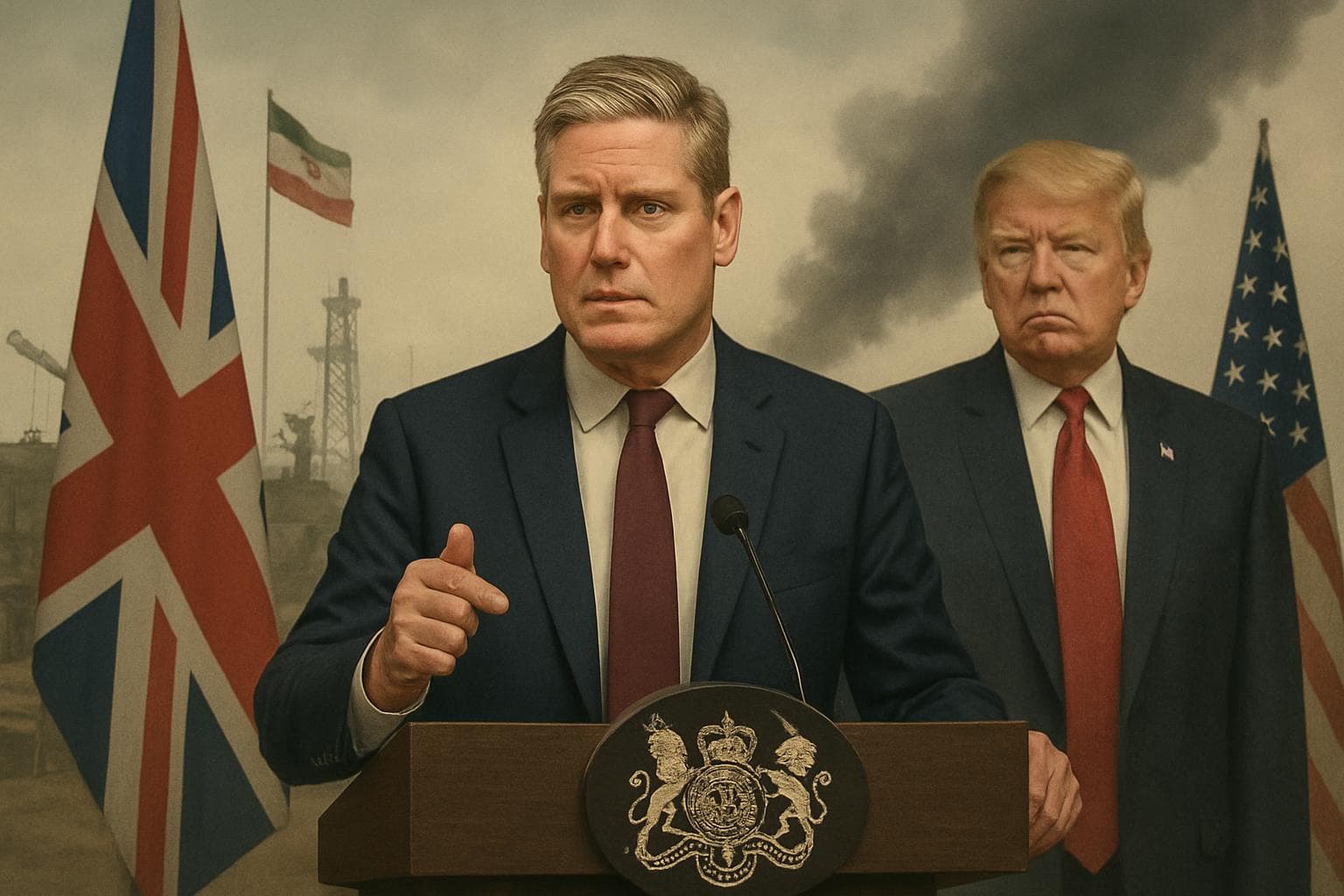
In a tense political climate, UK Prime Minister Keir Starmer has defended his decision to limit the use of British military bases to defensive strikes against Iran, following criticism from US President Donald Trump. The decision comes amid escalating tensions in the Middle East, with Starmer emphasizing the importance of a lawful basis for any military action.
UK's Defensive Stance
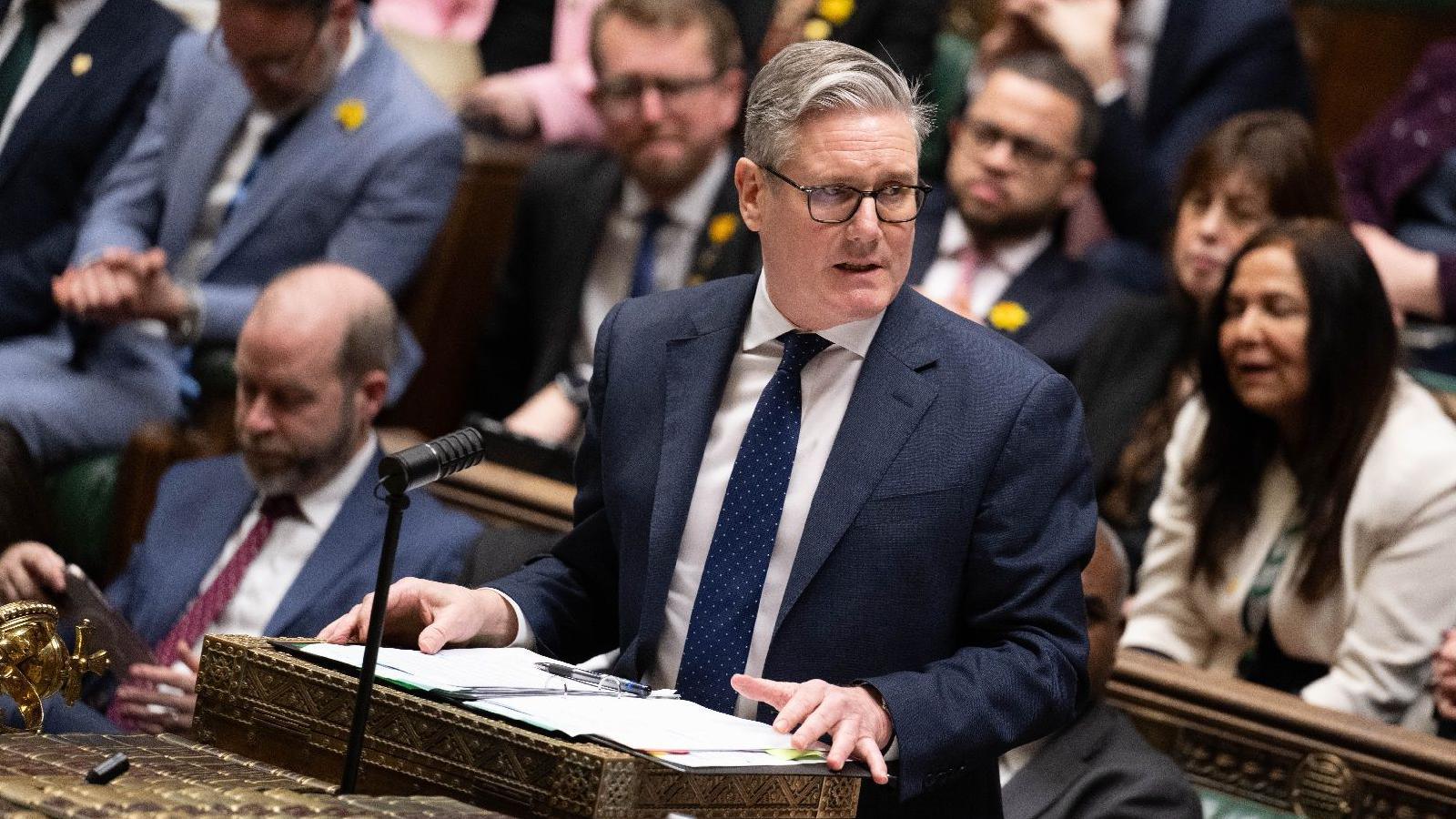
During a heated session of Prime Minister's Questions, Starmer reiterated that his primary concern is the safety of British nationals. He stated, "What I was not prepared to do was for the UK to join a war unless I was satisfied there was a lawful basis and a viable, thought-through plan." This cautious approach has been met with criticism from Conservative leader Kemi Badenoch, who accused Starmer of inaction, urging the UK to take more offensive measures after attacks on British bases in Bahrain and Cyprus.
Strained US-UK Relations
The decision not to allow initial offensive strikes has strained the "special relationship" between the US and UK. Trump expressed his dissatisfaction, describing the decision as "shocking" and questioning the strength of the bilateral relationship. Despite this, Starmer maintained that the cooperation between US and UK forces, including the use of British bases for defensive operations, exemplifies the special relationship in action.
Support for Starmer's Approach
Former NATO commander Gen Sir Richard Shirreff defended Starmer's cautious stance, warning against entering a conflict without a clear strategy. Shirreff highlighted the importance of a clear end point, drawing parallels to past conflicts such as Iraq. "Britain has to do what is right for Britain," he stated, emphasizing the need for a well-defined strategy.
Military Deployments and Preparations
In response to the escalating situation, the UK has been deploying military resources to the region. This includes radar systems, ground-based air defenses, and F-35 jets to protect British nationals and support US operations. The UK has also been coordinating with the US to ensure the safety of military personnel and civilians in the region.
WHAT THIS MIGHT MEAN
The UK's cautious approach to the Iran conflict could have significant implications for its international relations and domestic politics. While Starmer's emphasis on a lawful basis for military action aligns with international legal standards, it may lead to further tensions with the US, particularly under Trump's administration. The situation also highlights the challenges of balancing national security interests with international alliances.
Moving forward, the UK may need to navigate complex diplomatic waters to maintain its strategic alliances while ensuring the safety of its nationals. The deployment of additional military resources suggests a commitment to defense, but the UK may face pressure to take a more active role in the conflict. As the situation evolves, the UK will need to carefully consider its next steps to avoid further escalation and maintain its international standing.
Images from the Web
Related Articles
UK Reinforces Military Presence in Cyprus Amid Middle East Tensions

UK Faces Dilemmas Amid Iran Conflict and China Spying Allegations
Canada and Australia Forge Strategic Partnership Amid Global Uncertainty

UK Government to Reform Asylum Seeker Support and Employment Policies
Middle East Conflict Drives UK Energy Prices to New Highs
Labour MP's Husband Arrested in UK-China Espionage Probe
UK-Iran Tensions: Starmer Defends Cautious Approach Amid Trump Criticism
In This Article
 Ethan Brooks| Published
 HIGHLIGHTS
- UK Prime Minister Keir Starmer defended his decision to allow US use of British bases only for defensive strikes on Iran, emphasizing the need for a lawful basis.
- US President Donald Trump criticized Starmer for not permitting initial offensive strikes, straining the "special relationship" between the US and UK.
- Conservative leader Kemi Badenoch accused Starmer of inaction, urging more aggressive measures against Iran following attacks on British bases.
- Former NATO commander Gen Sir Richard Shirreff supported Starmer's cautious approach, warning against entering a conflict without a clear strategy.
- The UK has been deploying military resources, including radar systems and F-35 jets, to protect British nationals and support US operations in the region.
In a tense political climate, UK Prime Minister Keir Starmer has defended his decision to limit the use of British military bases to defensive strikes against Iran, following criticism from US President Donald Trump. The decision comes amid escalating tensions in the Middle East, with Starmer emphasizing the importance of a lawful basis for any military action.
UK's Defensive Stance
During a heated session of Prime Minister's Questions, Starmer reiterated that his primary concern is the safety of British nationals. He stated, "What I was not prepared to do was for the UK to join a war unless I was satisfied there was a lawful basis and a viable, thought-through plan." This cautious approach has been met with criticism from Conservative leader Kemi Badenoch, who accused Starmer of inaction, urging the UK to take more offensive measures after attacks on British bases in Bahrain and Cyprus.
Strained US-UK Relations
The decision not to allow initial offensive strikes has strained the "special relationship" between the US and UK. Trump expressed his dissatisfaction, describing the decision as "shocking" and questioning the strength of the bilateral relationship. Despite this, Starmer maintained that the cooperation between US and UK forces, including the use of British bases for defensive operations, exemplifies the special relationship in action.
Support for Starmer's Approach
Former NATO commander Gen Sir Richard Shirreff defended Starmer's cautious stance, warning against entering a conflict without a clear strategy. Shirreff highlighted the importance of a clear end point, drawing parallels to past conflicts such as Iraq. "Britain has to do what is right for Britain," he stated, emphasizing the need for a well-defined strategy.
Military Deployments and Preparations
In response to the escalating situation, the UK has been deploying military resources to the region. This includes radar systems, ground-based air defenses, and F-35 jets to protect British nationals and support US operations. The UK has also been coordinating with the US to ensure the safety of military personnel and civilians in the region.
WHAT THIS MIGHT MEAN
The UK's cautious approach to the Iran conflict could have significant implications for its international relations and domestic politics. While Starmer's emphasis on a lawful basis for military action aligns with international legal standards, it may lead to further tensions with the US, particularly under Trump's administration. The situation also highlights the challenges of balancing national security interests with international alliances.
Moving forward, the UK may need to navigate complex diplomatic waters to maintain its strategic alliances while ensuring the safety of its nationals. The deployment of additional military resources suggests a commitment to defense, but the UK may face pressure to take a more active role in the conflict. As the situation evolves, the UK will need to carefully consider its next steps to avoid further escalation and maintain its international standing.
Images from the Web
Related Articles
UK Reinforces Military Presence in Cyprus Amid Middle East Tensions
UK Faces Dilemmas Amid Iran Conflict and China Spying Allegations
Canada and Australia Forge Strategic Partnership Amid Global Uncertainty
UK Government to Reform Asylum Seeker Support and Employment Policies
Middle East Conflict Drives UK Energy Prices to New Highs
Labour MP's Husband Arrested in UK-China Espionage Probe