
Cuba Faces Widespread Blackout Amid Deepening Fuel Crisis
In This Article
HIGHLIGHTS
- Millions in Cuba experienced a major blackout on Wednesday due to a shutdown at the Antonio Guiteras power plant.
- The blackout affected regions from Camaguey to Pinar del Rio, including Havana, amid ongoing fuel shortages.
- US sanctions on Venezuelan oil have exacerbated Cuba's energy crisis, leading to frequent power outages.
- The Cuban government is working to restore power, with officials meeting to address the situation.
- The crisis has disrupted public services, including transportation and healthcare, impacting daily life.
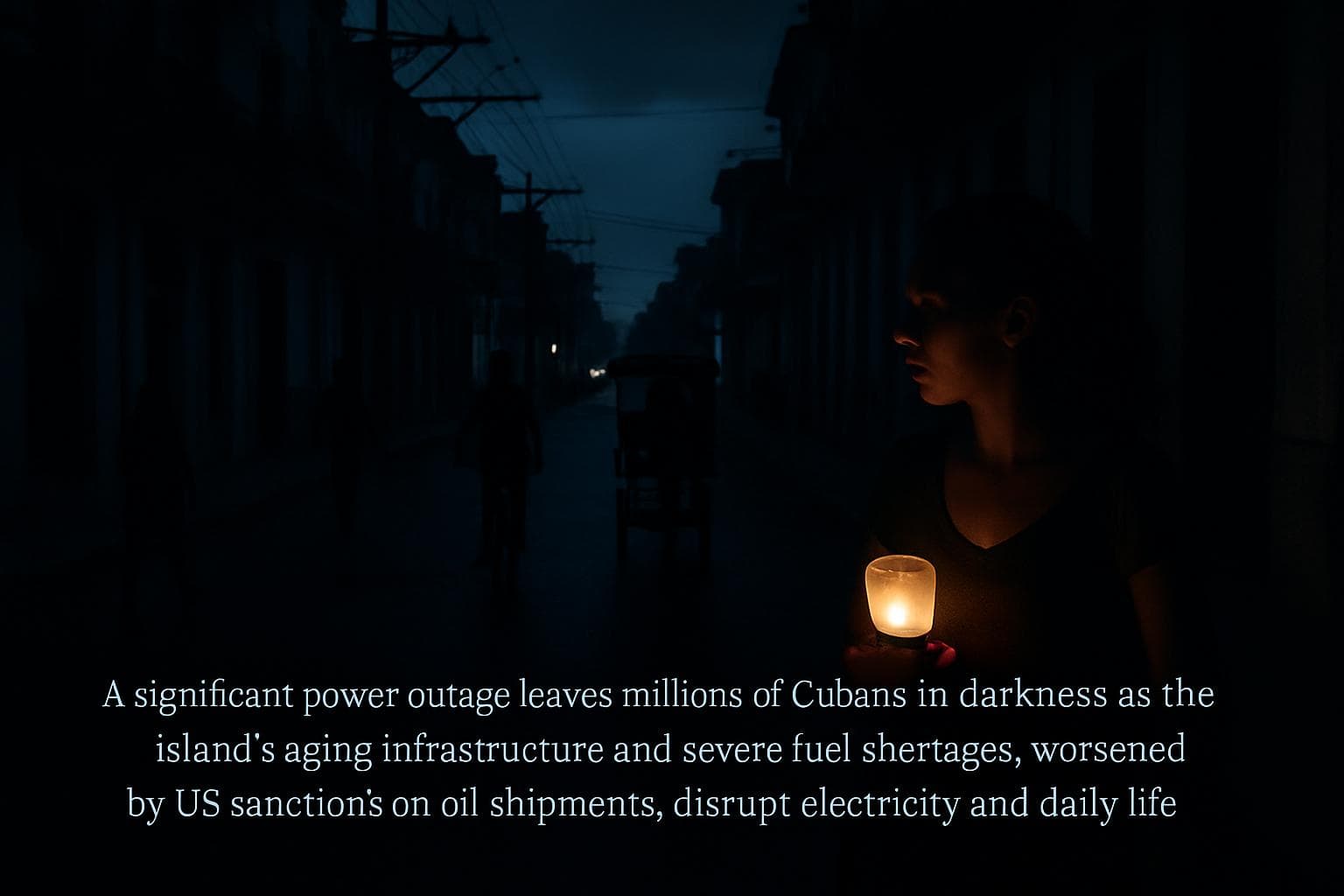
Millions of Cubans were left in darkness on Wednesday as a significant power outage swept across the island, highlighting the nation's ongoing struggle with a severe fuel crisis. The blackout, which affected two-thirds of the country, was triggered by an unexpected shutdown at the Antonio Guiteras thermoelectric power plant, located approximately 100 kilometers east of Havana.
Extent of the Blackout
The power outage stretched from the central province of Camaguey to Pinar del Rio in the west, enveloping the capital, Havana, in darkness. Cuba's national electricity company, UNE, confirmed the incident, marking the second major blackout in the region within three months. The country's aging infrastructure, compounded by chronic fuel shortages, has led to frequent disruptions in electricity supply.
Impact of US Sanctions
The energy crisis in Cuba has been exacerbated by US sanctions on oil shipments from Venezuela, a key ally that previously supplied around 35,000 barrels of oil daily to the island. These sanctions have intensified the strain on Cuba's electricity grid, which relies heavily on imported fuel. The US blockade has also affected other sectors, with airlines like Air France suspending services due to aviation fuel shortages.
Government Response and Public Impact
In response to the blackout, Cuban Prime Minister Manuel Marrero Cruz and Energy Minister Vicente de la O Levy convened to strategize on restoring power. "We trust in the experience and effort of the electrical workers to overcome this situation in the shortest possible time," Marrero stated on social media. Meanwhile, the outage has severely impacted daily life, disrupting public transport and healthcare services. Residents like Odalis Sánchez, caught without transportation, expressed frustration over the lack of power and its effects on everyday activities.
Historical Context
The strained relationship between the US and Cuba dates back to 1959, following Fidel Castro's rise to power. Economic and trade embargoes have been in place since 1960, with recent US administrations maintaining a hardline stance. President Donald Trump has openly advocated for a change in Cuba's leadership, further complicating diplomatic relations.
WHAT THIS MIGHT MEAN
The ongoing energy crisis in Cuba could lead to increased public discontent and pressure on the government to find alternative energy sources. If the US maintains its sanctions, Cuba may seek to strengthen ties with other allies to secure fuel supplies. Experts suggest that without significant infrastructure investment and diplomatic negotiations, Cuba's energy challenges will persist, potentially affecting its economic stability and international relations.
Related Articles
El Mencho's Death Sparks Violent Unrest Across Mexico

UK Faces Dilemmas Amid Iran Conflict and China Spying Allegations
Spain's Sánchez Stands Firm Against Trump's Trade Threat Over Iran Stance
China Sets Lowest GDP Growth Target in Decades Amid Economic Challenges
Tech Giants Pledge to Cover AI Data Center Energy Costs Amid Rising Electricity Concerns
Congress Subpoenas Attorney General Bondi in Epstein Investigation
Cuba Faces Widespread Blackout Amid Deepening Fuel Crisis
In This Article
HIGHLIGHTS
- Millions in Cuba experienced a major blackout on Wednesday due to a shutdown at the Antonio Guiteras power plant.
- The blackout affected regions from Camaguey to Pinar del Rio, including Havana, amid ongoing fuel shortages.
- US sanctions on Venezuelan oil have exacerbated Cuba's energy crisis, leading to frequent power outages.
- The Cuban government is working to restore power, with officials meeting to address the situation.
- The crisis has disrupted public services, including transportation and healthcare, impacting daily life.
Millions of Cubans were left in darkness on Wednesday as a significant power outage swept across the island, highlighting the nation's ongoing struggle with a severe fuel crisis. The blackout, which affected two-thirds of the country, was triggered by an unexpected shutdown at the Antonio Guiteras thermoelectric power plant, located approximately 100 kilometers east of Havana.
Extent of the Blackout
The power outage stretched from the central province of Camaguey to Pinar del Rio in the west, enveloping the capital, Havana, in darkness. Cuba's national electricity company, UNE, confirmed the incident, marking the second major blackout in the region within three months. The country's aging infrastructure, compounded by chronic fuel shortages, has led to frequent disruptions in electricity supply.
Impact of US Sanctions
The energy crisis in Cuba has been exacerbated by US sanctions on oil shipments from Venezuela, a key ally that previously supplied around 35,000 barrels of oil daily to the island. These sanctions have intensified the strain on Cuba's electricity grid, which relies heavily on imported fuel. The US blockade has also affected other sectors, with airlines like Air France suspending services due to aviation fuel shortages.
Government Response and Public Impact
In response to the blackout, Cuban Prime Minister Manuel Marrero Cruz and Energy Minister Vicente de la O Levy convened to strategize on restoring power. "We trust in the experience and effort of the electrical workers to overcome this situation in the shortest possible time," Marrero stated on social media. Meanwhile, the outage has severely impacted daily life, disrupting public transport and healthcare services. Residents like Odalis Sánchez, caught without transportation, expressed frustration over the lack of power and its effects on everyday activities.
Historical Context
The strained relationship between the US and Cuba dates back to 1959, following Fidel Castro's rise to power. Economic and trade embargoes have been in place since 1960, with recent US administrations maintaining a hardline stance. President Donald Trump has openly advocated for a change in Cuba's leadership, further complicating diplomatic relations.
WHAT THIS MIGHT MEAN
The ongoing energy crisis in Cuba could lead to increased public discontent and pressure on the government to find alternative energy sources. If the US maintains its sanctions, Cuba may seek to strengthen ties with other allies to secure fuel supplies. Experts suggest that without significant infrastructure investment and diplomatic negotiations, Cuba's energy challenges will persist, potentially affecting its economic stability and international relations.
Related Articles
El Mencho's Death Sparks Violent Unrest Across Mexico
UK Faces Dilemmas Amid Iran Conflict and China Spying Allegations
Spain's Sánchez Stands Firm Against Trump's Trade Threat Over Iran Stance
China Sets Lowest GDP Growth Target in Decades Amid Economic Challenges
Tech Giants Pledge to Cover AI Data Center Energy Costs Amid Rising Electricity Concerns
Congress Subpoenas Attorney General Bondi in Epstein Investigation