
China Sets Lowest GDP Growth Target in Decades Amid Economic Challenges
In This Article
HIGHLIGHTS
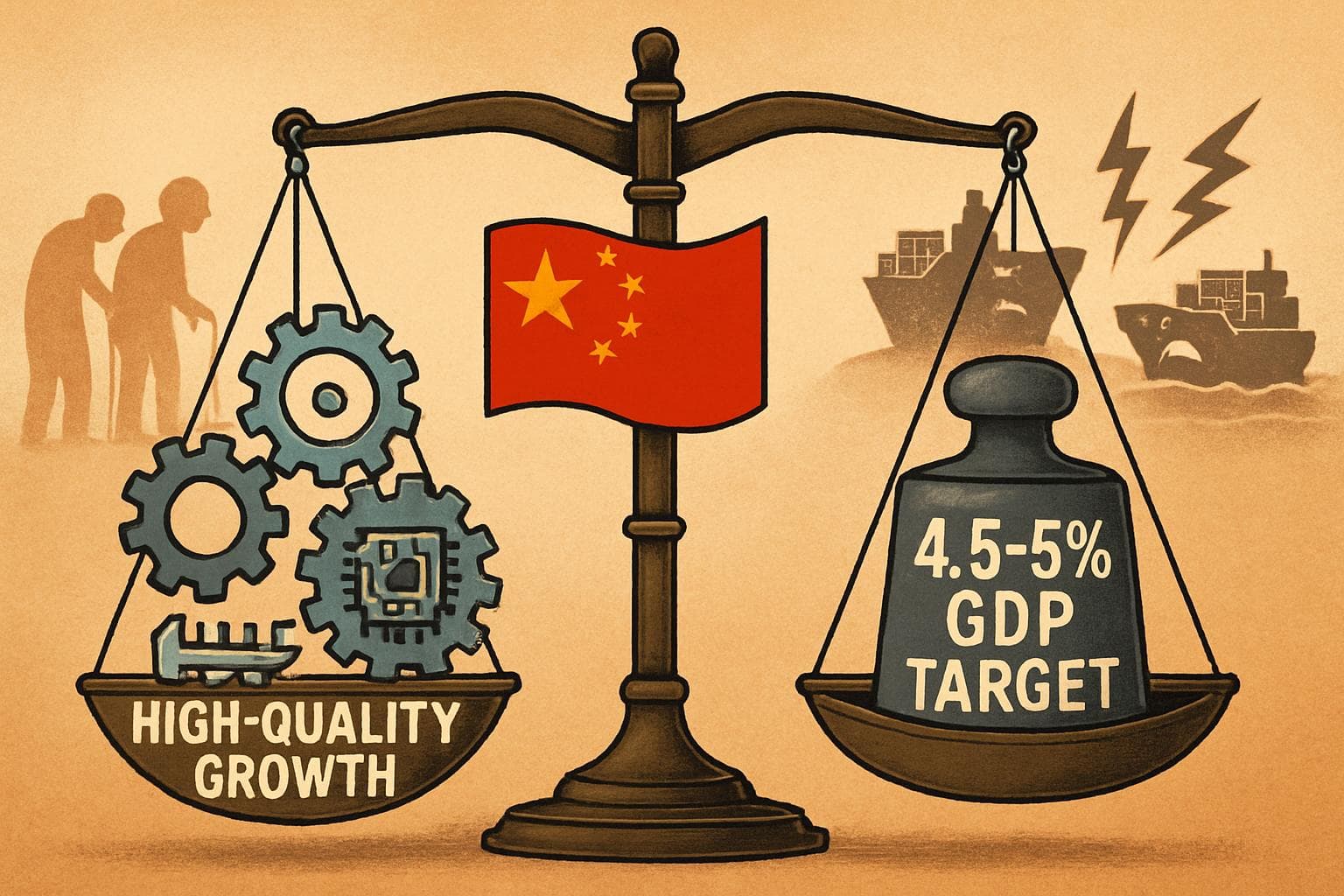
- China has set its lowest GDP growth target since 1991, aiming for 4.5%-5% growth amid domestic and international challenges.
- The new target reflects a strategic shift towards "high-quality growth" focusing on innovation and high-tech industries.
- The 15th Five Year Plan outlines goals for boosting consumption, technological advancements, and addressing demographic issues.
- China faces economic pressures from an aging population, weak domestic demand, and a struggling property sector.
- A temporary trade truce with the US provides China an opportunity to focus on structural economic reforms.
China has announced its lowest GDP growth target since 1991, setting a goal of 4.5%-5% as it navigates a complex economic landscape. This decision, revealed during the annual "two sessions" political gathering, marks a significant shift in strategy as Beijing seeks to transition from export-led growth to a more resilient economic model.
Strategic Shift Towards High-Quality Growth
Premier Li Qiang, addressing delegates at the National People’s Congress, emphasized the need for "high-quality growth" driven by innovation and high-tech industries. The 15th Five Year Plan, unveiled during the sessions, outlines ambitious projects to enhance domestic consumption and technological capacity. These initiatives aim to reduce China's reliance on exports and upgrade its manufacturing sector.
Economic Pressures and Demographic Challenges
China's economic landscape is fraught with challenges, including an aging population, a sluggish property market, and weak domestic demand. The government has set a 5.5% target for urban unemployment and aims to create over 12 million new urban jobs, reflecting a commitment to maintaining social stability amid economic restructuring.
Navigating Global Trade Tensions
The ongoing trade tensions with the United States have added to the economic pressures. However, a temporary trade truce provides a window for China to focus on internal reforms. Despite these challenges, China ended the previous year with a record $1 trillion trade surplus, underscoring its resilience in global markets.
WHAT THIS MIGHT MEAN
Looking ahead, China's strategic pivot towards high-tech industries and domestic consumption could redefine its economic trajectory. However, the shift may pose risks to traditional sectors, potentially impacting millions of blue-collar workers. The success of these reforms will depend on how effectively China can balance growth with social stability.
The temporary trade truce with the US offers a critical opportunity for China to recalibrate its economic policies. Future negotiations and potential visits by US officials could further influence China's economic strategy. As China aims to become a moderately developed country by 2035, its ability to navigate these domestic and international challenges will be crucial.
Related Articles

UK Faces Dilemmas Amid Iran Conflict and China Spying Allegations
Trump's New Tariff Strategy Sparks Global Trade Uncertainty
Trump's Tariff Strategy Faces Supreme Court Setback, New Measures Announced

Cuba Faces Widespread Blackout Amid Deepening Fuel Crisis

Google Faces Legal Battle Over AI Chatbot's Alleged Role in Tragic Death

Labour MP's Husband Arrested in UK-China Espionage Probe
China Sets Lowest GDP Growth Target in Decades Amid Economic Challenges
In This Article
 Daniel Rivera| Published
 HIGHLIGHTS
- China has set its lowest GDP growth target since 1991, aiming for 4.5%-5% growth amid domestic and international challenges.
- The new target reflects a strategic shift towards "high-quality growth" focusing on innovation and high-tech industries.
- The 15th Five Year Plan outlines goals for boosting consumption, technological advancements, and addressing demographic issues.
- China faces economic pressures from an aging population, weak domestic demand, and a struggling property sector.
- A temporary trade truce with the US provides China an opportunity to focus on structural economic reforms.
China has announced its lowest GDP growth target since 1991, setting a goal of 4.5%-5% as it navigates a complex economic landscape. This decision, revealed during the annual "two sessions" political gathering, marks a significant shift in strategy as Beijing seeks to transition from export-led growth to a more resilient economic model.
Strategic Shift Towards High-Quality Growth
Premier Li Qiang, addressing delegates at the National People’s Congress, emphasized the need for "high-quality growth" driven by innovation and high-tech industries. The 15th Five Year Plan, unveiled during the sessions, outlines ambitious projects to enhance domestic consumption and technological capacity. These initiatives aim to reduce China's reliance on exports and upgrade its manufacturing sector.
Economic Pressures and Demographic Challenges
China's economic landscape is fraught with challenges, including an aging population, a sluggish property market, and weak domestic demand. The government has set a 5.5% target for urban unemployment and aims to create over 12 million new urban jobs, reflecting a commitment to maintaining social stability amid economic restructuring.
Navigating Global Trade Tensions
The ongoing trade tensions with the United States have added to the economic pressures. However, a temporary trade truce provides a window for China to focus on internal reforms. Despite these challenges, China ended the previous year with a record $1 trillion trade surplus, underscoring its resilience in global markets.
WHAT THIS MIGHT MEAN
Looking ahead, China's strategic pivot towards high-tech industries and domestic consumption could redefine its economic trajectory. However, the shift may pose risks to traditional sectors, potentially impacting millions of blue-collar workers. The success of these reforms will depend on how effectively China can balance growth with social stability.
The temporary trade truce with the US offers a critical opportunity for China to recalibrate its economic policies. Future negotiations and potential visits by US officials could further influence China's economic strategy. As China aims to become a moderately developed country by 2035, its ability to navigate these domestic and international challenges will be crucial.
Related Articles
UK Faces Dilemmas Amid Iran Conflict and China Spying Allegations
Trump's New Tariff Strategy Sparks Global Trade Uncertainty
Trump's Tariff Strategy Faces Supreme Court Setback, New Measures Announced
Cuba Faces Widespread Blackout Amid Deepening Fuel Crisis
Google Faces Legal Battle Over AI Chatbot's Alleged Role in Tragic Death
Labour MP's Husband Arrested in UK-China Espionage Probe