
Trump's New Tariff Strategy Sparks Global Trade Uncertainty
In This Article
HIGHLIGHTS
- President Trump announced a new 15% global tariff following a Supreme Court ruling against his previous tariff strategy.
- The tariffs, applied under Section 122 of the Trade Act 1974, affect countries including the UK, EU, and Japan.
- US trade chief Jamieson Greer stated the administration's tariff policy remains unchanged despite legal setbacks.
- The British Chambers of Commerce estimates the new tariffs could cost UK exporters £2-3bn.
- China's commerce ministry and India have expressed concerns over the ongoing tariff disputes.
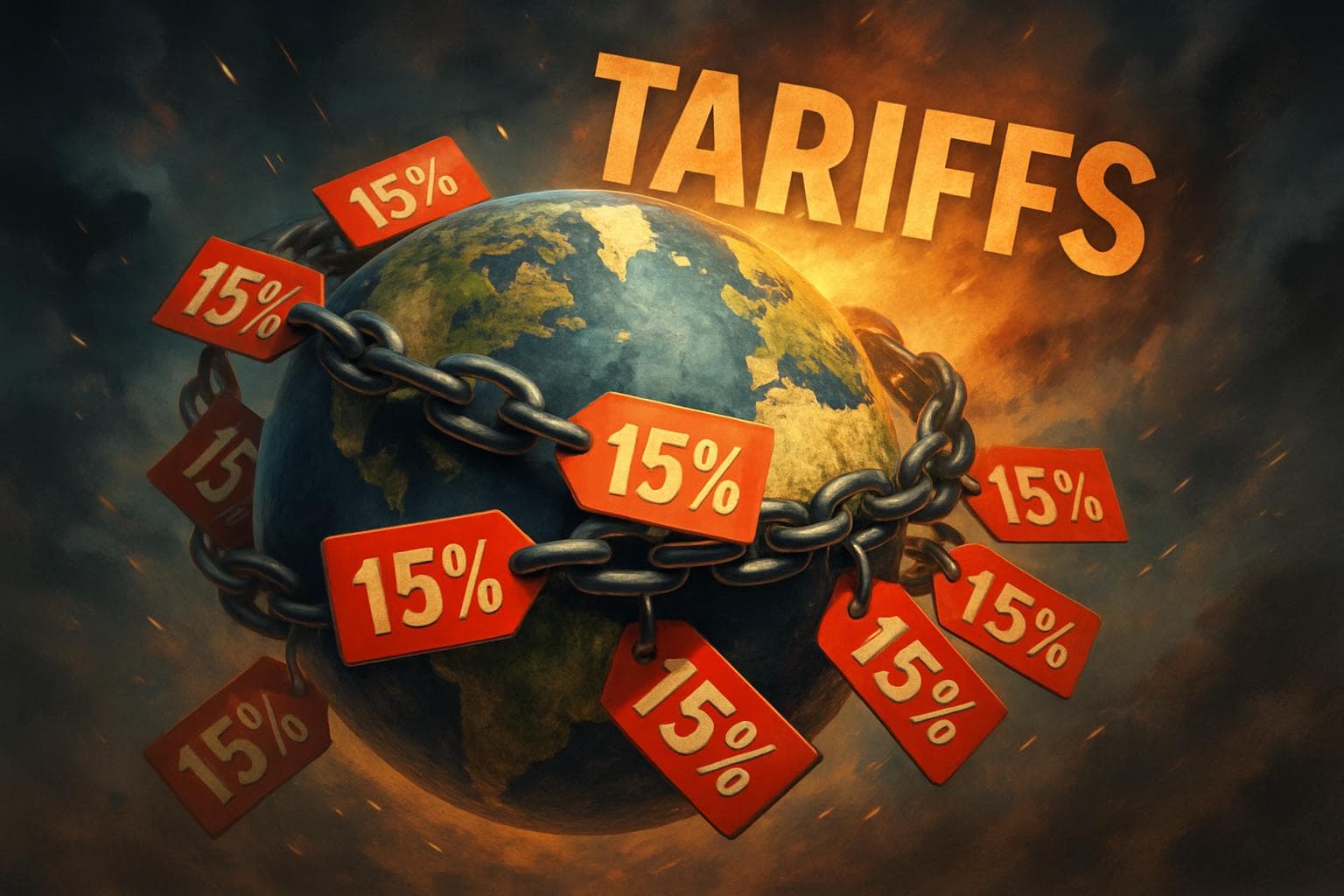
In a move that has intensified global trade tensions, President Donald Trump announced a new 15% global tariff on imports, following a Supreme Court decision that invalidated his previous tariff strategy. The decision, delivered last Friday, ruled that Trump could not use the International Emergency Economic Powers Act of 1977 to impose tariffs, prompting the administration to pivot to Section 122 of the Trade Act 1974.
Supreme Court Ruling and New Tariff Policy
The Supreme Court's ruling was a significant blow to Trump's economic agenda, which heavily relied on tariffs as a tool for international negotiations. In response, Trump swiftly signed a proclamation on Saturday, leveraging Section 122 to impose a temporary 15% tariff on goods from all countries. This move has raised concerns among major trading partners, including the UK and Australia, who had previously negotiated 10% tariff deals with the US.
Impact on International Trade Agreements
The new tariffs have cast uncertainty over existing trade agreements. Jamieson Greer, the top US trade negotiator, emphasized that while the legal mechanisms might change, the administration's policy remains steadfast. "We want to maintain the policy we have," Greer stated, underscoring the administration's commitment to its trade strategy despite the Supreme Court's rebuke.
The British Chambers of Commerce estimates that the increased tariffs could cost UK exporters between £2-3bn. Paul Ashworth, chief North America economist for Capital Economics, noted that the non-discriminatory nature of Section 122 means previous deals are likely affected, placing countries like the EU and Japan back at square one.
Global Reactions and Economic Implications
The announcement has prompted reactions from around the world. China's commerce ministry called for the removal of tariffs, warning against the perils of protectionism. Meanwhile, India postponed a planned trade delegation to Washington, citing the tariff turmoil as a primary reason.
Senate minority leader Chuck Schumer hailed the Supreme Court ruling as a victory for American consumers, criticizing Trump's unilateral approach to trade policy. As the situation unfolds, businesses and consumers alike face continued uncertainty over the future of international trade relations.
WHAT THIS MIGHT MEAN
The imposition of the new tariffs under Section 122 could lead to prolonged trade disputes, as affected countries may seek to renegotiate terms or retaliate with their own tariffs. The economic uncertainty may impact global markets, with businesses facing increased costs and consumers potentially seeing higher prices. Experts suggest that the US Congress may need to intervene if the tariffs extend beyond the 150-day limit, potentially leading to legislative changes in trade policy. As countries like China and India reassess their trade strategies, the global economic landscape could experience significant shifts in the coming months.
Related Articles
China Sets Lowest GDP Growth Target in Decades Amid Economic Challenges

UK Faces Dilemmas Amid Iran Conflict and China Spying Allegations
Canada and Australia Forge Strategic Partnership Amid Global Uncertainty
Tech Giants Pledge to Cover AI Data Center Energy Costs Amid Rising Electricity Concerns
UK-Iran Tensions: Starmer Defends Cautious Approach Amid Trump Criticism
UK Government to Reform Asylum Seeker Support and Employment Policies
Trump's New Tariff Strategy Sparks Global Trade Uncertainty
In This Article
 Daniel Rivera| Published
 HIGHLIGHTS
- President Trump announced a new 15% global tariff following a Supreme Court ruling against his previous tariff strategy.
- The tariffs, applied under Section 122 of the Trade Act 1974, affect countries including the UK, EU, and Japan.
- US trade chief Jamieson Greer stated the administration's tariff policy remains unchanged despite legal setbacks.
- The British Chambers of Commerce estimates the new tariffs could cost UK exporters £2-3bn.
- China's commerce ministry and India have expressed concerns over the ongoing tariff disputes.
In a move that has intensified global trade tensions, President Donald Trump announced a new 15% global tariff on imports, following a Supreme Court decision that invalidated his previous tariff strategy. The decision, delivered last Friday, ruled that Trump could not use the International Emergency Economic Powers Act of 1977 to impose tariffs, prompting the administration to pivot to Section 122 of the Trade Act 1974.
Supreme Court Ruling and New Tariff Policy
The Supreme Court's ruling was a significant blow to Trump's economic agenda, which heavily relied on tariffs as a tool for international negotiations. In response, Trump swiftly signed a proclamation on Saturday, leveraging Section 122 to impose a temporary 15% tariff on goods from all countries. This move has raised concerns among major trading partners, including the UK and Australia, who had previously negotiated 10% tariff deals with the US.
Impact on International Trade Agreements
The new tariffs have cast uncertainty over existing trade agreements. Jamieson Greer, the top US trade negotiator, emphasized that while the legal mechanisms might change, the administration's policy remains steadfast. "We want to maintain the policy we have," Greer stated, underscoring the administration's commitment to its trade strategy despite the Supreme Court's rebuke.
The British Chambers of Commerce estimates that the increased tariffs could cost UK exporters between £2-3bn. Paul Ashworth, chief North America economist for Capital Economics, noted that the non-discriminatory nature of Section 122 means previous deals are likely affected, placing countries like the EU and Japan back at square one.
Global Reactions and Economic Implications
The announcement has prompted reactions from around the world. China's commerce ministry called for the removal of tariffs, warning against the perils of protectionism. Meanwhile, India postponed a planned trade delegation to Washington, citing the tariff turmoil as a primary reason.
Senate minority leader Chuck Schumer hailed the Supreme Court ruling as a victory for American consumers, criticizing Trump's unilateral approach to trade policy. As the situation unfolds, businesses and consumers alike face continued uncertainty over the future of international trade relations.
WHAT THIS MIGHT MEAN
The imposition of the new tariffs under Section 122 could lead to prolonged trade disputes, as affected countries may seek to renegotiate terms or retaliate with their own tariffs. The economic uncertainty may impact global markets, with businesses facing increased costs and consumers potentially seeing higher prices. Experts suggest that the US Congress may need to intervene if the tariffs extend beyond the 150-day limit, potentially leading to legislative changes in trade policy. As countries like China and India reassess their trade strategies, the global economic landscape could experience significant shifts in the coming months.
Related Articles
China Sets Lowest GDP Growth Target in Decades Amid Economic Challenges
UK Faces Dilemmas Amid Iran Conflict and China Spying Allegations
Canada and Australia Forge Strategic Partnership Amid Global Uncertainty
Tech Giants Pledge to Cover AI Data Center Energy Costs Amid Rising Electricity Concerns
UK-Iran Tensions: Starmer Defends Cautious Approach Amid Trump Criticism
UK Government to Reform Asylum Seeker Support and Employment Policies