
Train Derailment in Cumbria Sparks Major Disruption and Safety Concerns
In This Article
HIGHLIGHTS
- A Glasgow to London train derailed near Shap, Cumbria, likely due to a landslip, causing significant disruption on the West Coast Main Line.
- Of the 87 people on board, four sustained minor injuries, but none required hospital treatment.
- Network Rail is working to clear the tracks, with services expected to resume by Wednesday morning.
- Passengers have expressed frustration and distress due to delays, with alternative transport arrangements being made.
- MP Tim Farron has called for an investigation into rail infrastructure spending in the region.
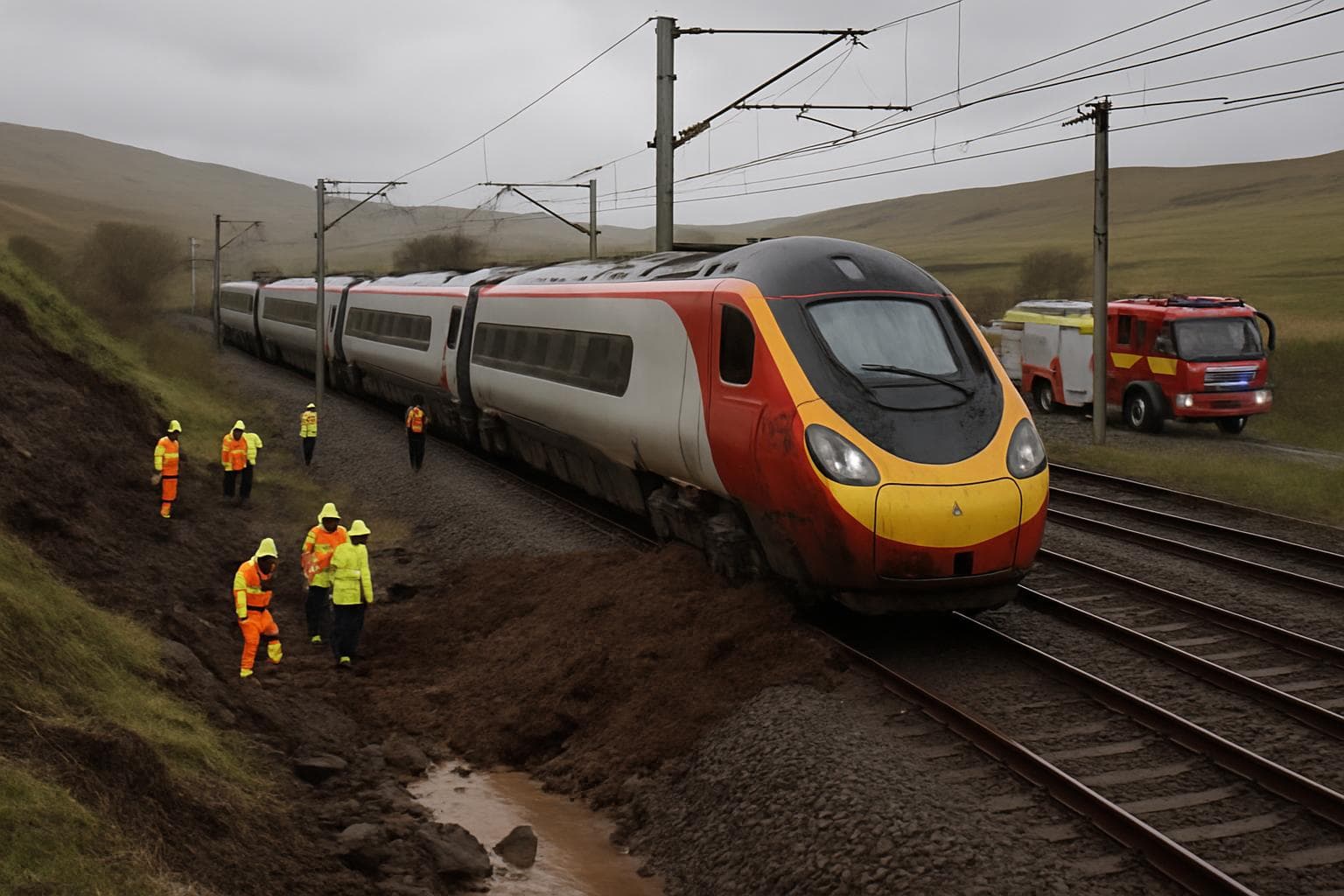
Train passengers are experiencing significant delays after a Glasgow to London service derailed near Shap in Cumbria, seemingly after hitting a landslip. The incident, which occurred early Monday morning, has disrupted services on the West Coast Main Line, affecting thousands of travelers.
Incident Details and Immediate Response
The Avanti West Coast train, traveling at approximately 80mph, came off the tracks at around 06:15 GMT. Of the 87 passengers and crew on board, four suffered minor injuries, but none required hospital treatment, according to the North West Ambulance Service. Emergency services quickly declared a major incident, although it was later stood down.
Passenger Experiences and Reactions
Passengers described moments of panic and distress during the derailment. Nathan Cunningham, a passenger, recounted hearing "scraping sounds along the carriages" before the train halted abruptly. Despite the chaos, staff were praised for their swift response in ensuring passenger safety. Prosper Ndlovu, another traveler, expressed frustration over delays, stating, "I'm just hungry right now. I haven't eaten since last night."
Efforts to Restore Services
Network Rail has been working tirelessly to clear the tracks and repair damage to the overhead lines. Darren Miller, infrastructure director for the North West, confirmed that the train has been removed and overhead lines repaired, with services expected to resume by Wednesday morning. However, passengers are advised to check travel updates regularly.
Calls for Investigation and Future Implications
The derailment has prompted MP Tim Farron to question the adequacy of rail infrastructure spending in the region, which is prone to landslips. He emphasized the need for an investigation into whether deferred modernization projects have contributed to the incident.
WHAT THIS MIGHT MEAN
As Network Rail continues its efforts to restore normal service, the incident raises broader questions about rail safety and infrastructure investment in the UK. The call for an investigation by MP Tim Farron highlights potential gaps in maintenance and modernization efforts, particularly in regions vulnerable to landslips. If the investigation reveals systemic issues, it could lead to increased funding and accelerated infrastructure projects to enhance rail safety. Additionally, the incident may prompt a review of current monitoring systems and emergency response protocols to prevent similar occurrences in the future.
Related Articles

UK Government to Reform Asylum Seeker Support and Employment Policies

UK Faces Dilemmas Amid Iran Conflict and China Spying Allegations
UK Reinforces Military Presence in Cyprus Amid Middle East Tensions

Labour MP's Husband Arrested in UK-China Espionage Probe

UK-Iran Tensions: Starmer Defends Cautious Approach Amid Trump Criticism

Persistent Safety Concerns in Nottingham Maternity Services Amidst Calls for Systemic Reform
Train Derailment in Cumbria Sparks Major Disruption and Safety Concerns
In This Article
 Ethan Brooks| Published
 HIGHLIGHTS
- A Glasgow to London train derailed near Shap, Cumbria, likely due to a landslip, causing significant disruption on the West Coast Main Line.
- Of the 87 people on board, four sustained minor injuries, but none required hospital treatment.
- Network Rail is working to clear the tracks, with services expected to resume by Wednesday morning.
- Passengers have expressed frustration and distress due to delays, with alternative transport arrangements being made.
- MP Tim Farron has called for an investigation into rail infrastructure spending in the region.
Train passengers are experiencing significant delays after a Glasgow to London service derailed near Shap in Cumbria, seemingly after hitting a landslip. The incident, which occurred early Monday morning, has disrupted services on the West Coast Main Line, affecting thousands of travelers.
Incident Details and Immediate Response
The Avanti West Coast train, traveling at approximately 80mph, came off the tracks at around 06:15 GMT. Of the 87 passengers and crew on board, four suffered minor injuries, but none required hospital treatment, according to the North West Ambulance Service. Emergency services quickly declared a major incident, although it was later stood down.
Passenger Experiences and Reactions
Passengers described moments of panic and distress during the derailment. Nathan Cunningham, a passenger, recounted hearing "scraping sounds along the carriages" before the train halted abruptly. Despite the chaos, staff were praised for their swift response in ensuring passenger safety. Prosper Ndlovu, another traveler, expressed frustration over delays, stating, "I'm just hungry right now. I haven't eaten since last night."
Efforts to Restore Services
Network Rail has been working tirelessly to clear the tracks and repair damage to the overhead lines. Darren Miller, infrastructure director for the North West, confirmed that the train has been removed and overhead lines repaired, with services expected to resume by Wednesday morning. However, passengers are advised to check travel updates regularly.
Calls for Investigation and Future Implications
The derailment has prompted MP Tim Farron to question the adequacy of rail infrastructure spending in the region, which is prone to landslips. He emphasized the need for an investigation into whether deferred modernization projects have contributed to the incident.
WHAT THIS MIGHT MEAN
As Network Rail continues its efforts to restore normal service, the incident raises broader questions about rail safety and infrastructure investment in the UK. The call for an investigation by MP Tim Farron highlights potential gaps in maintenance and modernization efforts, particularly in regions vulnerable to landslips. If the investigation reveals systemic issues, it could lead to increased funding and accelerated infrastructure projects to enhance rail safety. Additionally, the incident may prompt a review of current monitoring systems and emergency response protocols to prevent similar occurrences in the future.
Related Articles
UK Government to Reform Asylum Seeker Support and Employment Policies
UK Faces Dilemmas Amid Iran Conflict and China Spying Allegations
UK Reinforces Military Presence in Cyprus Amid Middle East Tensions
Labour MP's Husband Arrested in UK-China Espionage Probe
UK-Iran Tensions: Starmer Defends Cautious Approach Amid Trump Criticism
Persistent Safety Concerns in Nottingham Maternity Services Amidst Calls for Systemic Reform