
Delta and United Airlines Sued Over Deceptive Window Seat Charges
In This Article
HIGHLIGHTS
- Delta and United Airlines face lawsuits for allegedly charging extra for window seats that lack windows.
- The lawsuits, filed in federal courts, seek millions in damages for over a million passengers per airline.
- Complaints highlight that certain Boeing and Airbus planes have windowless seats due to technical components.
- Other airlines, like American and Alaska, disclose windowless seats during booking, unlike Delta and United.
- The legal firm Greenbaum Olbrantz describes the practice as "deceptive" and "unlawful".
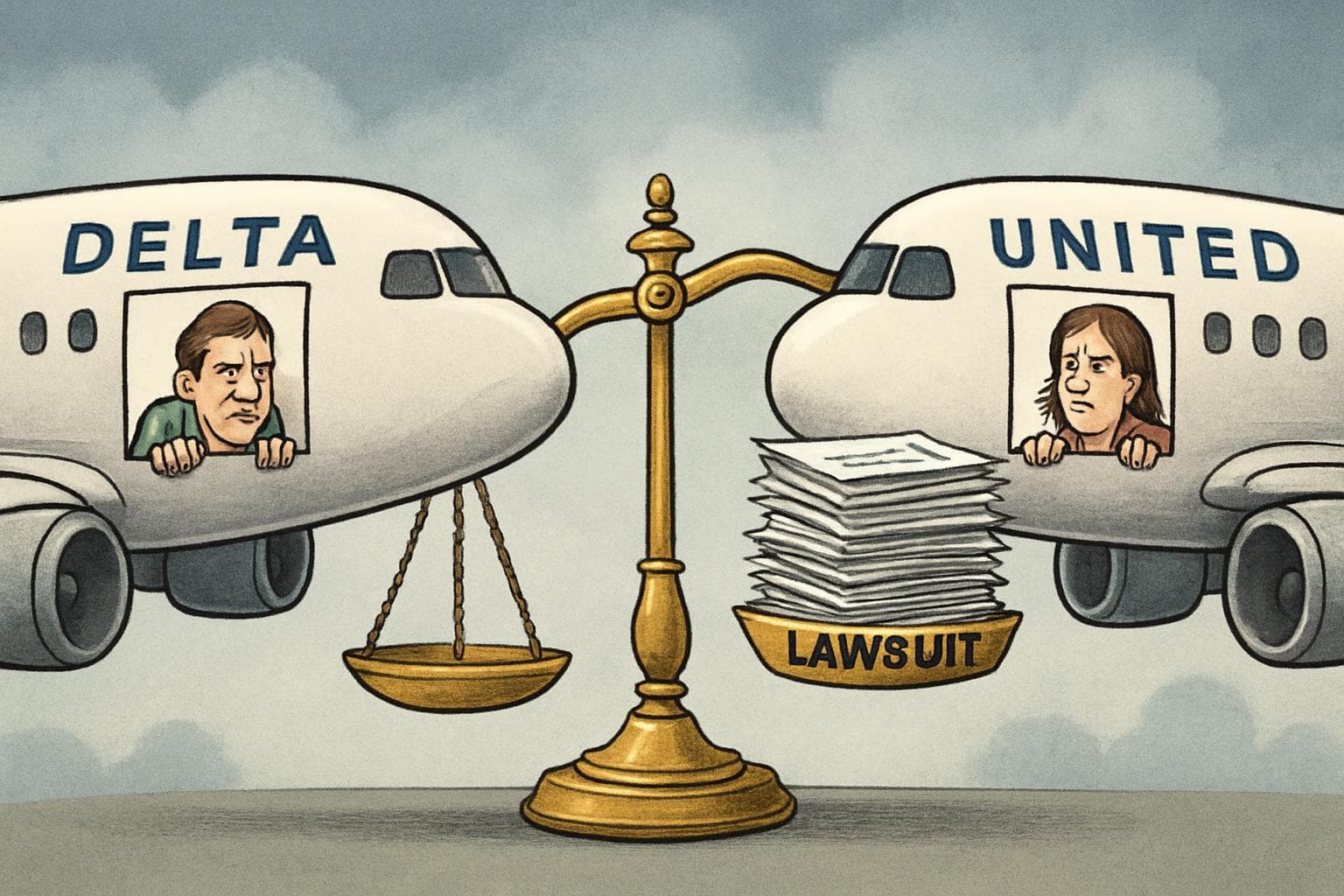
Delta Air Lines and United Airlines are embroiled in legal battles as passengers accuse them of charging premiums for window seats that do not actually have windows. The lawsuits, filed in federal courts in San Francisco and Brooklyn, seek millions of dollars in damages for over a million passengers at each airline.
Allegations of Deceptive Practices
The complaints, lodged by the legal firm Greenbaum Olbrantz, claim that certain seats on Boeing 737, Boeing 757, and Airbus A321 aircraft are marketed as window seats despite being adjacent to blank walls. This situation arises due to the placement of air conditioning ducts, electrical conduits, or other components, which the airlines allegedly fail to disclose during the booking process.
Consumer Protection Concerns
Passengers argue that they would not have opted for these seats, nor paid extra for them, had they known about the lack of windows. The lawsuits highlight that other airlines, such as American Airlines and Alaska Airlines, provide transparency by flagging windowless seats during booking, a practice Delta and United are accused of neglecting.
Legal and Industry Reactions
Carter Greenbaum, an attorney at Greenbaum Olbrantz, emphasized the need to hold Delta and United accountable for what he described as misrepresentation and failure to deliver promised services. Neither airline has commented on the ongoing legal proceedings, maintaining silence amid growing scrutiny.
WHAT THIS MIGHT MEAN
The outcome of these lawsuits could set a precedent for how airlines disclose seat information, potentially leading to industry-wide changes in booking transparency. If the courts rule against Delta and United, it may prompt airlines to revise their seating policies and improve consumer protection measures. Legal experts suggest that this case could encourage more passengers to scrutinize airline practices, potentially leading to further legal challenges in the aviation sector.
Related Articles

Bob Weir, Grateful Dead Co-Founder and Psychedelic Rock Icon, Dies at 78

Violence Erupts Across Mexico Following Death of Drug Lord El Mencho

Elon Musk Defends Tweets in Twitter Takeover Trial

Tragedy Strikes as Avalanche Claims Eight Lives in California's Sierra Nevada

Pinterest Dismisses Engineers for Breaching Privacy Amidst Major Layoffs

Nationwide Protests Erupt After Fatal Shooting of Alex Pretti by Federal Agents in Minneapolis
Delta and United Airlines Sued Over Deceptive Window Seat Charges
In This Article
 Marcus Blake| Published
 HIGHLIGHTS
- Delta and United Airlines face lawsuits for allegedly charging extra for window seats that lack windows.
- The lawsuits, filed in federal courts, seek millions in damages for over a million passengers per airline.
- Complaints highlight that certain Boeing and Airbus planes have windowless seats due to technical components.
- Other airlines, like American and Alaska, disclose windowless seats during booking, unlike Delta and United.
- The legal firm Greenbaum Olbrantz describes the practice as "deceptive" and "unlawful".
Delta Air Lines and United Airlines are embroiled in legal battles as passengers accuse them of charging premiums for window seats that do not actually have windows. The lawsuits, filed in federal courts in San Francisco and Brooklyn, seek millions of dollars in damages for over a million passengers at each airline.
Allegations of Deceptive Practices
The complaints, lodged by the legal firm Greenbaum Olbrantz, claim that certain seats on Boeing 737, Boeing 757, and Airbus A321 aircraft are marketed as window seats despite being adjacent to blank walls. This situation arises due to the placement of air conditioning ducts, electrical conduits, or other components, which the airlines allegedly fail to disclose during the booking process.
Consumer Protection Concerns
Passengers argue that they would not have opted for these seats, nor paid extra for them, had they known about the lack of windows. The lawsuits highlight that other airlines, such as American Airlines and Alaska Airlines, provide transparency by flagging windowless seats during booking, a practice Delta and United are accused of neglecting.
Legal and Industry Reactions
Carter Greenbaum, an attorney at Greenbaum Olbrantz, emphasized the need to hold Delta and United accountable for what he described as misrepresentation and failure to deliver promised services. Neither airline has commented on the ongoing legal proceedings, maintaining silence amid growing scrutiny.
WHAT THIS MIGHT MEAN
The outcome of these lawsuits could set a precedent for how airlines disclose seat information, potentially leading to industry-wide changes in booking transparency. If the courts rule against Delta and United, it may prompt airlines to revise their seating policies and improve consumer protection measures. Legal experts suggest that this case could encourage more passengers to scrutinize airline practices, potentially leading to further legal challenges in the aviation sector.
Related Articles
Bob Weir, Grateful Dead Co-Founder and Psychedelic Rock Icon, Dies at 78
Violence Erupts Across Mexico Following Death of Drug Lord El Mencho
Elon Musk Defends Tweets in Twitter Takeover Trial
Tragedy Strikes as Avalanche Claims Eight Lives in California's Sierra Nevada
Pinterest Dismisses Engineers for Breaching Privacy Amidst Major Layoffs
Nationwide Protests Erupt After Fatal Shooting of Alex Pretti by Federal Agents in Minneapolis