
Nvidia Unveils Advanced AI Platforms for Self-Driving Cars and AI Computing
In This Article
HIGHLIGHTS
- Nvidia unveiled Alpamayo, an AI platform designed to enhance reasoning in self-driving cars, at CES in Las Vegas.
- The company announced the production of the Vera Rubin chip, promising a fivefold increase in AI computing power.
- Nvidia's partnership with Mercedes-Benz will see the release of a driverless car in the US, Europe, and Asia.
- The open-source Alpamayo model is available on Hugging Face, allowing researchers to access and retrain it.
- Nvidia faces growing competition from companies like Google, despite its market dominance in AI hardware.
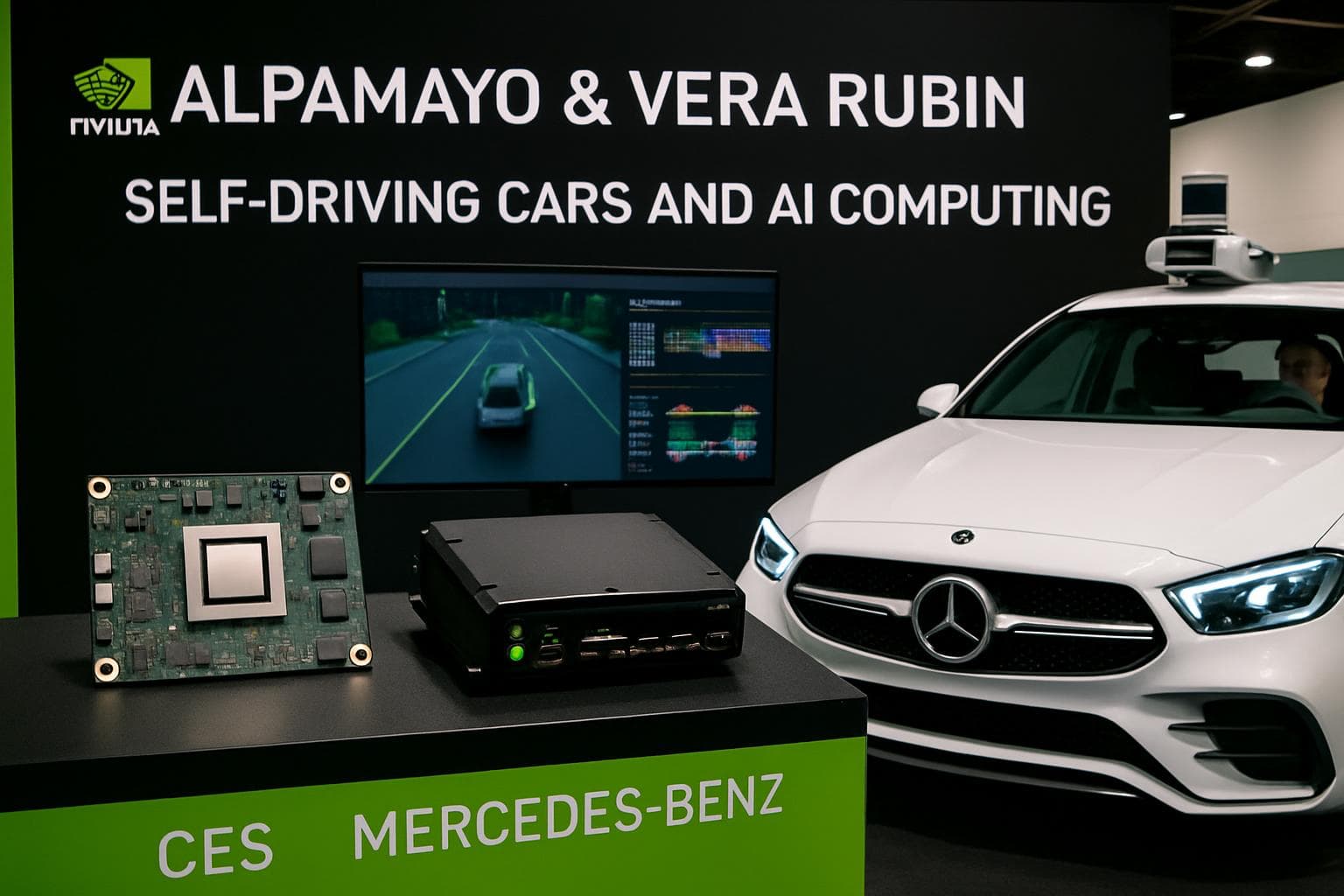
Nvidia, the world's most valuable publicly traded company, has announced significant advancements in AI technology aimed at revolutionizing self-driving cars and AI computing. At the Consumer Electronics Show (CES) in Las Vegas, CEO Jensen Huang introduced Alpamayo, a groundbreaking platform designed to enable autonomous vehicles to think and reason like humans.
Alpamayo: A Leap in Autonomous Vehicle Technology
Alpamayo is set to transform the landscape of self-driving cars by allowing them to navigate complex environments and explain their decisions. "Alpamayo brings reasoning to autonomous vehicles," Huang stated, emphasizing its ability to handle rare scenarios. The platform is open-source, with its code available on Hugging Face, enabling researchers to access and refine the model. This development aligns with Nvidia's vision of a future where every vehicle is autonomous.
Nvidia's collaboration with Mercedes-Benz will soon see the launch of a driverless car powered by Alpamayo in the US, followed by releases in Europe and Asia. A demonstration video showcased the AI-driven Mercedes-Benz navigating San Francisco streets, highlighting the system's natural driving style learned from human demonstrations.
Vera Rubin Chip: A New Era in AI Computing
Alongside Alpamayo, Nvidia announced the Vera Rubin chip, which promises to deliver five times the AI computing power of its predecessors. The chip, part of a platform comprising six Nvidia chips, is designed to enhance the efficiency of AI applications, such as chatbots. Huang highlighted the chip's ability to improve token generation efficiency by tenfold, thanks to a proprietary data approach.
The Vera Rubin chip is expected to debut later this year, with Nvidia's labs already testing it. This development comes as Nvidia faces increasing competition from companies like Google, which is both a customer and a rival in AI chip technology.
Strategic Moves and Market Position
Nvidia's strategic moves, including the acquisition of talent and technology from startup Groq, underscore its commitment to maintaining leadership in AI hardware. Despite its dominance, the company acknowledges the competitive landscape, with rivals like Advanced Micro Devices and Google challenging its market position.
Nvidia's shares saw a slight increase following the announcements, reflecting investor confidence in its AI-driven future. The company's plans to launch a robotaxi service next year further demonstrate its ambition to lead in the autonomous vehicle sector.
WHAT THIS MIGHT MEAN
Nvidia's advancements in AI technology could significantly impact the autonomous vehicle industry, potentially challenging established players like Tesla. The open-source nature of Alpamayo may accelerate innovation and adoption among automakers, fostering a more competitive market.
The introduction of the Vera Rubin chip positions Nvidia to maintain its edge in AI computing, although competition from tech giants like Google could intensify. As AI technology continues to evolve, Nvidia's ability to innovate and adapt will be crucial in sustaining its market leadership.
Looking ahead, Nvidia's strategic partnerships and technological innovations could redefine the future of transportation and AI applications, influencing both industry standards and consumer expectations.
Related Articles

Tech Giants Pledge to Cover AI Data Center Energy Costs Amid Rising Electricity Concerns

Pinterest Dismisses Engineers for Breaching Privacy Amidst Major Layoffs
SpaceX and xAI Merge in $1.25 Trillion Deal to Propel Space-Based AI Innovation
Tesla Shifts Focus to AI and Robotics Amid Revenue Decline

Tech Leaders Warn of AI Boom's Potential Market Disruption Amidst Global Expansion Plans

Elon Musk Defends Tweets in Twitter Takeover Trial
Nvidia Unveils Advanced AI Platforms for Self-Driving Cars and AI Computing
In This Article
 Himanshu Kaushik| Published
 HIGHLIGHTS
- Nvidia unveiled Alpamayo, an AI platform designed to enhance reasoning in self-driving cars, at CES in Las Vegas.
- The company announced the production of the Vera Rubin chip, promising a fivefold increase in AI computing power.
- Nvidia's partnership with Mercedes-Benz will see the release of a driverless car in the US, Europe, and Asia.
- The open-source Alpamayo model is available on Hugging Face, allowing researchers to access and retrain it.
- Nvidia faces growing competition from companies like Google, despite its market dominance in AI hardware.
Nvidia, the world's most valuable publicly traded company, has announced significant advancements in AI technology aimed at revolutionizing self-driving cars and AI computing. At the Consumer Electronics Show (CES) in Las Vegas, CEO Jensen Huang introduced Alpamayo, a groundbreaking platform designed to enable autonomous vehicles to think and reason like humans.
Alpamayo: A Leap in Autonomous Vehicle Technology
Alpamayo is set to transform the landscape of self-driving cars by allowing them to navigate complex environments and explain their decisions. "Alpamayo brings reasoning to autonomous vehicles," Huang stated, emphasizing its ability to handle rare scenarios. The platform is open-source, with its code available on Hugging Face, enabling researchers to access and refine the model. This development aligns with Nvidia's vision of a future where every vehicle is autonomous.
Nvidia's collaboration with Mercedes-Benz will soon see the launch of a driverless car powered by Alpamayo in the US, followed by releases in Europe and Asia. A demonstration video showcased the AI-driven Mercedes-Benz navigating San Francisco streets, highlighting the system's natural driving style learned from human demonstrations.
Vera Rubin Chip: A New Era in AI Computing
Alongside Alpamayo, Nvidia announced the Vera Rubin chip, which promises to deliver five times the AI computing power of its predecessors. The chip, part of a platform comprising six Nvidia chips, is designed to enhance the efficiency of AI applications, such as chatbots. Huang highlighted the chip's ability to improve token generation efficiency by tenfold, thanks to a proprietary data approach.
The Vera Rubin chip is expected to debut later this year, with Nvidia's labs already testing it. This development comes as Nvidia faces increasing competition from companies like Google, which is both a customer and a rival in AI chip technology.
Strategic Moves and Market Position
Nvidia's strategic moves, including the acquisition of talent and technology from startup Groq, underscore its commitment to maintaining leadership in AI hardware. Despite its dominance, the company acknowledges the competitive landscape, with rivals like Advanced Micro Devices and Google challenging its market position.
Nvidia's shares saw a slight increase following the announcements, reflecting investor confidence in its AI-driven future. The company's plans to launch a robotaxi service next year further demonstrate its ambition to lead in the autonomous vehicle sector.
WHAT THIS MIGHT MEAN
Nvidia's advancements in AI technology could significantly impact the autonomous vehicle industry, potentially challenging established players like Tesla. The open-source nature of Alpamayo may accelerate innovation and adoption among automakers, fostering a more competitive market.
The introduction of the Vera Rubin chip positions Nvidia to maintain its edge in AI computing, although competition from tech giants like Google could intensify. As AI technology continues to evolve, Nvidia's ability to innovate and adapt will be crucial in sustaining its market leadership.
Looking ahead, Nvidia's strategic partnerships and technological innovations could redefine the future of transportation and AI applications, influencing both industry standards and consumer expectations.
Related Articles
Tech Giants Pledge to Cover AI Data Center Energy Costs Amid Rising Electricity Concerns
Pinterest Dismisses Engineers for Breaching Privacy Amidst Major Layoffs
SpaceX and xAI Merge in $1.25 Trillion Deal to Propel Space-Based AI Innovation
Tesla Shifts Focus to AI and Robotics Amid Revenue Decline
Tech Leaders Warn of AI Boom's Potential Market Disruption Amidst Global Expansion Plans
Elon Musk Defends Tweets in Twitter Takeover Trial