
Tech Leaders Warn of AI Boom's Potential Market Disruption Amidst Global Expansion Plans
In This Article
HIGHLIGHTS
- Cisco CEO Chuck Robbins predicts the AI boom will surpass the internet in impact but warns of potential market "carnage" similar to the dotcom bubble.
- At the World Economic Forum in Davos, tech leaders, including Microsoft's Satya Nadella, discussed AI's global expansion and infrastructure needs.
- Concerns about an AI investment bubble were echoed by industry leaders, with some likening it to the late 90s dotcom crash.
- AI's potential to disrupt job markets is significant, with some roles being eliminated or transformed, according to Robbins.
- Despite the hype, there are fears about AI's impact on online safety and the need for robust regulation.
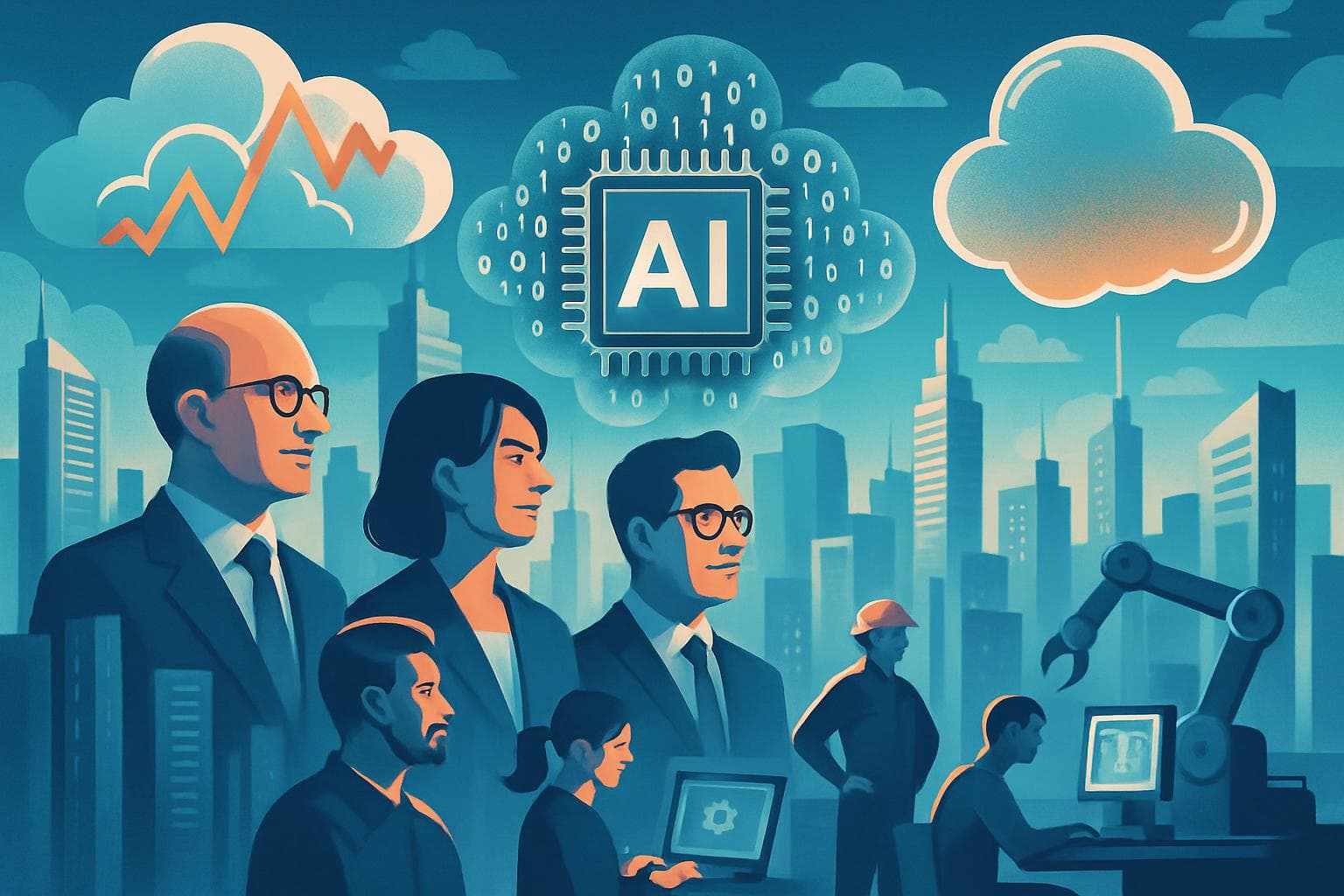
The rapid growth of artificial intelligence (AI) is poised to reshape industries worldwide, but not without potential upheaval, according to leading tech executives. Chuck Robbins, CEO of Cisco Systems, has likened the current AI boom to the internet revolution, predicting it will have an even greater impact. However, he cautions that the market may experience significant "carnage" similar to the dotcom bubble burst of the late 1990s.
Speaking to the BBC, Robbins highlighted the transformative power of AI, particularly in sectors like customer service, where automation could lead to job reductions. "You shouldn't worry as much about AI taking your job as you should worry about someone who's very good using AI taking your job," Robbins advised, urging workers to adapt to the evolving landscape.
At the recent World Economic Forum in Davos, AI was a central theme, with tech CEOs outlining ambitious visions for its global integration. Microsoft's Satya Nadella emphasized the need for widespread distribution of data centers, or "token factories," to ensure AI's benefits are felt globally. Meanwhile, Google's latest innovations, including updates to Google Glass, were showcased to enthusiastic delegates.
Despite the optimism, concerns about an AI investment bubble persist. Industry figures, including JPMorgan Chase's Jamie Dimon and DeepMind's Demis Hassabis, have expressed skepticism, drawing parallels to past market crashes. "A tell-tale sign of this as a bubble is if all we’re talking about are the tech firms," Nadella remarked, highlighting the need for tangible applications beyond hype.
The potential risks of AI extend beyond economic implications. Robbins warned of enhanced cyber threats and scams, underscoring the necessity for stringent regulation. As AI continues to evolve, balancing innovation with safety and ethical considerations remains a critical challenge.
WHAT THIS MIGHT MEAN
As AI technology continues to advance, the potential for significant market shifts and job disruptions looms large. If the predicted bubble bursts, it could lead to financial losses and a reevaluation of investment strategies within the tech sector. However, companies that successfully integrate AI into their operations may emerge as industry leaders, driving further innovation.
The global expansion of AI infrastructure, as advocated by leaders like Nadella, could democratize access to AI technologies, fostering economic growth in both developed and developing regions. However, this expansion must be accompanied by robust regulatory frameworks to mitigate risks associated with cybersecurity and ethical concerns.
Ultimately, the future of AI will depend on how effectively stakeholders navigate these challenges, balancing the promise of technological advancement with the need for responsible governance and societal impact.
Related Articles
Tech Giants Pledge to Cover AI Data Center Energy Costs Amid Rising Electricity Concerns
Bill Gates Withdraws from India AI Summit Amid Epstein Controversy

Google Faces Legal Battle Over AI Chatbot's Alleged Role in Tragic Death
Zuckerberg Defends Meta in Landmark Social Media Addiction Trial
Amazon's $200 Billion AI Investment Sparks Investor Concerns

Iranian Students Lead Major Protests Amid Rising US-Iran Tensions
Tech Leaders Warn of AI Boom's Potential Market Disruption Amidst Global Expansion Plans
In This Article
 Himanshu Kaushik| Published
 HIGHLIGHTS
- Cisco CEO Chuck Robbins predicts the AI boom will surpass the internet in impact but warns of potential market "carnage" similar to the dotcom bubble.
- At the World Economic Forum in Davos, tech leaders, including Microsoft's Satya Nadella, discussed AI's global expansion and infrastructure needs.
- Concerns about an AI investment bubble were echoed by industry leaders, with some likening it to the late 90s dotcom crash.
- AI's potential to disrupt job markets is significant, with some roles being eliminated or transformed, according to Robbins.
- Despite the hype, there are fears about AI's impact on online safety and the need for robust regulation.
The rapid growth of artificial intelligence (AI) is poised to reshape industries worldwide, but not without potential upheaval, according to leading tech executives. Chuck Robbins, CEO of Cisco Systems, has likened the current AI boom to the internet revolution, predicting it will have an even greater impact. However, he cautions that the market may experience significant "carnage" similar to the dotcom bubble burst of the late 1990s.
Speaking to the BBC, Robbins highlighted the transformative power of AI, particularly in sectors like customer service, where automation could lead to job reductions. "You shouldn't worry as much about AI taking your job as you should worry about someone who's very good using AI taking your job," Robbins advised, urging workers to adapt to the evolving landscape.
At the recent World Economic Forum in Davos, AI was a central theme, with tech CEOs outlining ambitious visions for its global integration. Microsoft's Satya Nadella emphasized the need for widespread distribution of data centers, or "token factories," to ensure AI's benefits are felt globally. Meanwhile, Google's latest innovations, including updates to Google Glass, were showcased to enthusiastic delegates.
Despite the optimism, concerns about an AI investment bubble persist. Industry figures, including JPMorgan Chase's Jamie Dimon and DeepMind's Demis Hassabis, have expressed skepticism, drawing parallels to past market crashes. "A tell-tale sign of this as a bubble is if all we’re talking about are the tech firms," Nadella remarked, highlighting the need for tangible applications beyond hype.
The potential risks of AI extend beyond economic implications. Robbins warned of enhanced cyber threats and scams, underscoring the necessity for stringent regulation. As AI continues to evolve, balancing innovation with safety and ethical considerations remains a critical challenge.
WHAT THIS MIGHT MEAN
As AI technology continues to advance, the potential for significant market shifts and job disruptions looms large. If the predicted bubble bursts, it could lead to financial losses and a reevaluation of investment strategies within the tech sector. However, companies that successfully integrate AI into their operations may emerge as industry leaders, driving further innovation.
The global expansion of AI infrastructure, as advocated by leaders like Nadella, could democratize access to AI technologies, fostering economic growth in both developed and developing regions. However, this expansion must be accompanied by robust regulatory frameworks to mitigate risks associated with cybersecurity and ethical concerns.
Ultimately, the future of AI will depend on how effectively stakeholders navigate these challenges, balancing the promise of technological advancement with the need for responsible governance and societal impact.
Related Articles
Tech Giants Pledge to Cover AI Data Center Energy Costs Amid Rising Electricity Concerns
Bill Gates Withdraws from India AI Summit Amid Epstein Controversy
Google Faces Legal Battle Over AI Chatbot's Alleged Role in Tragic Death
Zuckerberg Defends Meta in Landmark Social Media Addiction Trial
Amazon's $200 Billion AI Investment Sparks Investor Concerns
Iranian Students Lead Major Protests Amid Rising US-Iran Tensions