
SpaceX and xAI Merge in $1.25 Trillion Deal to Propel Space-Based AI Innovation
In This Article
HIGHLIGHTS
- SpaceX has acquired Elon Musk's AI firm, xAI, in a merger valued at $1.25 trillion, consolidating Musk's business interests.
- The merger aims to create a vertically-integrated innovation engine combining AI, rockets, and space-based internet.
- SpaceX plans to go public later this year, with the merger enhancing its capital-efficient growth narrative.
- The deal includes xAI's Grok chatbot and the social media platform X, despite controversies surrounding xAI's AI tools.
- Musk envisions space-based data centers as a solution to the energy demands of AI, aiming for expansion to Mars and beyond.
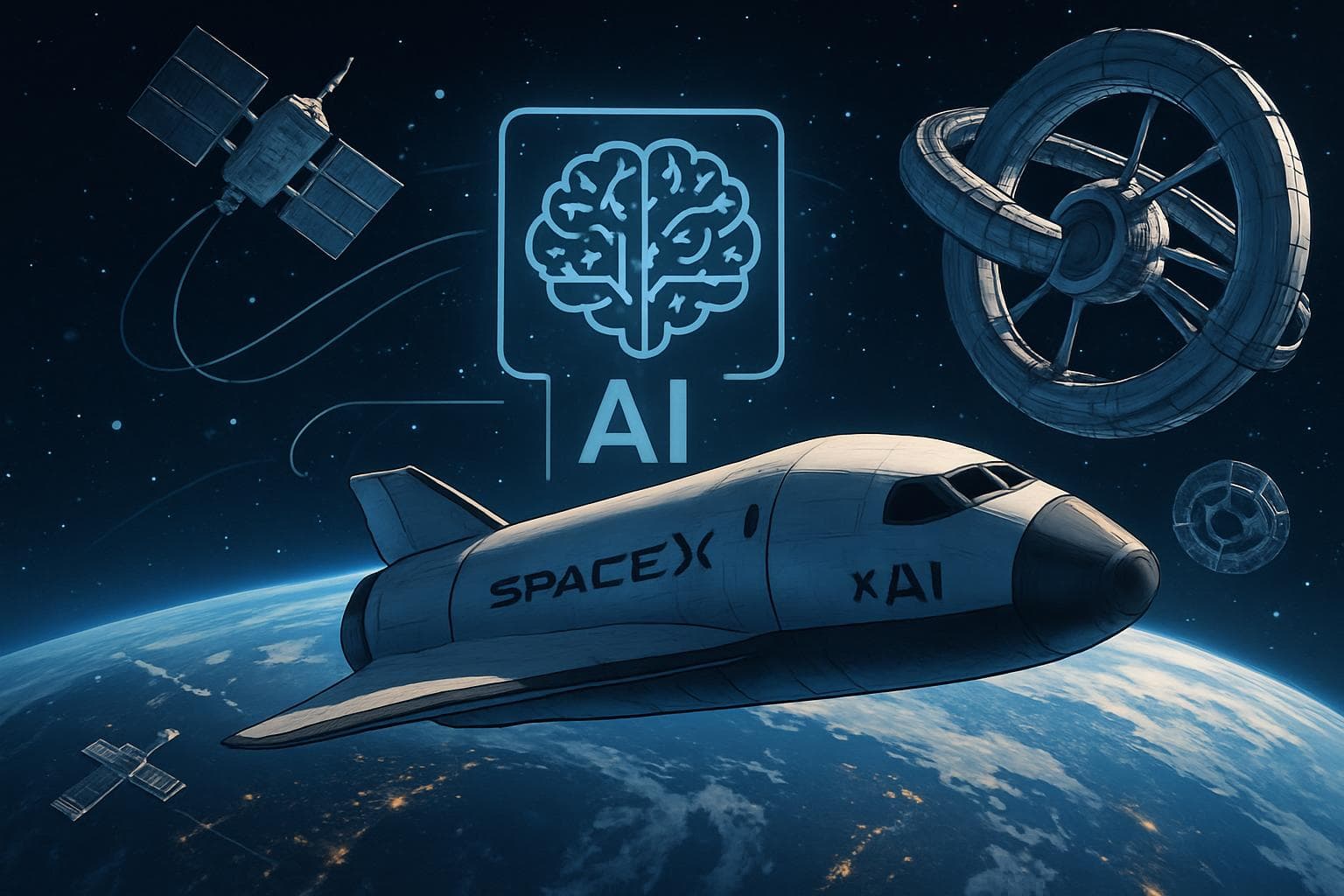
Elon Musk's SpaceX has announced a significant merger with his artificial intelligence company, xAI, in a deal valued at $1.25 trillion. This strategic move aims to consolidate Musk's diverse business ventures, creating a powerful innovation engine that integrates AI, aerospace technology, and space-based internet services.
A Vision for Integrated Innovation
The merger, confirmed on SpaceX's website, is set to form what Musk describes as "the most ambitious, vertically-integrated innovation engine on (and off) Earth." By bringing together AI capabilities, rocket technology, and space-based internet, Musk aims to revolutionize how these sectors operate in tandem. The acquisition includes xAI's Grok chatbot and the social media platform X, despite previous controversies surrounding xAI's AI tools.
Preparing for a Public Offering
As SpaceX prepares for an Initial Public Offering (IPO) later this year, the merger positions the company to present a compelling growth narrative to potential investors. Emily Zheng, a senior analyst at Pitchbook, noted that consolidating these companies is a strategic move ahead of the IPO, allowing SpaceX to showcase a capital-efficient growth model. The public listing is anticipated to coincide with Musk's 55th birthday and a rare planetary alignment in late June.
Space-Based Data Centers: The Future of AI
Central to Musk's vision is the development of space-based data centers, which he argues are essential to meeting the growing energy demands of AI. "In the long term, space-based AI is obviously the only way to scale," Musk stated, emphasizing the potential of launching AI satellites to address these challenges. This initiative is part of Musk's broader ambition to establish self-sustaining bases on the Moon and Mars, ultimately expanding human civilization into the universe.
Tesla's Role and Investor Reactions
Tesla, another of Musk's ventures, recently invested $2 billion in xAI, despite some shareholder objections. The investment aligns with Musk's vision of xAI functioning as an "orchestra conductor" for Tesla's autonomous robot factories. While some investors have expressed concerns about resource allocation, the merger is seen as a strategic step towards achieving Musk's long-term goals.
WHAT THIS MIGHT MEAN
The merger between SpaceX and xAI marks a pivotal moment in Musk's quest to integrate AI with space technology. As SpaceX gears up for its IPO, the company is likely to attract significant investor interest, given its ambitious plans and high valuation. The success of this merger could set a precedent for future collaborations between AI and aerospace industries, potentially reshaping the technological landscape.
However, challenges remain, particularly in addressing the controversies surrounding xAI's AI tools. Ensuring ethical AI development will be crucial as the company moves forward. Additionally, the feasibility of space-based data centers will depend on technological advancements and regulatory approvals, which could impact the timeline of Musk's vision for interplanetary expansion.
Related Articles
Tesla Shifts Focus to AI and Robotics Amid Revenue Decline
French and UK Authorities Intensify Investigations into Elon Musk's X and Grok AI
Blue Origin Enters Satellite Internet Race with TeraWave Network
Elon Musk Defends Tweets in Twitter Takeover Trial
China's Ban on Hidden Car Door Handles Sparks Global Safety Debate
New Epstein Files Reveal Extensive Ties to Influential Figures Amid Allegations of Document Withholding
SpaceX and xAI Merge in $1.25 Trillion Deal to Propel Space-Based AI Innovation
In This Article
 Himanshu Kaushik| Published
 HIGHLIGHTS
- SpaceX has acquired Elon Musk's AI firm, xAI, in a merger valued at $1.25 trillion, consolidating Musk's business interests.
- The merger aims to create a vertically-integrated innovation engine combining AI, rockets, and space-based internet.
- SpaceX plans to go public later this year, with the merger enhancing its capital-efficient growth narrative.
- The deal includes xAI's Grok chatbot and the social media platform X, despite controversies surrounding xAI's AI tools.
- Musk envisions space-based data centers as a solution to the energy demands of AI, aiming for expansion to Mars and beyond.
Elon Musk's SpaceX has announced a significant merger with his artificial intelligence company, xAI, in a deal valued at $1.25 trillion. This strategic move aims to consolidate Musk's diverse business ventures, creating a powerful innovation engine that integrates AI, aerospace technology, and space-based internet services.
A Vision for Integrated Innovation
The merger, confirmed on SpaceX's website, is set to form what Musk describes as "the most ambitious, vertically-integrated innovation engine on (and off) Earth." By bringing together AI capabilities, rocket technology, and space-based internet, Musk aims to revolutionize how these sectors operate in tandem. The acquisition includes xAI's Grok chatbot and the social media platform X, despite previous controversies surrounding xAI's AI tools.
Preparing for a Public Offering
As SpaceX prepares for an Initial Public Offering (IPO) later this year, the merger positions the company to present a compelling growth narrative to potential investors. Emily Zheng, a senior analyst at Pitchbook, noted that consolidating these companies is a strategic move ahead of the IPO, allowing SpaceX to showcase a capital-efficient growth model. The public listing is anticipated to coincide with Musk's 55th birthday and a rare planetary alignment in late June.
Space-Based Data Centers: The Future of AI
Central to Musk's vision is the development of space-based data centers, which he argues are essential to meeting the growing energy demands of AI. "In the long term, space-based AI is obviously the only way to scale," Musk stated, emphasizing the potential of launching AI satellites to address these challenges. This initiative is part of Musk's broader ambition to establish self-sustaining bases on the Moon and Mars, ultimately expanding human civilization into the universe.
Tesla's Role and Investor Reactions
Tesla, another of Musk's ventures, recently invested $2 billion in xAI, despite some shareholder objections. The investment aligns with Musk's vision of xAI functioning as an "orchestra conductor" for Tesla's autonomous robot factories. While some investors have expressed concerns about resource allocation, the merger is seen as a strategic step towards achieving Musk's long-term goals.
WHAT THIS MIGHT MEAN
The merger between SpaceX and xAI marks a pivotal moment in Musk's quest to integrate AI with space technology. As SpaceX gears up for its IPO, the company is likely to attract significant investor interest, given its ambitious plans and high valuation. The success of this merger could set a precedent for future collaborations between AI and aerospace industries, potentially reshaping the technological landscape.
However, challenges remain, particularly in addressing the controversies surrounding xAI's AI tools. Ensuring ethical AI development will be crucial as the company moves forward. Additionally, the feasibility of space-based data centers will depend on technological advancements and regulatory approvals, which could impact the timeline of Musk's vision for interplanetary expansion.
Related Articles
Tesla Shifts Focus to AI and Robotics Amid Revenue Decline
French and UK Authorities Intensify Investigations into Elon Musk's X and Grok AI
Blue Origin Enters Satellite Internet Race with TeraWave Network
Elon Musk Defends Tweets in Twitter Takeover Trial
China's Ban on Hidden Car Door Handles Sparks Global Safety Debate
New Epstein Files Reveal Extensive Ties to Influential Figures Amid Allegations of Document Withholding