
Ecuador Nightclub Shooting Leaves Eight Dead Amid Rising Gang Violence

In This Article
HIGHLIGHTS
- Eight people were killed and three injured in a nightclub shooting in Santa Lucía, Ecuador, on Sunday.
- The attack occurred in Guayas province, currently under a state of emergency due to escalating gang violence.
- Among the deceased was the nightclub owner, Jorge Urquizo, brother of Santa Lucía's mayor.
- Police found 800 cartridge cases at the scene, but the motive for the shooting remains unclear.
- Ecuador has seen a surge in violence, with over 4,051 homicides recorded from January to May 2025.
In the early hours of Sunday, a deadly shooting at a nightclub in Santa Lucía, Ecuador, claimed the lives of eight individuals and left three others injured. The attack, which took place in the coastal province of Guayas, highlights the escalating gang violence that has plagued the region despite a state of emergency declared by President Daniel Noboa.
Details of the Attack
According to police reports, gunmen arrived in two pickup trucks and opened fire on a crowd gathered outside the nightclub at approximately 1:15 a.m. local time. Law enforcement officials discovered seven bodies at the scene, with an eighth victim succumbing to injuries at a nearby hospital. Among the deceased was Jorge Urquizo, the nightclub owner and brother of Santa Lucía's mayor, Ubaldo Urquizo. Authorities recovered 800 cartridge cases from the site, but the motive behind the attack remains unknown.
A Region Under Siege
The province of Guayas, where Santa Lucía is located, is one of four provinces currently under a state of emergency as the government attempts to curb gang-related violence. Despite increased military presence, the region has witnessed a series of violent incidents, including a pool hall shooting that left nine dead on July 19 and a bar attack claiming 17 lives on July 27. Official statistics reveal a staggering 4,051 homicides recorded between January and May 2025, marking one of the most violent periods in Ecuador's recent history.
The Broader Context
Ecuador, once considered a peaceful nation nestled between Colombia and Peru, has become a battleground for gangs linked to Mexican and Colombian drug cartels vying for control. The country serves as a major transit point for cocaine, with over 70% of the world's supply passing through its ports. This surge in drug trafficking has fueled the violence, prompting President Noboa to declare war on gang crime earlier this year.
WHAT THIS MIGHT MEAN
The recent nightclub shooting underscores the challenges faced by Ecuadorian authorities in their fight against gang violence. As the government intensifies its crackdown, the potential for further bloodshed remains high. Experts suggest that without addressing the root causes of drug trafficking and gang proliferation, the cycle of violence is likely to continue. The international community may need to step in to support Ecuador's efforts in combating this crisis, potentially through increased cooperation and intelligence sharing. As the situation evolves, the effectiveness of President Noboa's strategies will be closely scrutinized, with the hope that peace can eventually be restored to the beleaguered nation.
Related Articles
El Mencho's Death Sparks Violent Unrest Across Mexico
Colombia's Petro and Trump Seek Diplomatic Reset Amid Regional Challenges
Peru's Political Turmoil Continues with New Interim President Amid Controversy
Ecuador Protests ICE Agent's Attempted Entry into Minneapolis Consulate
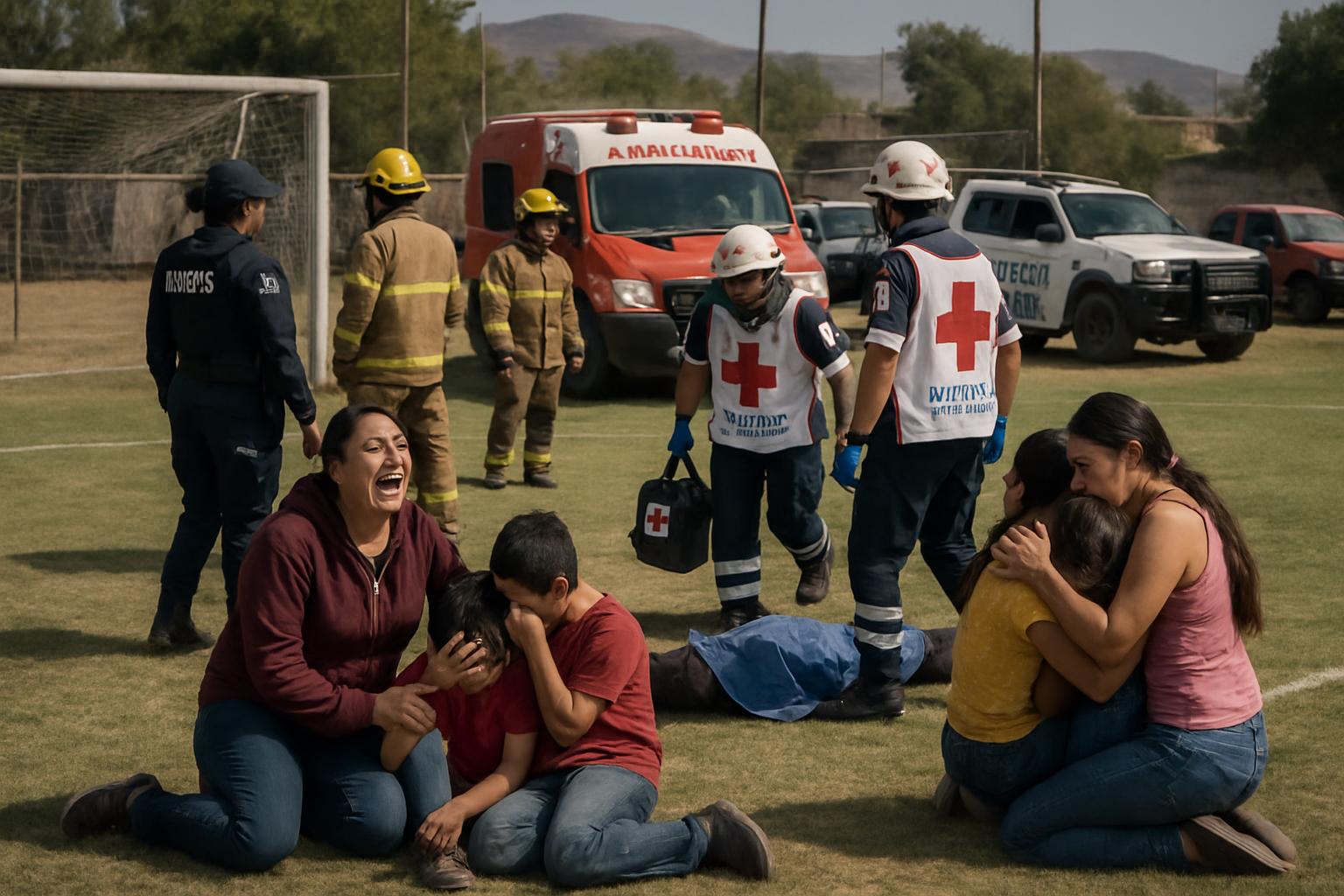
Gunmen Attack Football Match in Mexico, Killing 11 Amidst Rising Cartel Violence
US Supreme Court Ruling on Trump's Tariffs Sparks Trade Policy Uncertainty
Ecuador Nightclub Shooting Leaves Eight Dead Amid Rising Gang Violence
In This Article
HIGHLIGHTS
- Eight people were killed and three injured in a nightclub shooting in Santa Lucía, Ecuador, on Sunday.
- The attack occurred in Guayas province, currently under a state of emergency due to escalating gang violence.
- Among the deceased was the nightclub owner, Jorge Urquizo, brother of Santa Lucía's mayor.
- Police found 800 cartridge cases at the scene, but the motive for the shooting remains unclear.
- Ecuador has seen a surge in violence, with over 4,051 homicides recorded from January to May 2025.
In the early hours of Sunday, a deadly shooting at a nightclub in Santa Lucía, Ecuador, claimed the lives of eight individuals and left three others injured. The attack, which took place in the coastal province of Guayas, highlights the escalating gang violence that has plagued the region despite a state of emergency declared by President Daniel Noboa.
Details of the Attack
According to police reports, gunmen arrived in two pickup trucks and opened fire on a crowd gathered outside the nightclub at approximately 1:15 a.m. local time. Law enforcement officials discovered seven bodies at the scene, with an eighth victim succumbing to injuries at a nearby hospital. Among the deceased was Jorge Urquizo, the nightclub owner and brother of Santa Lucía's mayor, Ubaldo Urquizo. Authorities recovered 800 cartridge cases from the site, but the motive behind the attack remains unknown.
A Region Under Siege
The province of Guayas, where Santa Lucía is located, is one of four provinces currently under a state of emergency as the government attempts to curb gang-related violence. Despite increased military presence, the region has witnessed a series of violent incidents, including a pool hall shooting that left nine dead on July 19 and a bar attack claiming 17 lives on July 27. Official statistics reveal a staggering 4,051 homicides recorded between January and May 2025, marking one of the most violent periods in Ecuador's recent history.
The Broader Context
Ecuador, once considered a peaceful nation nestled between Colombia and Peru, has become a battleground for gangs linked to Mexican and Colombian drug cartels vying for control. The country serves as a major transit point for cocaine, with over 70% of the world's supply passing through its ports. This surge in drug trafficking has fueled the violence, prompting President Noboa to declare war on gang crime earlier this year.
WHAT THIS MIGHT MEAN
The recent nightclub shooting underscores the challenges faced by Ecuadorian authorities in their fight against gang violence. As the government intensifies its crackdown, the potential for further bloodshed remains high. Experts suggest that without addressing the root causes of drug trafficking and gang proliferation, the cycle of violence is likely to continue. The international community may need to step in to support Ecuador's efforts in combating this crisis, potentially through increased cooperation and intelligence sharing. As the situation evolves, the effectiveness of President Noboa's strategies will be closely scrutinized, with the hope that peace can eventually be restored to the beleaguered nation.
Related Articles
El Mencho's Death Sparks Violent Unrest Across Mexico
Colombia's Petro and Trump Seek Diplomatic Reset Amid Regional Challenges
Peru's Political Turmoil Continues with New Interim President Amid Controversy
Ecuador Protests ICE Agent's Attempted Entry into Minneapolis Consulate
Gunmen Attack Football Match in Mexico, Killing 11 Amidst Rising Cartel Violence
US Supreme Court Ruling on Trump's Tariffs Sparks Trade Policy Uncertainty