
Birth Rates in England and Wales Rise for the First Time Since 2021 Amid Increase in Older Fathers
In This Article
HIGHLIGHTS
- Births in England and Wales increased by 0.6% in 2024, marking the first rise since 2021, according to the Office for National Statistics (ONS).
- A notable 14.2% increase in births to fathers over 60 contributed significantly to this rise, with 1,076 babies born to older dads.
- The number of births to parents under 30 continued to decline, with a nearly 5% drop among those under 20.
- Births where one or both parents were born outside the UK rose to 40.4% in England and 19.4% in Wales.
- Rising living costs and expensive childcare are cited as barriers to starting families, prompting calls for better parental leave policies.
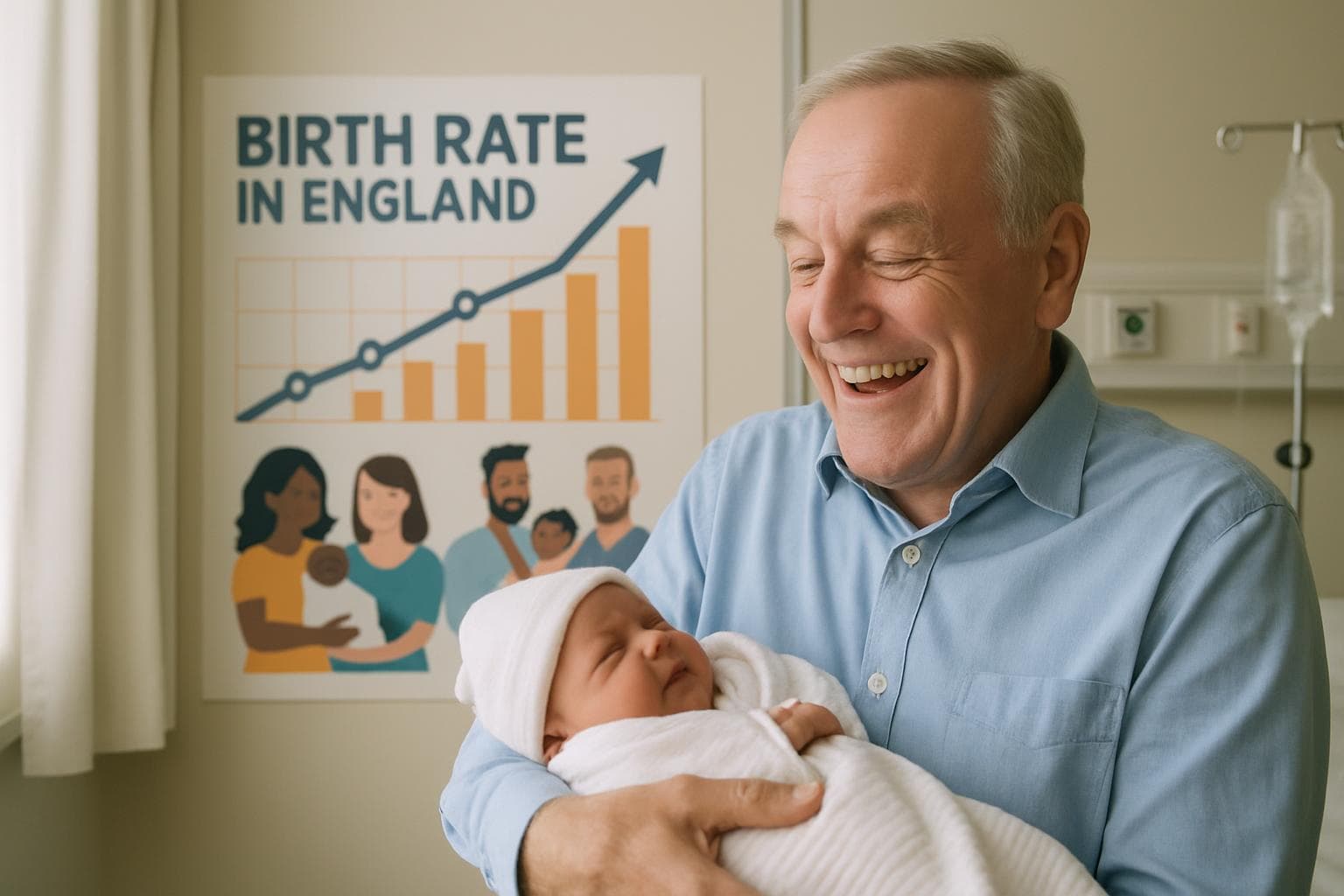
In a surprising shift, the number of births in England and Wales has increased for the first time since 2021, driven largely by a rise in births to fathers over the age of 60. According to the latest data from the Office for National Statistics (ONS), 594,677 live births were recorded in 2024, a 0.6% increase from the previous year.
Surge in Older Fathers
The ONS highlighted a "notable" 14.2% rise in births to fathers aged 60 and over, with 1,076 babies born to this demographic. This trend is part of a broader pattern of delayed parenthood, as the number of births to parents under 30 continues to decline. Professor Allan Pacey, a fertility expert, noted that men over 40 are about half as fertile as those aged 25, making this increase particularly intriguing.
Shifting Demographics
The data also revealed that 40.4% of live births in England and 19.4% in Wales involved at least one parent born outside the UK, reflecting ongoing demographic shifts. Despite the overall rise in birth rates, the number of births to mothers under 30 fell, with the most significant drop among those under 20, decreasing by nearly 5%.
Economic Pressures and Policy Responses
Economic factors, including the high cost of living and expensive childcare, are frequently cited as barriers to starting families. Angela McConville, CEO of the childbirth charity NCT, emphasized the need for government action to support families through improved maternity care and affordable childcare. The government has acknowledged these challenges, with a review of parental leave underway, as one in three fathers reportedly cannot afford to take paternity leave.
Regional Variations
Regionally, the West Midlands and London saw the largest increases in birth rates, while five regions experienced declines, including a 1.4% drop in the North East. Education Secretary Bridget Phillipson has expressed concern over the long-term implications of declining fertility rates, urging Britons to consider having more children sooner.
WHAT THIS MIGHT MEAN
The recent rise in birth rates, particularly among older fathers, could signal a shift in societal norms regarding parenthood. However, the continued decline in births to younger parents may have long-term implications for population demographics and economic growth. Policymakers may need to address the economic barriers that deter young people from starting families, such as high living costs and inadequate childcare support. Additionally, the increase in births to parents born outside the UK highlights the importance of inclusive policies that support diverse family structures. As the government reviews parental leave policies, there is potential for significant reforms that could better support families and encourage higher birth rates in the future.
Related Articles

Labour MP's Husband Arrested in UK-China Espionage Probe

Sisters Tragically Drown at Eryri National Park's Watkin Path

Nottingham Attacks Inquiry: Families Demand Accountability and Truth

Prince Andrew's Ties to Epstein Under Scrutiny Amid Calls for Inquiry

Breakthrough Drug Offers Hope for Children with Severe Epilepsy

Police Federation Chief Arrested Amid Fraud Investigation
Birth Rates in England and Wales Rise for the First Time Since 2021 Amid Increase in Older Fathers
In This Article
 Ethan Brooks| Published
 HIGHLIGHTS
- Births in England and Wales increased by 0.6% in 2024, marking the first rise since 2021, according to the Office for National Statistics (ONS).
- A notable 14.2% increase in births to fathers over 60 contributed significantly to this rise, with 1,076 babies born to older dads.
- The number of births to parents under 30 continued to decline, with a nearly 5% drop among those under 20.
- Births where one or both parents were born outside the UK rose to 40.4% in England and 19.4% in Wales.
- Rising living costs and expensive childcare are cited as barriers to starting families, prompting calls for better parental leave policies.
In a surprising shift, the number of births in England and Wales has increased for the first time since 2021, driven largely by a rise in births to fathers over the age of 60. According to the latest data from the Office for National Statistics (ONS), 594,677 live births were recorded in 2024, a 0.6% increase from the previous year.
Surge in Older Fathers
The ONS highlighted a "notable" 14.2% rise in births to fathers aged 60 and over, with 1,076 babies born to this demographic. This trend is part of a broader pattern of delayed parenthood, as the number of births to parents under 30 continues to decline. Professor Allan Pacey, a fertility expert, noted that men over 40 are about half as fertile as those aged 25, making this increase particularly intriguing.
Shifting Demographics
The data also revealed that 40.4% of live births in England and 19.4% in Wales involved at least one parent born outside the UK, reflecting ongoing demographic shifts. Despite the overall rise in birth rates, the number of births to mothers under 30 fell, with the most significant drop among those under 20, decreasing by nearly 5%.
Economic Pressures and Policy Responses
Economic factors, including the high cost of living and expensive childcare, are frequently cited as barriers to starting families. Angela McConville, CEO of the childbirth charity NCT, emphasized the need for government action to support families through improved maternity care and affordable childcare. The government has acknowledged these challenges, with a review of parental leave underway, as one in three fathers reportedly cannot afford to take paternity leave.
Regional Variations
Regionally, the West Midlands and London saw the largest increases in birth rates, while five regions experienced declines, including a 1.4% drop in the North East. Education Secretary Bridget Phillipson has expressed concern over the long-term implications of declining fertility rates, urging Britons to consider having more children sooner.
WHAT THIS MIGHT MEAN
The recent rise in birth rates, particularly among older fathers, could signal a shift in societal norms regarding parenthood. However, the continued decline in births to younger parents may have long-term implications for population demographics and economic growth. Policymakers may need to address the economic barriers that deter young people from starting families, such as high living costs and inadequate childcare support. Additionally, the increase in births to parents born outside the UK highlights the importance of inclusive policies that support diverse family structures. As the government reviews parental leave policies, there is potential for significant reforms that could better support families and encourage higher birth rates in the future.
Related Articles
Labour MP's Husband Arrested in UK-China Espionage Probe
Sisters Tragically Drown at Eryri National Park's Watkin Path
Nottingham Attacks Inquiry: Families Demand Accountability and Truth
Prince Andrew's Ties to Epstein Under Scrutiny Amid Calls for Inquiry
Breakthrough Drug Offers Hope for Children with Severe Epilepsy
Police Federation Chief Arrested Amid Fraud Investigation