
Nottingham Attacks Inquiry: Families Demand Accountability and Truth
In This Article
HIGHLIGHTS
- A public inquiry into the Nottingham attacks by Valdo Calocane begins, focusing on systemic failings in mental health care and police oversight.
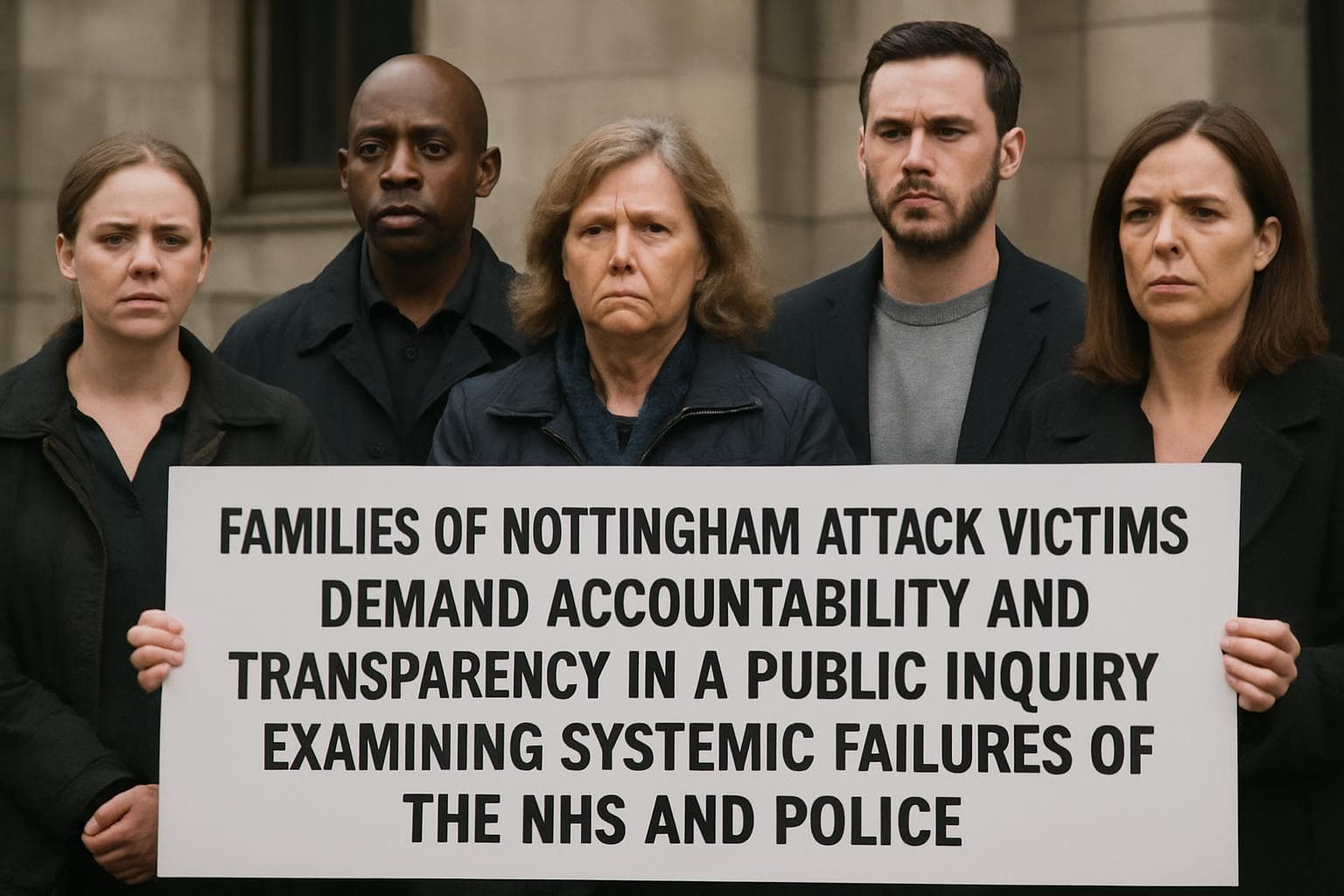
- Victims' families, including Dr. Sanjoy Kumar and Emma Webber, demand transparency and accountability from the NHS and police.
- Calocane, diagnosed with paranoid schizophrenia, was sentenced to an indefinite hospital order after admitting manslaughter and attempted murder.
- The inquiry will scrutinize the NHS and police actions leading up to the attacks, with expectations of revealing significant failings.
- Families have criticized the lack of integrity and transparency from institutions involved, calling for the "whole truth" to emerge.
The long-awaited public inquiry into the Nottingham attacks, which left three dead and several injured, is set to begin, with families of the victims demanding full transparency and accountability from the NHS and police. The inquiry, commencing in London, will delve into the systemic failures that allowed Valdo Calocane, diagnosed with paranoid schizophrenia, to carry out his deadly spree on June 13, 2023.
Families Seek Answers
Dr. Sanjoy Kumar, whose daughter Grace O'Malley-Kumar was killed while trying to protect her friend Barnaby Webber, expressed his determination to uncover the truth. "She is the driving force behind everything that we do," Kumar stated, emphasizing the need for changes in the mental health system to prevent future tragedies. Emma Webber, mother of Barnaby, echoed this sentiment, stressing the importance of accountability and transparency from the involved institutions.
Examining Systemic Failures
The inquiry will scrutinize the actions and decisions of the NHS and police leading up to the attacks. Reports have already highlighted a series of errors and omissions in Calocane's care, with the Care Quality Commission identifying significant risks to public safety. An independent review by Theemis Consulting further revealed that Calocane had no contact with mental health services for months before the attacks.
Legal Context and Sentencing
Calocane was sentenced to an indefinite hospital order in January 2024 after pleading guilty to manslaughter on the grounds of diminished responsibility and attempted murder. The Crown Prosecution Service accepted his plea, acknowledging his mental health condition. The inquiry aims to uncover how such a situation was allowed to escalate, with families hoping for systemic reforms.
Institutional Criticism
Families have criticized the evasive and defensive responses from institutions involved, with Emma Webber noting a lack of integrity and transparency. The police watchdog is investigating the actions of Leicestershire and Nottinghamshire police forces, following reports of missed opportunities to prevent the attacks.
WHAT THIS MIGHT MEAN
As the inquiry unfolds, it is expected to reveal significant failings in the mental health and policing systems, potentially leading to widespread reforms. The findings could prompt changes in how mental health cases are managed and monitored, aiming to prevent similar incidents in the future. Legal and political implications may arise, with increased pressure on the NHS and police to improve accountability and transparency. The families' relentless pursuit of truth and justice may serve as a catalyst for systemic change, ensuring that the tragic events of June 2023 are not repeated.
Images from the Web
Related Articles

Labour MP's Husband Arrested in UK-China Espionage Probe

Persistent Safety Concerns in Nottingham Maternity Services Amidst Calls for Systemic Reform

UK Government to Reform Asylum Seeker Support and Employment Policies

Birmingham's Proactive Approach to Measles Outbreak Offers Lessons for North London

Global Counsel Faces Collapse Amidst Epstein Scandal Fallout

Andrew Mountbatten-Windsor Arrested Amid Misconduct Allegations
Nottingham Attacks Inquiry: Families Demand Accountability and Truth
In This Article
 Ethan Brooks| Published
 HIGHLIGHTS
- A public inquiry into the Nottingham attacks by Valdo Calocane begins, focusing on systemic failings in mental health care and police oversight.
- Victims' families, including Dr. Sanjoy Kumar and Emma Webber, demand transparency and accountability from the NHS and police.
- Calocane, diagnosed with paranoid schizophrenia, was sentenced to an indefinite hospital order after admitting manslaughter and attempted murder.
- The inquiry will scrutinize the NHS and police actions leading up to the attacks, with expectations of revealing significant failings.
- Families have criticized the lack of integrity and transparency from institutions involved, calling for the "whole truth" to emerge.
The long-awaited public inquiry into the Nottingham attacks, which left three dead and several injured, is set to begin, with families of the victims demanding full transparency and accountability from the NHS and police. The inquiry, commencing in London, will delve into the systemic failures that allowed Valdo Calocane, diagnosed with paranoid schizophrenia, to carry out his deadly spree on June 13, 2023.
Families Seek Answers
Dr. Sanjoy Kumar, whose daughter Grace O'Malley-Kumar was killed while trying to protect her friend Barnaby Webber, expressed his determination to uncover the truth. "She is the driving force behind everything that we do," Kumar stated, emphasizing the need for changes in the mental health system to prevent future tragedies. Emma Webber, mother of Barnaby, echoed this sentiment, stressing the importance of accountability and transparency from the involved institutions.
Examining Systemic Failures
The inquiry will scrutinize the actions and decisions of the NHS and police leading up to the attacks. Reports have already highlighted a series of errors and omissions in Calocane's care, with the Care Quality Commission identifying significant risks to public safety. An independent review by Theemis Consulting further revealed that Calocane had no contact with mental health services for months before the attacks.
Legal Context and Sentencing
Calocane was sentenced to an indefinite hospital order in January 2024 after pleading guilty to manslaughter on the grounds of diminished responsibility and attempted murder. The Crown Prosecution Service accepted his plea, acknowledging his mental health condition. The inquiry aims to uncover how such a situation was allowed to escalate, with families hoping for systemic reforms.
Institutional Criticism
Families have criticized the evasive and defensive responses from institutions involved, with Emma Webber noting a lack of integrity and transparency. The police watchdog is investigating the actions of Leicestershire and Nottinghamshire police forces, following reports of missed opportunities to prevent the attacks.
WHAT THIS MIGHT MEAN
As the inquiry unfolds, it is expected to reveal significant failings in the mental health and policing systems, potentially leading to widespread reforms. The findings could prompt changes in how mental health cases are managed and monitored, aiming to prevent similar incidents in the future. Legal and political implications may arise, with increased pressure on the NHS and police to improve accountability and transparency. The families' relentless pursuit of truth and justice may serve as a catalyst for systemic change, ensuring that the tragic events of June 2023 are not repeated.
Images from the Web
Related Articles
Labour MP's Husband Arrested in UK-China Espionage Probe
Persistent Safety Concerns in Nottingham Maternity Services Amidst Calls for Systemic Reform
UK Government to Reform Asylum Seeker Support and Employment Policies
Birmingham's Proactive Approach to Measles Outbreak Offers Lessons for North London
Global Counsel Faces Collapse Amidst Epstein Scandal Fallout
Andrew Mountbatten-Windsor Arrested Amid Misconduct Allegations