
Eurostar Services Disrupted by Major Cable Theft in France
In This Article
HIGHLIGHTS
- Eurostar services face severe delays and cancellations due to a significant cable theft near Lille, France.
- The theft of 600 meters of copper cable has disrupted high-speed rail lines connecting London, Paris, Brussels, and Amsterdam.
- Passengers are advised to cancel or postpone travel plans, with options for free exchanges or refunds.
- The disruption coincides with the Nato summit in the Netherlands, raising concerns about potential sabotage.
- Repairs are underway, with one track reopened, but full service restoration is pending.
Eurostar passengers are experiencing significant travel disruptions following a major cable theft near Lille, France, which has led to severe delays and cancellations on high-speed rail services. The theft of 600 meters of copper cable has impacted key routes connecting London with Paris, Brussels, and Amsterdam, prompting Eurostar to advise passengers to cancel or postpone their journeys.
Impact on Eurostar Services
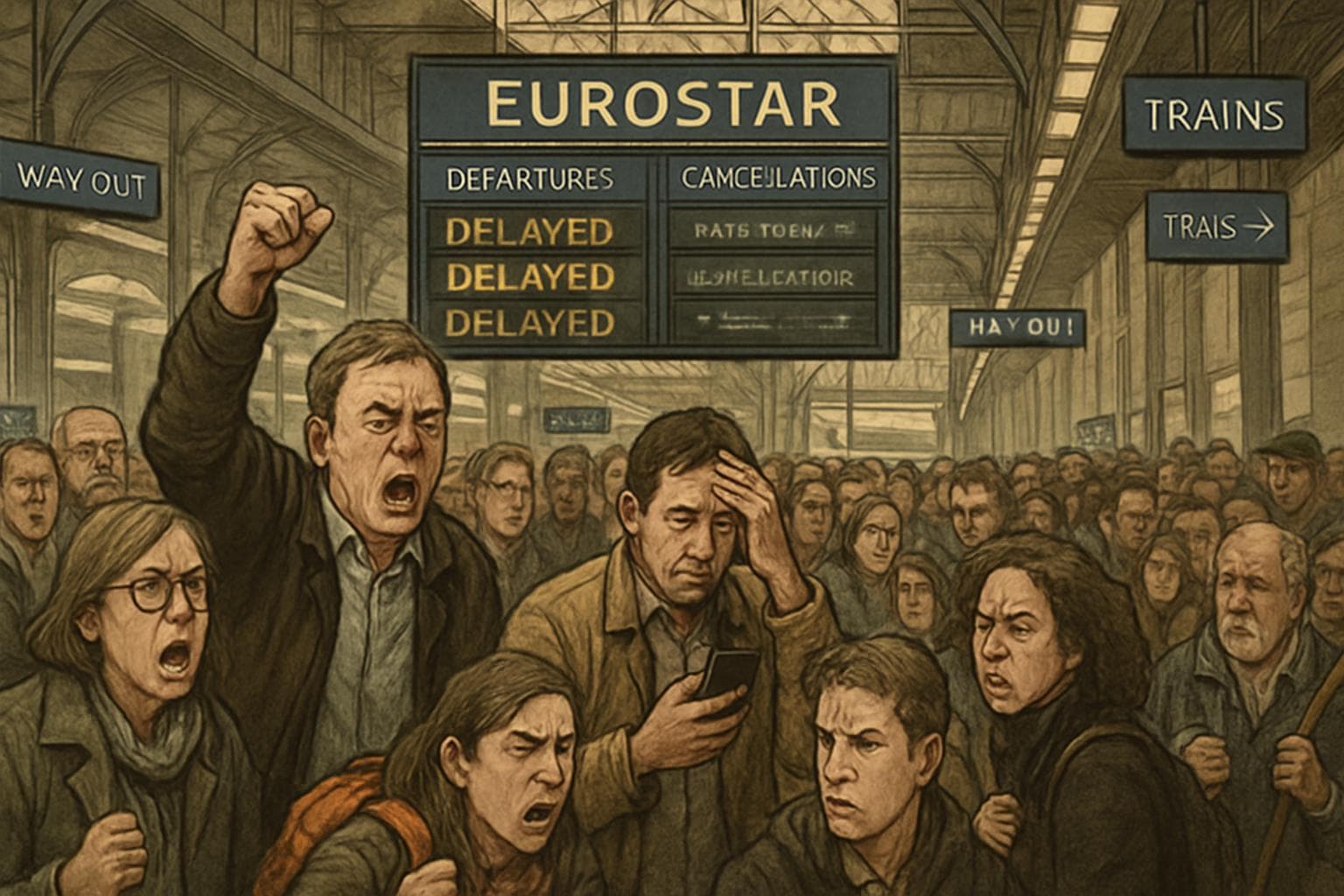
The disruption began after two fatalities on the LGV Nord line on Tuesday, followed by the cable theft, which has compounded the delays. Eurostar has reported that several trains have been cancelled, and those still running are subject to severe delays. Passengers at London's St Pancras International station have faced long queues as they attempt to rebook or seek refunds.
Potential Sabotage Concerns
The timing of the theft has raised concerns about potential sabotage, as it coincides with the Nato summit in the Netherlands. Dutch authorities are investigating a separate incident involving a power outage affecting rail services near the summit venue. The Netherlands' Justice Minister, David van Weel, suggested that the disruption could be linked to activist groups or state actors.
Repair Efforts and Passenger Experiences
French rail operator SNCF has deployed a team of specialists to repair the damage, with one track already reopened. However, full restoration of services is not expected until later in the day. Passengers have expressed frustration over the lack of communication and the chaotic situation at stations. Nigel Hardman, a passenger from Blackpool, described the experience as a "nightmare start" to his trip, highlighting the financial and logistical challenges faced by travelers.
Broader Implications
The incident has highlighted vulnerabilities in Europe's high-speed rail infrastructure, with similar cable thefts previously causing significant disruptions in other countries, such as Spain. As authorities work to restore normal service, the focus remains on ensuring passenger safety and minimizing further delays.
WHAT THIS MIGHT MEAN
The ongoing investigation into the cable theft and potential sabotage could lead to increased security measures on European rail networks. If sabotage is confirmed, it may prompt international discussions on rail infrastructure security, especially during high-profile events like the Nato summit. In the short term, Eurostar and SNCF will need to manage passenger dissatisfaction and logistical challenges, while long-term solutions may involve technological upgrades to prevent future thefts. As repairs progress, passengers are advised to stay informed about service updates and consider alternative travel arrangements.
Related Articles

Trial Begins for 2003 Rape Case That Led to Notorious Miscarriage of Justice

UK Police Intensify Investigation into Andrew Mountbatten-Windsor Amid Misconduct Allegations

Prince Andrew's Arrest Raises Questions About Royal Succession and Monarchy's Future

Arrests Over French Activist's Death Heighten Political Tensions

Nottingham Attacks Inquiry: Families Demand Accountability and Truth

Global Counsel Faces Collapse Amidst Epstein Scandal Fallout
Eurostar Services Disrupted by Major Cable Theft in France
In This Article
 Sofia Romano| Published
 HIGHLIGHTS
- Eurostar services face severe delays and cancellations due to a significant cable theft near Lille, France.
- The theft of 600 meters of copper cable has disrupted high-speed rail lines connecting London, Paris, Brussels, and Amsterdam.
- Passengers are advised to cancel or postpone travel plans, with options for free exchanges or refunds.
- The disruption coincides with the Nato summit in the Netherlands, raising concerns about potential sabotage.
- Repairs are underway, with one track reopened, but full service restoration is pending.
Eurostar passengers are experiencing significant travel disruptions following a major cable theft near Lille, France, which has led to severe delays and cancellations on high-speed rail services. The theft of 600 meters of copper cable has impacted key routes connecting London with Paris, Brussels, and Amsterdam, prompting Eurostar to advise passengers to cancel or postpone their journeys.
Impact on Eurostar Services
The disruption began after two fatalities on the LGV Nord line on Tuesday, followed by the cable theft, which has compounded the delays. Eurostar has reported that several trains have been cancelled, and those still running are subject to severe delays. Passengers at London's St Pancras International station have faced long queues as they attempt to rebook or seek refunds.
Potential Sabotage Concerns
The timing of the theft has raised concerns about potential sabotage, as it coincides with the Nato summit in the Netherlands. Dutch authorities are investigating a separate incident involving a power outage affecting rail services near the summit venue. The Netherlands' Justice Minister, David van Weel, suggested that the disruption could be linked to activist groups or state actors.
Repair Efforts and Passenger Experiences
French rail operator SNCF has deployed a team of specialists to repair the damage, with one track already reopened. However, full restoration of services is not expected until later in the day. Passengers have expressed frustration over the lack of communication and the chaotic situation at stations. Nigel Hardman, a passenger from Blackpool, described the experience as a "nightmare start" to his trip, highlighting the financial and logistical challenges faced by travelers.
Broader Implications
The incident has highlighted vulnerabilities in Europe's high-speed rail infrastructure, with similar cable thefts previously causing significant disruptions in other countries, such as Spain. As authorities work to restore normal service, the focus remains on ensuring passenger safety and minimizing further delays.
WHAT THIS MIGHT MEAN
The ongoing investigation into the cable theft and potential sabotage could lead to increased security measures on European rail networks. If sabotage is confirmed, it may prompt international discussions on rail infrastructure security, especially during high-profile events like the Nato summit. In the short term, Eurostar and SNCF will need to manage passenger dissatisfaction and logistical challenges, while long-term solutions may involve technological upgrades to prevent future thefts. As repairs progress, passengers are advised to stay informed about service updates and consider alternative travel arrangements.
Related Articles
Trial Begins for 2003 Rape Case That Led to Notorious Miscarriage of Justice
UK Police Intensify Investigation into Andrew Mountbatten-Windsor Amid Misconduct Allegations
Prince Andrew's Arrest Raises Questions About Royal Succession and Monarchy's Future
Arrests Over French Activist's Death Heighten Political Tensions
Nottingham Attacks Inquiry: Families Demand Accountability and Truth
Global Counsel Faces Collapse Amidst Epstein Scandal Fallout