
Extended Debate for Assisted Dying Bill Amidst Record Amendments
In This Article
HIGHLIGHTS
- The House of Lords has been granted an additional 10 Fridays to debate the assisted dying bill due to a record number of amendments.
- The bill, introduced by Labour MP Kim Leadbeater, aims to allow terminally ill adults in England and Wales to apply for assisted death.
- Critics argue the bill lacks sufficient safeguards for vulnerable individuals and requires significant re-drafting.
- Proponents emphasize the need for thorough scrutiny, while some peers are accused of using procedural tactics to delay the bill.
- The government maintains a neutral stance, providing extra time without using government resources.
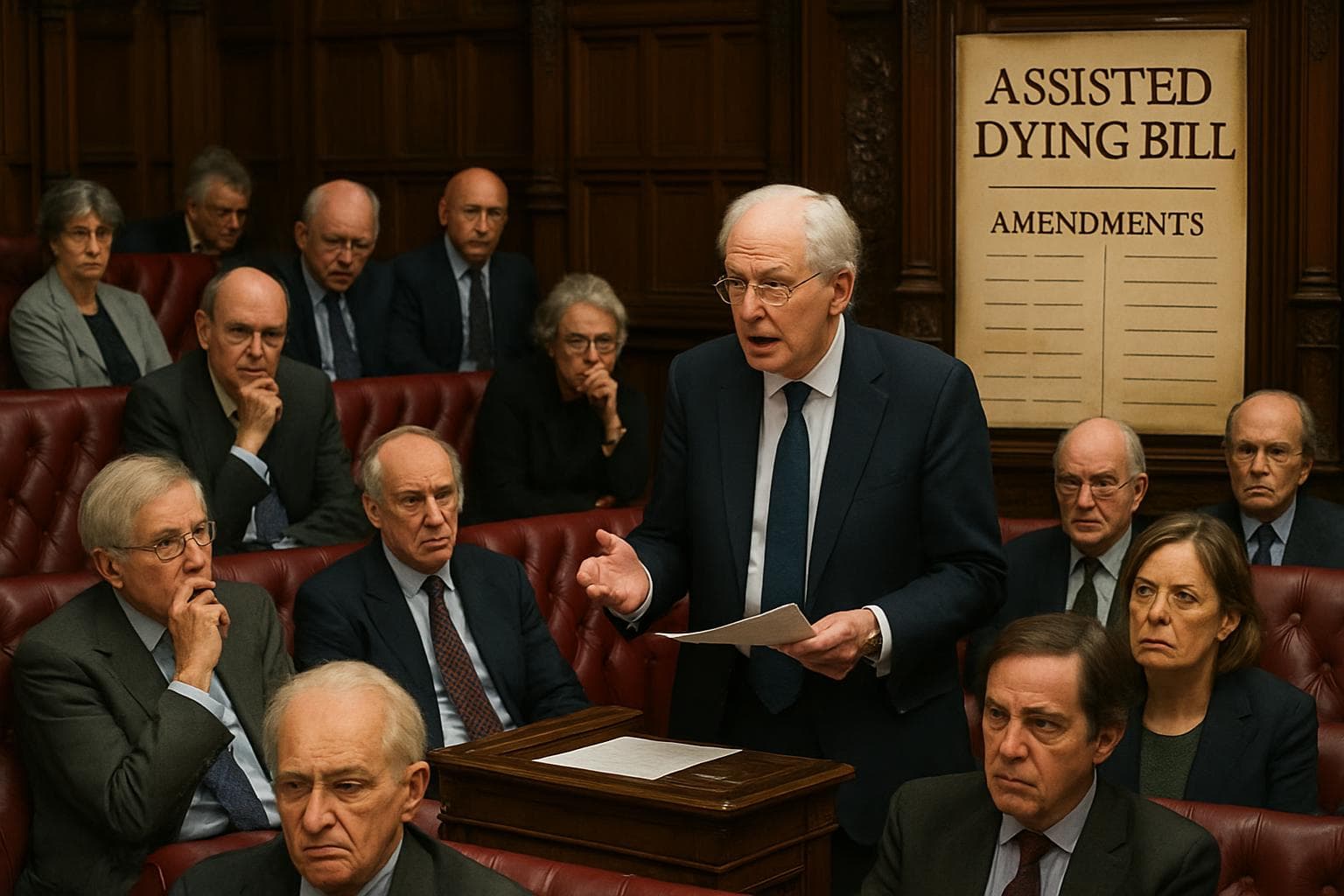
The House of Lords has been allocated additional time to debate the contentious assisted dying bill, following a historic number of amendments that threatened to derail its passage. The bill, which seeks to permit terminally ill adults in England and Wales to opt for assisted death, has sparked intense debate and scrutiny.
Legislative Process and Challenges
Initially backed by MPs in a landmark vote in June, the bill is now in its final stages in the House of Lords. However, the sheer volume of amendments—over 1,000—has raised concerns about the bill's viability. Critics argue that the legislation, drafted as a private member's bill by Labour MP Kim Leadbeater, lacks adequate protections for vulnerable individuals and requires substantial re-drafting.
Government's Neutral Stance
In response to the procedural bottleneck, the government's chief whip in the Lords announced an extension of 10 additional Fridays for debate, spread between January and April. Lord Roy Kennedy emphasized the government's neutral position, stating that the extra time would not come from government resources. He noted the importance of thorough scrutiny, given the bill's implications for end-of-life legislation.
Diverse Perspectives and Ethical Considerations
The debate has highlighted a spectrum of opinions. Dr. Lucy Thomas, a palliative care doctor, expressed concerns about the bill's approach, arguing that it fails to address suffering adequately and places undue responsibility on doctors. Meanwhile, crossbench peer Tanni Grey-Thompson underscored the Lords' role in providing a detailed analysis of the bill, which she believes is crucial for such a significant issue.
Public and Political Reactions
Public opinion remains divided, with some advocating for the right to choose assisted dying and others emphasizing the need for comprehensive palliative care. The debate continues to evoke strong emotions and ethical considerations, as stakeholders grapple with the complexities of end-of-life choices.
WHAT THIS MIGHT MEAN
As the debate progresses, the extended time for scrutiny may lead to further amendments, potentially strengthening the bill's safeguards. However, if consensus is not reached by the end of the parliamentary session, the bill could face significant delays or even collapse. The outcome may also influence future legislative approaches to assisted dying, setting a precedent for how such sensitive issues are handled in the UK. Experts suggest that the ongoing discussions could pave the way for a more nuanced and ethically robust framework for end-of-life care.
Related Articles

Saharan Dust to Illuminate UK Skies with Vivid Sunrises and Sunsets

Police Federation Chief Arrested Amid Fraud Investigation

Government Announces £4 Billion Overhaul of SEND Support in England

Canada and Australia Forge Strategic Partnership Amid Global Uncertainty

UK Government to Reform Asylum Seeker Support and Employment Policies

Sisters Tragically Drown at Eryri National Park's Watkin Path
Extended Debate for Assisted Dying Bill Amidst Record Amendments
In This Article
 Alex Carter| Published
 HIGHLIGHTS
- The House of Lords has been granted an additional 10 Fridays to debate the assisted dying bill due to a record number of amendments.
- The bill, introduced by Labour MP Kim Leadbeater, aims to allow terminally ill adults in England and Wales to apply for assisted death.
- Critics argue the bill lacks sufficient safeguards for vulnerable individuals and requires significant re-drafting.
- Proponents emphasize the need for thorough scrutiny, while some peers are accused of using procedural tactics to delay the bill.
- The government maintains a neutral stance, providing extra time without using government resources.
The House of Lords has been allocated additional time to debate the contentious assisted dying bill, following a historic number of amendments that threatened to derail its passage. The bill, which seeks to permit terminally ill adults in England and Wales to opt for assisted death, has sparked intense debate and scrutiny.
Legislative Process and Challenges
Initially backed by MPs in a landmark vote in June, the bill is now in its final stages in the House of Lords. However, the sheer volume of amendments—over 1,000—has raised concerns about the bill's viability. Critics argue that the legislation, drafted as a private member's bill by Labour MP Kim Leadbeater, lacks adequate protections for vulnerable individuals and requires substantial re-drafting.
Government's Neutral Stance
In response to the procedural bottleneck, the government's chief whip in the Lords announced an extension of 10 additional Fridays for debate, spread between January and April. Lord Roy Kennedy emphasized the government's neutral position, stating that the extra time would not come from government resources. He noted the importance of thorough scrutiny, given the bill's implications for end-of-life legislation.
Diverse Perspectives and Ethical Considerations
The debate has highlighted a spectrum of opinions. Dr. Lucy Thomas, a palliative care doctor, expressed concerns about the bill's approach, arguing that it fails to address suffering adequately and places undue responsibility on doctors. Meanwhile, crossbench peer Tanni Grey-Thompson underscored the Lords' role in providing a detailed analysis of the bill, which she believes is crucial for such a significant issue.
Public and Political Reactions
Public opinion remains divided, with some advocating for the right to choose assisted dying and others emphasizing the need for comprehensive palliative care. The debate continues to evoke strong emotions and ethical considerations, as stakeholders grapple with the complexities of end-of-life choices.
WHAT THIS MIGHT MEAN
As the debate progresses, the extended time for scrutiny may lead to further amendments, potentially strengthening the bill's safeguards. However, if consensus is not reached by the end of the parliamentary session, the bill could face significant delays or even collapse. The outcome may also influence future legislative approaches to assisted dying, setting a precedent for how such sensitive issues are handled in the UK. Experts suggest that the ongoing discussions could pave the way for a more nuanced and ethically robust framework for end-of-life care.
Related Articles
Saharan Dust to Illuminate UK Skies with Vivid Sunrises and Sunsets
Police Federation Chief Arrested Amid Fraud Investigation
Government Announces £4 Billion Overhaul of SEND Support in England
Canada and Australia Forge Strategic Partnership Amid Global Uncertainty
UK Government to Reform Asylum Seeker Support and Employment Policies
Sisters Tragically Drown at Eryri National Park's Watkin Path