
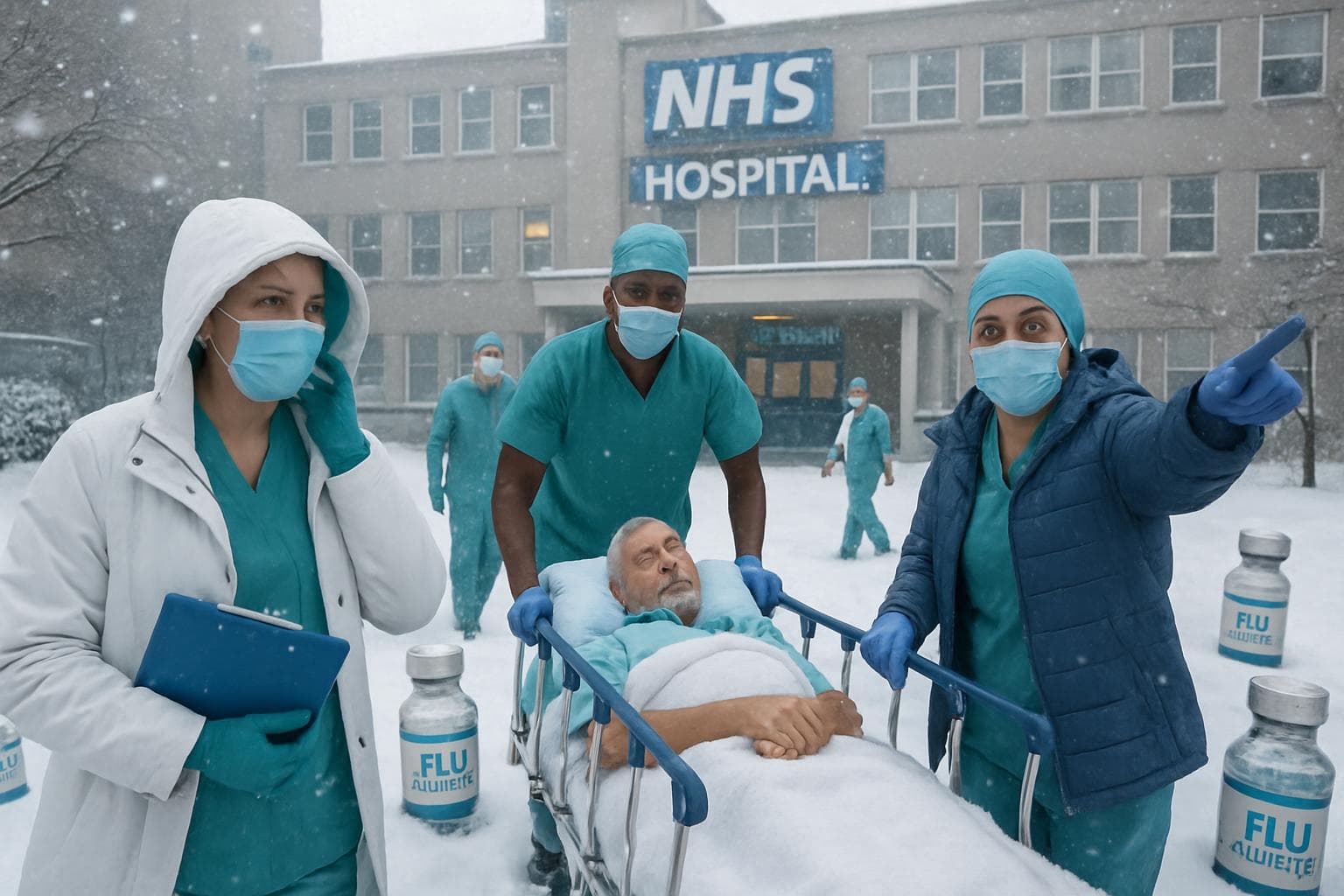
Flu Cases Decline as Cold Weather Alerts Heighten NHS Concerns
In This Article
HIGHLIGHTS
- Flu cases in English hospitals have decreased for the second consecutive week, with 2,676 patients recorded last week.
- The UK Health Security Agency has issued cold weather alerts, predicting increased pressure on health services due to freezing temperatures.
- NHS England's medical director praised the vaccination efforts, noting over half a million more people vaccinated compared to last year.
- Health Secretary Wes Streeting highlighted improved hospital bed occupancy and ambulance performance despite ongoing challenges.
- Health charities warn of increased risks for vulnerable groups, urging flu vaccinations and caution during the cold snap.
The number of flu patients in English hospitals has decreased for the second week in a row, offering a glimmer of relief for the National Health Service (NHS) amid a challenging winter. However, the UK Health Security Agency (UKHSA) has issued cold weather alerts, warning that freezing temperatures could exacerbate pressures on the health service.
Decline in Flu Cases
Recent NHS figures reveal a drop in flu hospitalizations, with an average of 2,676 patients recorded daily in the week ending December 28, down from 3,061 the previous week. This decline follows a peak of 3,140 patients in mid-December. Despite the decrease, the NHS remains vigilant, as flu cases had previously been on an upward trend, reaching a high of 5,408 patients last winter.
Cold Weather Alerts and Health Service Pressures
The UKHSA has issued amber and yellow cold health alerts across England, effective from 20:00 GMT on Friday until January 9. These alerts predict increased demand for health services, potential challenges in maintaining hospital temperatures, and staffing issues due to travel disruptions. NHS England's medical director, Prof Meghana Pandit, emphasized the importance of continued public cooperation, urging the use of NHS 111 services for non-emergencies.
Vaccination Efforts and Public Health Advice
The NHS attributes the decline in flu cases partly to successful vaccination campaigns, with over half a million more people vaccinated against flu compared to the same period last year. Health Secretary Wes Streeting acknowledged the NHS's efforts, noting improvements in hospital bed occupancy and ambulance handover performance. He stressed the importance of flu vaccinations and advised the public to reserve A&E visits for emergencies.
Vulnerable Groups and Health Risks
Health charities have echoed concerns about the cold snap's impact on vulnerable populations. Ruth Goss from the British Heart Foundation warned of increased risks of heart attacks and strokes, while Age UK's Caroline Abrahams highlighted the dangers for older individuals with pre-existing health conditions. Both organizations urged the public to take precautions and support those at risk.
WHAT THIS MIGHT MEAN
As the cold snap continues, the NHS may face heightened pressures, particularly if flu cases rebound. The effectiveness of vaccination campaigns will be crucial in mitigating these challenges. Experts suggest that ongoing public cooperation with health advisories and vaccination efforts will be vital in managing demand on health services. Politically, the situation underscores the need for sustained investment in healthcare infrastructure to cope with seasonal fluctuations and unexpected health crises.
Related Articles

NHS Faces Joint Surgery Delays Amid Bone Cement Shortage
Prince William Calls for Action on UK Male Suicide Rates
South West Water Faces Legal Repercussions Over Devon Parasite Outbreak

Government Announces £4 Billion Overhaul of SEND Support in England

UK Government's SEND Reforms: A Critical Turning Point for Special Education

Government U-turn Forces Local Elections in Lancashire and Essex Amid Reorganisation Plans
Flu Cases Decline as Cold Weather Alerts Heighten NHS Concerns
In This Article
 Ethan Brooks| Published
 HIGHLIGHTS
- Flu cases in English hospitals have decreased for the second consecutive week, with 2,676 patients recorded last week.
- The UK Health Security Agency has issued cold weather alerts, predicting increased pressure on health services due to freezing temperatures.
- NHS England's medical director praised the vaccination efforts, noting over half a million more people vaccinated compared to last year.
- Health Secretary Wes Streeting highlighted improved hospital bed occupancy and ambulance performance despite ongoing challenges.
- Health charities warn of increased risks for vulnerable groups, urging flu vaccinations and caution during the cold snap.
The number of flu patients in English hospitals has decreased for the second week in a row, offering a glimmer of relief for the National Health Service (NHS) amid a challenging winter. However, the UK Health Security Agency (UKHSA) has issued cold weather alerts, warning that freezing temperatures could exacerbate pressures on the health service.
Decline in Flu Cases
Recent NHS figures reveal a drop in flu hospitalizations, with an average of 2,676 patients recorded daily in the week ending December 28, down from 3,061 the previous week. This decline follows a peak of 3,140 patients in mid-December. Despite the decrease, the NHS remains vigilant, as flu cases had previously been on an upward trend, reaching a high of 5,408 patients last winter.
Cold Weather Alerts and Health Service Pressures
The UKHSA has issued amber and yellow cold health alerts across England, effective from 20:00 GMT on Friday until January 9. These alerts predict increased demand for health services, potential challenges in maintaining hospital temperatures, and staffing issues due to travel disruptions. NHS England's medical director, Prof Meghana Pandit, emphasized the importance of continued public cooperation, urging the use of NHS 111 services for non-emergencies.
Vaccination Efforts and Public Health Advice
The NHS attributes the decline in flu cases partly to successful vaccination campaigns, with over half a million more people vaccinated against flu compared to the same period last year. Health Secretary Wes Streeting acknowledged the NHS's efforts, noting improvements in hospital bed occupancy and ambulance handover performance. He stressed the importance of flu vaccinations and advised the public to reserve A&E visits for emergencies.
Vulnerable Groups and Health Risks
Health charities have echoed concerns about the cold snap's impact on vulnerable populations. Ruth Goss from the British Heart Foundation warned of increased risks of heart attacks and strokes, while Age UK's Caroline Abrahams highlighted the dangers for older individuals with pre-existing health conditions. Both organizations urged the public to take precautions and support those at risk.
WHAT THIS MIGHT MEAN
As the cold snap continues, the NHS may face heightened pressures, particularly if flu cases rebound. The effectiveness of vaccination campaigns will be crucial in mitigating these challenges. Experts suggest that ongoing public cooperation with health advisories and vaccination efforts will be vital in managing demand on health services. Politically, the situation underscores the need for sustained investment in healthcare infrastructure to cope with seasonal fluctuations and unexpected health crises.
Related Articles
NHS Faces Joint Surgery Delays Amid Bone Cement Shortage
Prince William Calls for Action on UK Male Suicide Rates
South West Water Faces Legal Repercussions Over Devon Parasite Outbreak
Government Announces £4 Billion Overhaul of SEND Support in England
UK Government's SEND Reforms: A Critical Turning Point for Special Education
Government U-turn Forces Local Elections in Lancashire and Essex Amid Reorganisation Plans