
Prince William Calls for Action on UK Male Suicide Rates
In This Article
HIGHLIGHTS
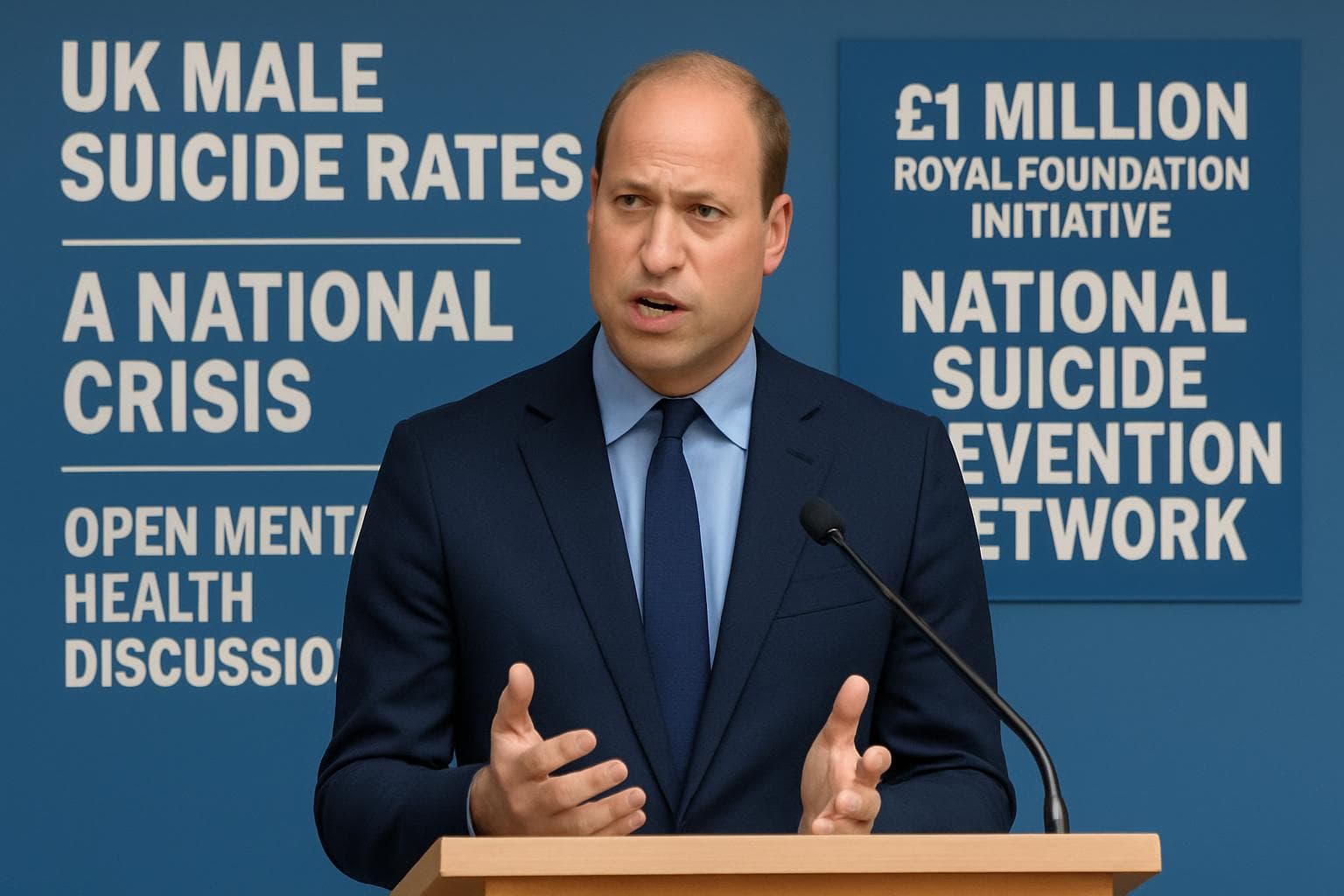
- Prince William described male suicide rates in the UK as a "national catastrophe" during a BBC Radio 1 Life Hacks episode.
- The Prince emphasized the need for more male role models to openly discuss mental health, aiming to normalize these conversations.
- His Royal Foundation is investing £1 million to establish a National Suicide Prevention Network.
- Suicide is the leading cause of death among young people aged 20 to 34 in England and Wales, according to the Office for National Statistics.
- Rapper Professor Green, who lost his father to suicide, joined the panel to advocate for open discussions on mental health.
Prince William has labeled the high rates of male suicide in the UK as a "national catastrophe," urging for more open discussions about mental health. Speaking on a special episode of BBC Radio 1's Life Hacks, the Prince of Wales shared his personal journey in understanding his emotions and stressed the importance of male role models in mental health advocacy.
A Call for Male Role Models
During the panel discussion, Prince William highlighted the need for men to openly discuss their mental health, suggesting that such conversations should become "second nature to us all." He reflected on his own experiences, stating, "I take a long time trying to understand my emotions and why I feel like I do." He emphasized that mental health crises are often temporary and encouraged people to "learn to love yourself and understand yourself."
Royal Foundation's Commitment
In a significant move, the Royal Foundation, led by Prince William, is contributing £1 million to develop a National Suicide Prevention Network. This initiative aims to provide crucial support and resources to those in need, pushing the conversation around suicide further into the public domain. The Prince expressed hope that increased education and dialogue would help reduce suicide rates, noting, "Tomorrow, you might wake up and you might feel very different."
Personal Stories and Advocacy
The panel also featured musician Professor Green, who has been a long-time advocate for mental health awareness. Having lost his father to suicide, Professor Green shared his personal experiences and stressed the importance of having supportive networks and accessible services. "These conversations are important to have, and it’s OK to have them," he remarked, underscoring the need for societal change.
The Stark Reality of Statistics
According to the Office for National Statistics, suicide remains the leading cause of death among young people aged 20 to 34 in England and Wales. This alarming statistic underscores the urgency of initiatives like the National Suicide Prevention Network and the need for public figures to champion mental health awareness.
WHAT THIS MIGHT MEAN
The Royal Foundation's investment in a National Suicide Prevention Network could significantly impact mental health support across the UK, potentially serving as a model for other countries. As more public figures like Prince William and Professor Green advocate for open discussions, societal attitudes towards mental health may shift, reducing stigma and encouraging more individuals to seek help. However, the success of these initiatives will depend on sustained funding, public engagement, and the development of effective support systems. The involvement of influential figures could catalyze policy changes and increase awareness, ultimately aiming to lower the suicide rates in the UK.
Related Articles
UK Government to Reform Asylum Seeker Support and Employment Policies

Sisters Tragically Drown at Eryri National Park's Watkin Path

UK Faces Dilemmas Amid Iran Conflict and China Spying Allegations

UK Reinforces Military Presence in Cyprus Amid Middle East Tensions

Labour MP's Husband Arrested in UK-China Espionage Probe

Police Federation Chief Arrested Amid Fraud Investigation
Prince William Calls for Action on UK Male Suicide Rates
In This Article
 Ethan Brooks| Published
 HIGHLIGHTS
- Prince William described male suicide rates in the UK as a "national catastrophe" during a BBC Radio 1 Life Hacks episode.
- The Prince emphasized the need for more male role models to openly discuss mental health, aiming to normalize these conversations.
- His Royal Foundation is investing £1 million to establish a National Suicide Prevention Network.
- Suicide is the leading cause of death among young people aged 20 to 34 in England and Wales, according to the Office for National Statistics.
- Rapper Professor Green, who lost his father to suicide, joined the panel to advocate for open discussions on mental health.
Prince William has labeled the high rates of male suicide in the UK as a "national catastrophe," urging for more open discussions about mental health. Speaking on a special episode of BBC Radio 1's Life Hacks, the Prince of Wales shared his personal journey in understanding his emotions and stressed the importance of male role models in mental health advocacy.
A Call for Male Role Models
During the panel discussion, Prince William highlighted the need for men to openly discuss their mental health, suggesting that such conversations should become "second nature to us all." He reflected on his own experiences, stating, "I take a long time trying to understand my emotions and why I feel like I do." He emphasized that mental health crises are often temporary and encouraged people to "learn to love yourself and understand yourself."
Royal Foundation's Commitment
In a significant move, the Royal Foundation, led by Prince William, is contributing £1 million to develop a National Suicide Prevention Network. This initiative aims to provide crucial support and resources to those in need, pushing the conversation around suicide further into the public domain. The Prince expressed hope that increased education and dialogue would help reduce suicide rates, noting, "Tomorrow, you might wake up and you might feel very different."
Personal Stories and Advocacy
The panel also featured musician Professor Green, who has been a long-time advocate for mental health awareness. Having lost his father to suicide, Professor Green shared his personal experiences and stressed the importance of having supportive networks and accessible services. "These conversations are important to have, and it’s OK to have them," he remarked, underscoring the need for societal change.
The Stark Reality of Statistics
According to the Office for National Statistics, suicide remains the leading cause of death among young people aged 20 to 34 in England and Wales. This alarming statistic underscores the urgency of initiatives like the National Suicide Prevention Network and the need for public figures to champion mental health awareness.
WHAT THIS MIGHT MEAN
The Royal Foundation's investment in a National Suicide Prevention Network could significantly impact mental health support across the UK, potentially serving as a model for other countries. As more public figures like Prince William and Professor Green advocate for open discussions, societal attitudes towards mental health may shift, reducing stigma and encouraging more individuals to seek help. However, the success of these initiatives will depend on sustained funding, public engagement, and the development of effective support systems. The involvement of influential figures could catalyze policy changes and increase awareness, ultimately aiming to lower the suicide rates in the UK.
Related Articles
UK Government to Reform Asylum Seeker Support and Employment Policies
Sisters Tragically Drown at Eryri National Park's Watkin Path
UK Faces Dilemmas Amid Iran Conflict and China Spying Allegations
UK Reinforces Military Presence in Cyprus Amid Middle East Tensions
Labour MP's Husband Arrested in UK-China Espionage Probe
Police Federation Chief Arrested Amid Fraud Investigation