
Greece Battles Devastating Wildfires Amidst Heatwave and Arson Allegations
In This Article
HIGHLIGHTS
- A massive wildfire has devastated coastal towns near Athens, destroying at least 20 homes and prompting evacuations.
- A Georgian woman has been charged with unintentional arson for allegedly starting a fire on Chios by discarding a cigarette.
- Over 1,000 people have been evacuated from affected areas, with emergency services battling fires amid strong winds and high temperatures.
- Greece has deployed an additional 18,000 firefighters this season to combat the increasing frequency of wildfires due to climate change.
- Authorities suspect some fires may have been deliberately set, with investigations underway to determine the causes.
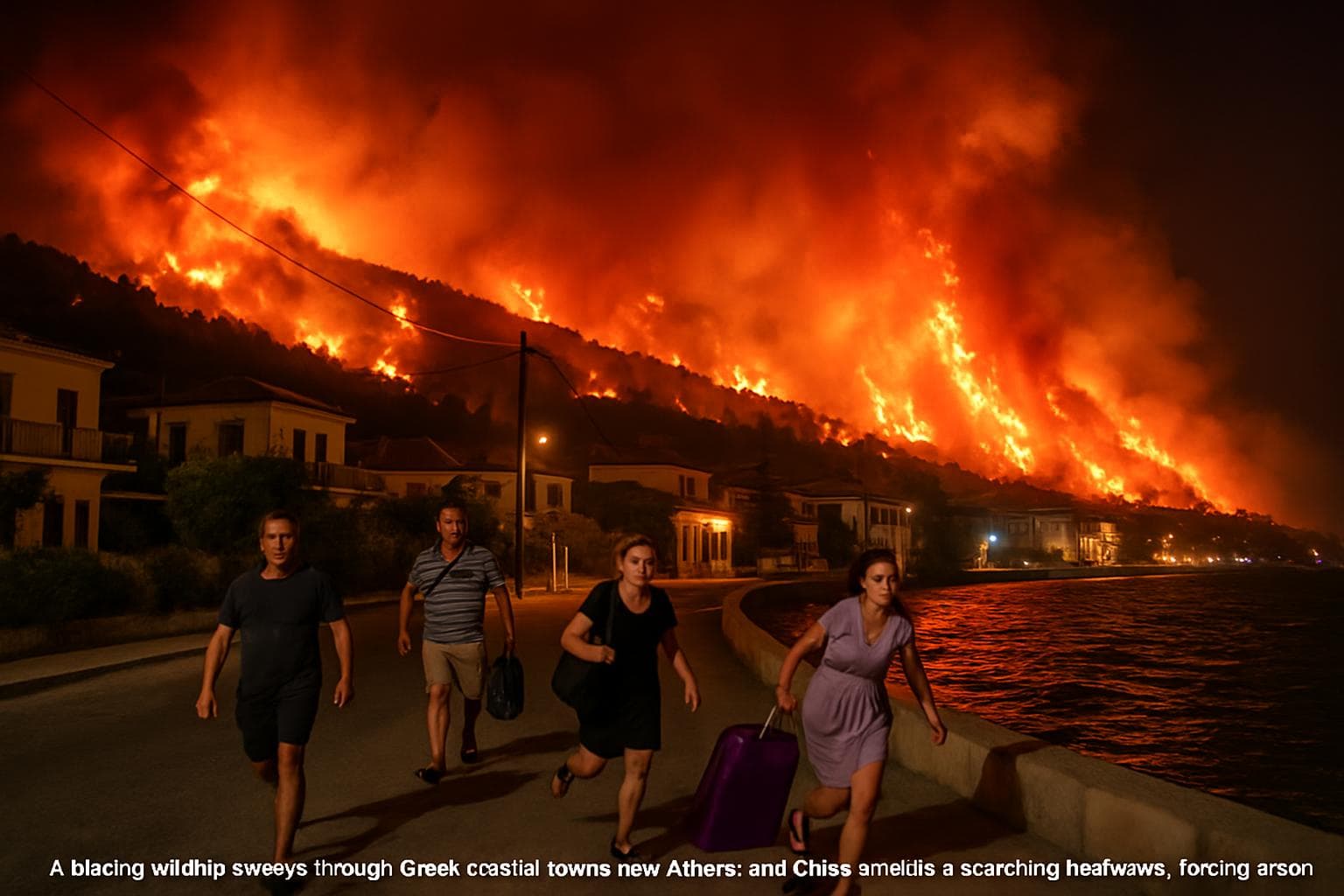
Greece is grappling with a series of wildfires that have swept through coastal towns near Athens and the island of Chios, causing widespread destruction and forcing mass evacuations. The fires, exacerbated by soaring temperatures and strong winds, have destroyed at least 20 homes in the towns of Palaia Fokaia and Thymari, located 40 kilometers southeast of Athens. Emergency services, including firefighters, forest rangers, and aircraft, have been deployed to contain the blazes, which have become increasingly common due to Greece's long, hot summers and the broader impacts of climate change.
Evacuations and Firefighting Efforts
As the flames advanced towards residential areas and beaches, more than 1,000 people were evacuated, with emergency alerts urging residents to leave their homes. Despite these warnings, some locals attempted to defend their properties using garden hoses, a move authorities warned could endanger lives. The Greek coast guard rescued 11 tourists trapped on a beach by the advancing flames, highlighting the perilous situation faced by those in the fire's path.
Arson Charges and Legal Context
On the island of Chios, a Georgian woman has been charged with unintentional arson after allegedly igniting a fire by discarding a cigarette. The blaze, which erupted in multiple locations simultaneously, has led to suspicions of deliberate arson. Greek authorities have launched investigations to determine the causes of these fires, with the country's fire service deploying a special arson investigation unit to the affected areas. The Greek government has recently toughened penalties for arson, with potential prison terms of up to 20 years and fines reaching €200,000.
Climate Change and Wildfire Prevention
Greece is experiencing its first heatwave of the summer, with temperatures expected to reach 40°C. This heatwave, coupled with dry conditions, has created a perfect storm for wildfires. In response, Greece has bolstered its firefighting capabilities, deploying an additional 18,000 firefighters for the season. The country remains on high alert, with a very high risk of wildfires forecasted for several regions, including Attica, Evia, the Peloponnese, and the northern Aegean.
WHAT THIS MIGHT MEAN
As Greece continues to battle these devastating wildfires, the focus will likely shift towards enhancing preventive measures and improving emergency response strategies. The ongoing investigations into potential arson could lead to stricter enforcement of fire safety regulations and harsher penalties for offenders. Additionally, the increasing frequency of such fires underscores the urgent need for global action on climate change, as rising temperatures and prolonged dry spells contribute to the growing threat of wildfires in the Mediterranean region. Experts suggest that comprehensive climate policies and international cooperation will be crucial in mitigating the impact of these natural disasters in the future.
Related Articles
Greece Battles Devastating Wildfires Amidst Severe Heatwave

Zelensky Vows Energy Sector Reforms Amid $100 Million Corruption Scandal
Tragic Collision in Aegean Sea Claims 14 Migrant Lives

Greek Court Acquits Aid Workers in Landmark Migrant Rescue Case

Ukraine Secures US LNG Supply via Greece Amid Energy Crisis
Heatwave Engulfs Southern Europe, Triggering Deadly Wildfires and Disrupting Tourism
Greece Battles Devastating Wildfires Amidst Heatwave and Arson Allegations
In This Article
 Leila Hassan| Published
 HIGHLIGHTS
- A massive wildfire has devastated coastal towns near Athens, destroying at least 20 homes and prompting evacuations.
- A Georgian woman has been charged with unintentional arson for allegedly starting a fire on Chios by discarding a cigarette.
- Over 1,000 people have been evacuated from affected areas, with emergency services battling fires amid strong winds and high temperatures.
- Greece has deployed an additional 18,000 firefighters this season to combat the increasing frequency of wildfires due to climate change.
- Authorities suspect some fires may have been deliberately set, with investigations underway to determine the causes.
Greece is grappling with a series of wildfires that have swept through coastal towns near Athens and the island of Chios, causing widespread destruction and forcing mass evacuations. The fires, exacerbated by soaring temperatures and strong winds, have destroyed at least 20 homes in the towns of Palaia Fokaia and Thymari, located 40 kilometers southeast of Athens. Emergency services, including firefighters, forest rangers, and aircraft, have been deployed to contain the blazes, which have become increasingly common due to Greece's long, hot summers and the broader impacts of climate change.
Evacuations and Firefighting Efforts
As the flames advanced towards residential areas and beaches, more than 1,000 people were evacuated, with emergency alerts urging residents to leave their homes. Despite these warnings, some locals attempted to defend their properties using garden hoses, a move authorities warned could endanger lives. The Greek coast guard rescued 11 tourists trapped on a beach by the advancing flames, highlighting the perilous situation faced by those in the fire's path.
Arson Charges and Legal Context
On the island of Chios, a Georgian woman has been charged with unintentional arson after allegedly igniting a fire by discarding a cigarette. The blaze, which erupted in multiple locations simultaneously, has led to suspicions of deliberate arson. Greek authorities have launched investigations to determine the causes of these fires, with the country's fire service deploying a special arson investigation unit to the affected areas. The Greek government has recently toughened penalties for arson, with potential prison terms of up to 20 years and fines reaching €200,000.
Climate Change and Wildfire Prevention
Greece is experiencing its first heatwave of the summer, with temperatures expected to reach 40°C. This heatwave, coupled with dry conditions, has created a perfect storm for wildfires. In response, Greece has bolstered its firefighting capabilities, deploying an additional 18,000 firefighters for the season. The country remains on high alert, with a very high risk of wildfires forecasted for several regions, including Attica, Evia, the Peloponnese, and the northern Aegean.
WHAT THIS MIGHT MEAN
As Greece continues to battle these devastating wildfires, the focus will likely shift towards enhancing preventive measures and improving emergency response strategies. The ongoing investigations into potential arson could lead to stricter enforcement of fire safety regulations and harsher penalties for offenders. Additionally, the increasing frequency of such fires underscores the urgent need for global action on climate change, as rising temperatures and prolonged dry spells contribute to the growing threat of wildfires in the Mediterranean region. Experts suggest that comprehensive climate policies and international cooperation will be crucial in mitigating the impact of these natural disasters in the future.
Related Articles
Greece Battles Devastating Wildfires Amidst Severe Heatwave
Zelensky Vows Energy Sector Reforms Amid $100 Million Corruption Scandal
Tragic Collision in Aegean Sea Claims 14 Migrant Lives
Greek Court Acquits Aid Workers in Landmark Migrant Rescue Case
Ukraine Secures US LNG Supply via Greece Amid Energy Crisis
Heatwave Engulfs Southern Europe, Triggering Deadly Wildfires and Disrupting Tourism