
Handwritten Notes Lead to Rescue of Mother and Son Stranded in California Forest

In This Article
HIGHLIGHTS
- A mother and her nine-year-old son were rescued in the Sierra Nevada after leaving handwritten notes when they got stranded.
- The pair were found by a Calaveras County volunteer search team, who were training nearby and used the notes to locate them.
- The duo had lost their GPS signal and got stuck about 10 miles from the nearest paved road on their way to a Boy Scouts camp.
- Authorities praised the mother and son for leaving notes and staying put, which facilitated their rescue.
- The boy used his Cub Scout whistle to signal for help, demonstrating effective emergency preparedness.
A mother and her nine-year-old son were successfully rescued from the rugged terrain of the Sierra Nevada in California after leaving a series of handwritten notes to signal for help. The pair, who had been stranded for over 24 hours, were discovered by a volunteer search and rescue team from Calaveras County, thanks to their resourceful use of notes and a Cub Scout whistle.
The ordeal began on July 11 when Tami and her son Stirling set out from the Sacramento area for a Boy Scouts camp. Their journey took an unexpected turn when their GPS directed them onto old logging roads, leading them deep into the forest. They eventually lost the GPS signal and became stuck approximately 10 miles from the nearest paved road.
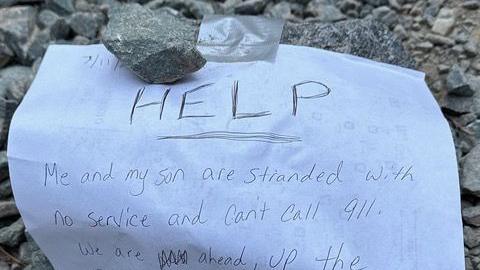
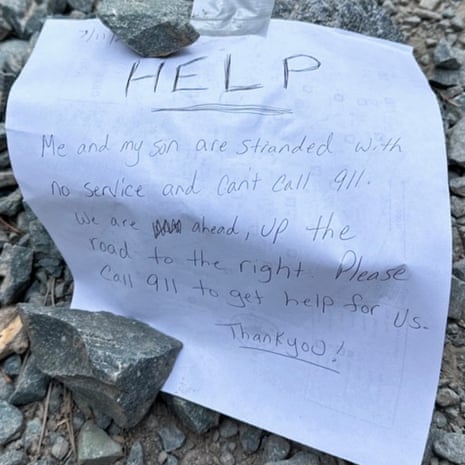
Realizing they were in a precarious situation with no phone service, Tami began leaving notes under rocks along their path. One note read, "HELP. Me and my son are stranded with no service and can't call 911." The notes were instrumental in guiding the search team, who were already in the area for training exercises.
The Calaveras County Sheriff's Office detailed the rescue mission in a Facebook post, explaining that the search team established a command post and utilized air assets and off-road vehicles to navigate the complex network of roads. A group of campers also contributed by alerting authorities to a vehicle matching the description of the missing pair.
The search team found the first note about four hours after being dispatched, followed by a second note that included contact information. Roughly a mile further, they located Tami and Stirling, who had spent the night in their car with a cooler of food and drinks.
Lt. Greg Stark of the sheriff's office commended the pair for their preparedness and decision to stay put once they realized they were lost. "They did everything right," Stark remarked, highlighting the importance of their actions in ensuring a swift rescue.
WHAT THIS MIGHT MEAN
The successful rescue of Tami and Stirling underscores the critical importance of emergency preparedness and communication in remote areas. Their use of handwritten notes and a Cub Scout whistle exemplifies effective strategies for signaling distress when technology fails. This incident may prompt further discussions on the reliability of GPS systems in remote locations and the need for alternative navigation methods.
Authorities may also consider enhancing training programs for search and rescue teams, emphasizing the value of traditional signaling techniques. As more people venture into remote areas for recreation, the lessons learned from this rescue could inform future safety guidelines and public awareness campaigns.
Images from the Web
Related Articles

Tragedy Strikes as Avalanche Claims Eight Lives in California's Sierra Nevada
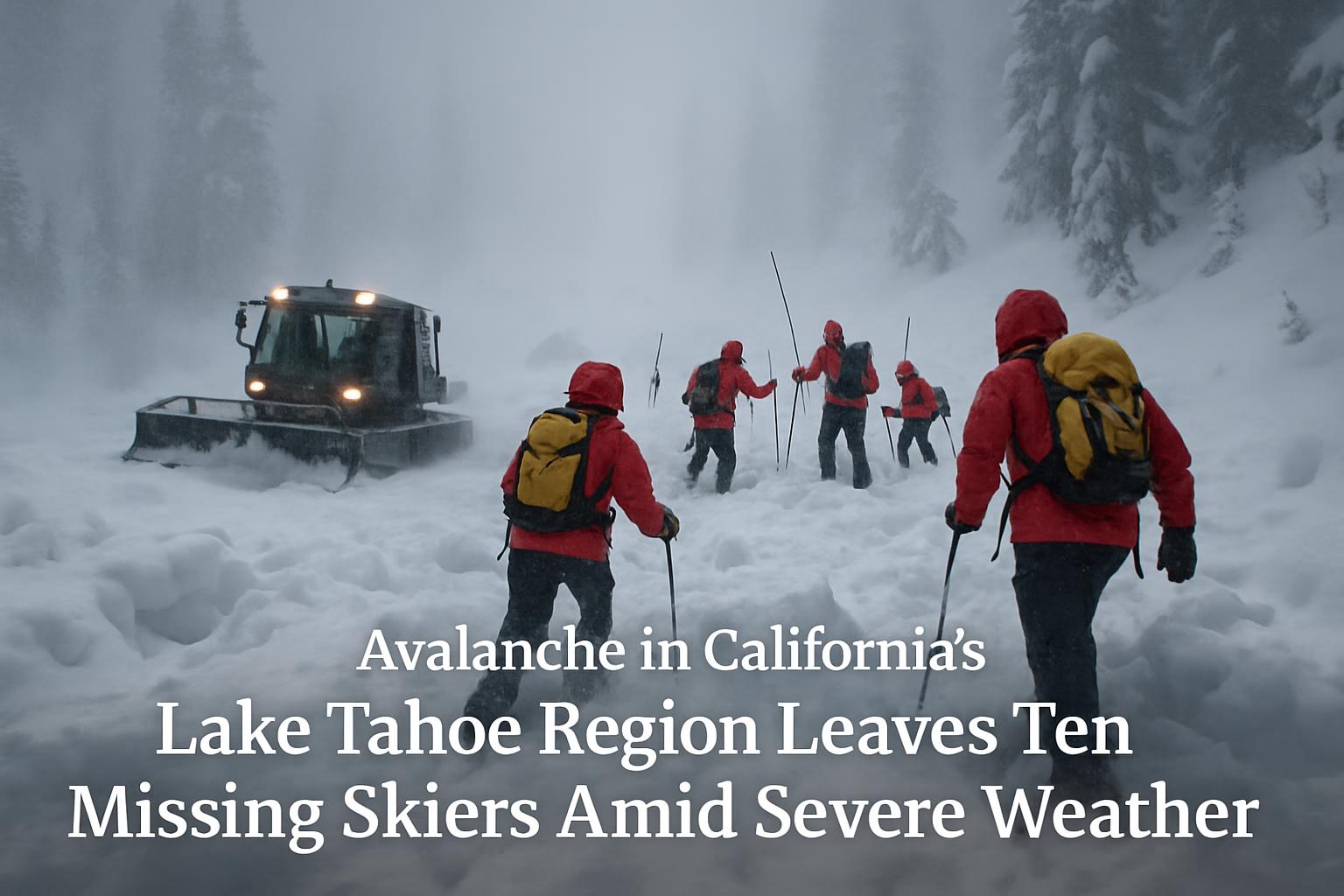
California Avalanche Leaves Ten Skiers Missing Amid Severe Weather

TikTok Faces Outage and Content Suppression Accusations Amid New US Ownership

NRA Calls for Full Investigation into Alex Pretti Shooting Amidst Rising Tensions

NASA Conducts First Medical Evacuation from International Space Station
Tragedy in the Sierra Nevada: Deadly Avalanche Claims Nine Lives
Handwritten Notes Lead to Rescue of Mother and Son Stranded in California Forest
In This Article
 Ethan Brooks| Published
 HIGHLIGHTS
- A mother and her nine-year-old son were rescued in the Sierra Nevada after leaving handwritten notes when they got stranded.
- The pair were found by a Calaveras County volunteer search team, who were training nearby and used the notes to locate them.
- The duo had lost their GPS signal and got stuck about 10 miles from the nearest paved road on their way to a Boy Scouts camp.
- Authorities praised the mother and son for leaving notes and staying put, which facilitated their rescue.
- The boy used his Cub Scout whistle to signal for help, demonstrating effective emergency preparedness.
A mother and her nine-year-old son were successfully rescued from the rugged terrain of the Sierra Nevada in California after leaving a series of handwritten notes to signal for help. The pair, who had been stranded for over 24 hours, were discovered by a volunteer search and rescue team from Calaveras County, thanks to their resourceful use of notes and a Cub Scout whistle.
The ordeal began on July 11 when Tami and her son Stirling set out from the Sacramento area for a Boy Scouts camp. Their journey took an unexpected turn when their GPS directed them onto old logging roads, leading them deep into the forest. They eventually lost the GPS signal and became stuck approximately 10 miles from the nearest paved road.
Realizing they were in a precarious situation with no phone service, Tami began leaving notes under rocks along their path. One note read, "HELP. Me and my son are stranded with no service and can't call 911." The notes were instrumental in guiding the search team, who were already in the area for training exercises.
The Calaveras County Sheriff's Office detailed the rescue mission in a Facebook post, explaining that the search team established a command post and utilized air assets and off-road vehicles to navigate the complex network of roads. A group of campers also contributed by alerting authorities to a vehicle matching the description of the missing pair.
The search team found the first note about four hours after being dispatched, followed by a second note that included contact information. Roughly a mile further, they located Tami and Stirling, who had spent the night in their car with a cooler of food and drinks.
Lt. Greg Stark of the sheriff's office commended the pair for their preparedness and decision to stay put once they realized they were lost. "They did everything right," Stark remarked, highlighting the importance of their actions in ensuring a swift rescue.
WHAT THIS MIGHT MEAN
The successful rescue of Tami and Stirling underscores the critical importance of emergency preparedness and communication in remote areas. Their use of handwritten notes and a Cub Scout whistle exemplifies effective strategies for signaling distress when technology fails. This incident may prompt further discussions on the reliability of GPS systems in remote locations and the need for alternative navigation methods.
Authorities may also consider enhancing training programs for search and rescue teams, emphasizing the value of traditional signaling techniques. As more people venture into remote areas for recreation, the lessons learned from this rescue could inform future safety guidelines and public awareness campaigns.
Images from the Web
Related Articles
Tragedy Strikes as Avalanche Claims Eight Lives in California's Sierra Nevada
California Avalanche Leaves Ten Skiers Missing Amid Severe Weather
TikTok Faces Outage and Content Suppression Accusations Amid New US Ownership
NRA Calls for Full Investigation into Alex Pretti Shooting Amidst Rising Tensions
NASA Conducts First Medical Evacuation from International Space Station
Tragedy in the Sierra Nevada: Deadly Avalanche Claims Nine Lives