
Heathrow Faces Financial and Operational Challenges Following Substation Fire
In This Article
HIGHLIGHTS
- Heathrow Airport's closure in March due to a substation fire disrupted 270,000 passengers and cost the airport tens of millions of pounds.
- CEO Thomas Woldbye missed emergency calls during the incident as his phone was on silent, but he expressed confidence in the airport's crisis management.
- The fire was traced to a known fault at the North Hyde substation, with National Grid facing criticism for not addressing the issue since 2018.
- Heathrow is considering legal action against National Grid and plans to invest in improving the airport's resilience.
- Despite record passenger numbers, Heathrow's profits fell by a third in the first half of 2025, partly due to increased finance costs.
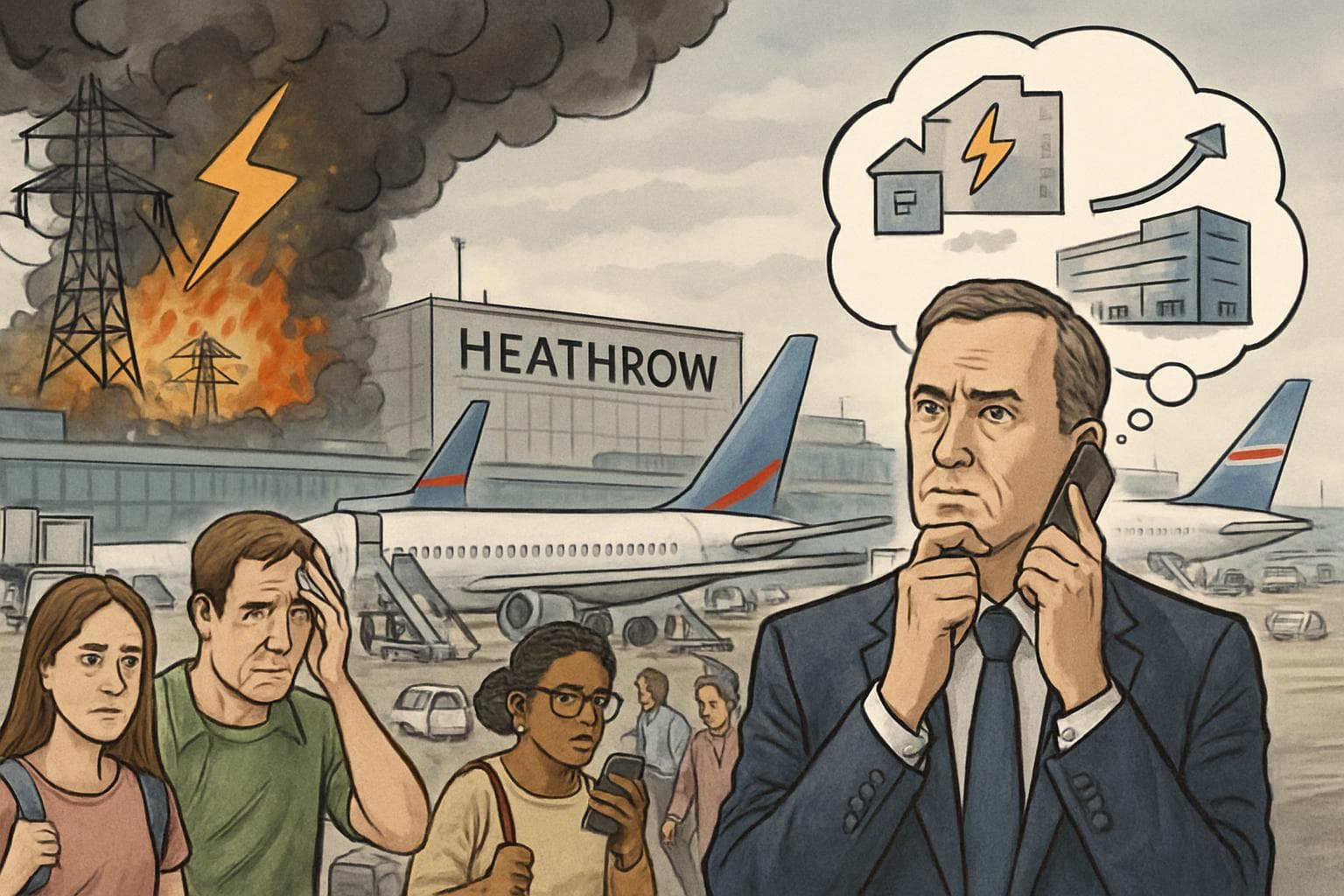
Heathrow Airport is grappling with the aftermath of a significant operational disruption caused by a fire at a nearby electrical substation in March, which led to the cancellation of 1,300 flights and affected 270,000 passengers. The incident, which cost the airport tens of millions of pounds, has sparked discussions about accountability and future resilience.
CEO's Response and Crisis Management
In his first public interview since the incident, Heathrow's CEO, Thomas Woldbye, expressed frustration over missing emergency calls as his phone was on silent. Despite this, Woldbye assured that the airport's crisis management procedures were effective. "An organisation like ours has to manage whether the captain's on the bridge or not," he told the BBC, emphasizing the importance of robust operational protocols.
Investigation and Accountability
The fire was attributed to a known fault at the North Hyde substation, which had been identified as early as 2018. The National Energy Systems Operator's report highlighted failings by National Grid, prompting Heathrow to consider legal action. "Our expectation is that [National Grid] takes accountability for these failings," Heathrow stated, underscoring the financial and operational impact on both the airport and airlines.
Financial Impact and Future Plans
Despite a record 39.9 million passenger journeys in the first half of 2025, Heathrow reported a 37.2% drop in pre-tax profits to £203 million, attributed to higher finance costs amid rising interest rates. In response, the airport plans to submit a five-year investment proposal to the Civil Aviation Authority, aiming to enhance facilities and increase passenger charges.
Heathrow Expansion and Resilience
Looking ahead, Heathrow is preparing to submit plans for a third runway, a move supported by the UK government but met with caution by Woldbye. "If customers are not clear they want it, why would we do this?" he questioned, highlighting the complexities of expanding a space-constrained airport. The runway, if approved, would not be operational until 2035 at the earliest.
WHAT THIS MIGHT MEAN
The fallout from the Heathrow fire could lead to significant legal and regulatory repercussions for National Grid, especially if Heathrow pursues damages. The incident underscores the need for improved infrastructure resilience, a priority for Heathrow as it seeks to prevent future disruptions. Meanwhile, the airport's expansion plans, including the contentious third runway, will require careful navigation of public and governmental support. As Heathrow continues to recover financially, its strategic investments and operational improvements will be crucial in maintaining its position as a leading global aviation hub.
Related Articles

Prince Andrew's Ties to Epstein Under Scrutiny Amid Calls for Inquiry

Government Criticized for Mishandling Maccabi Tel Aviv Fan Ban

Prince Andrew's Arrest Intensifies Scrutiny on Royal Succession and Prince William's Future Role

UK Defence Faces Scrutiny Amid Ajax Armoured Vehicle Delays and Soldier Safety Concerns

Government Announces £4 Billion Overhaul of SEND Support in England

UK Government's SEND Reforms: A Critical Turning Point for Special Education
Heathrow Faces Financial and Operational Challenges Following Substation Fire
In This Article
 Ethan Brooks| Published
 HIGHLIGHTS
- Heathrow Airport's closure in March due to a substation fire disrupted 270,000 passengers and cost the airport tens of millions of pounds.
- CEO Thomas Woldbye missed emergency calls during the incident as his phone was on silent, but he expressed confidence in the airport's crisis management.
- The fire was traced to a known fault at the North Hyde substation, with National Grid facing criticism for not addressing the issue since 2018.
- Heathrow is considering legal action against National Grid and plans to invest in improving the airport's resilience.
- Despite record passenger numbers, Heathrow's profits fell by a third in the first half of 2025, partly due to increased finance costs.
Heathrow Airport is grappling with the aftermath of a significant operational disruption caused by a fire at a nearby electrical substation in March, which led to the cancellation of 1,300 flights and affected 270,000 passengers. The incident, which cost the airport tens of millions of pounds, has sparked discussions about accountability and future resilience.
CEO's Response and Crisis Management
In his first public interview since the incident, Heathrow's CEO, Thomas Woldbye, expressed frustration over missing emergency calls as his phone was on silent. Despite this, Woldbye assured that the airport's crisis management procedures were effective. "An organisation like ours has to manage whether the captain's on the bridge or not," he told the BBC, emphasizing the importance of robust operational protocols.
Investigation and Accountability
The fire was attributed to a known fault at the North Hyde substation, which had been identified as early as 2018. The National Energy Systems Operator's report highlighted failings by National Grid, prompting Heathrow to consider legal action. "Our expectation is that [National Grid] takes accountability for these failings," Heathrow stated, underscoring the financial and operational impact on both the airport and airlines.
Financial Impact and Future Plans
Despite a record 39.9 million passenger journeys in the first half of 2025, Heathrow reported a 37.2% drop in pre-tax profits to £203 million, attributed to higher finance costs amid rising interest rates. In response, the airport plans to submit a five-year investment proposal to the Civil Aviation Authority, aiming to enhance facilities and increase passenger charges.
Heathrow Expansion and Resilience
Looking ahead, Heathrow is preparing to submit plans for a third runway, a move supported by the UK government but met with caution by Woldbye. "If customers are not clear they want it, why would we do this?" he questioned, highlighting the complexities of expanding a space-constrained airport. The runway, if approved, would not be operational until 2035 at the earliest.
WHAT THIS MIGHT MEAN
The fallout from the Heathrow fire could lead to significant legal and regulatory repercussions for National Grid, especially if Heathrow pursues damages. The incident underscores the need for improved infrastructure resilience, a priority for Heathrow as it seeks to prevent future disruptions. Meanwhile, the airport's expansion plans, including the contentious third runway, will require careful navigation of public and governmental support. As Heathrow continues to recover financially, its strategic investments and operational improvements will be crucial in maintaining its position as a leading global aviation hub.
Related Articles
Prince Andrew's Ties to Epstein Under Scrutiny Amid Calls for Inquiry
Government Criticized for Mishandling Maccabi Tel Aviv Fan Ban
Prince Andrew's Arrest Intensifies Scrutiny on Royal Succession and Prince William's Future Role
UK Defence Faces Scrutiny Amid Ajax Armoured Vehicle Delays and Soldier Safety Concerns
Government Announces £4 Billion Overhaul of SEND Support in England
UK Government's SEND Reforms: A Critical Turning Point for Special Education