
Heathrow Airport Fire Exposes Critical Infrastructure Failures
In This Article
HIGHLIGHTS
- A fire at Heathrow Airport's substation, caused by a known fault, led to a major power outage affecting over 270,000 journeys.
- The National Energy System Operator (NESO) found that moisture in the substation's bushing, first detected in 2018, was not addressed, leading to the fire.
- Ofgem has launched an investigation into National Grid for potential breaches in maintenance and development of the North Hyde substation.
- The fire suppression system at the substation was inoperable since 2022, exacerbating the incident's impact.
- Energy Secretary Ed Miliband described the findings as "deeply concerning," highlighting the need for improved infrastructure resilience.
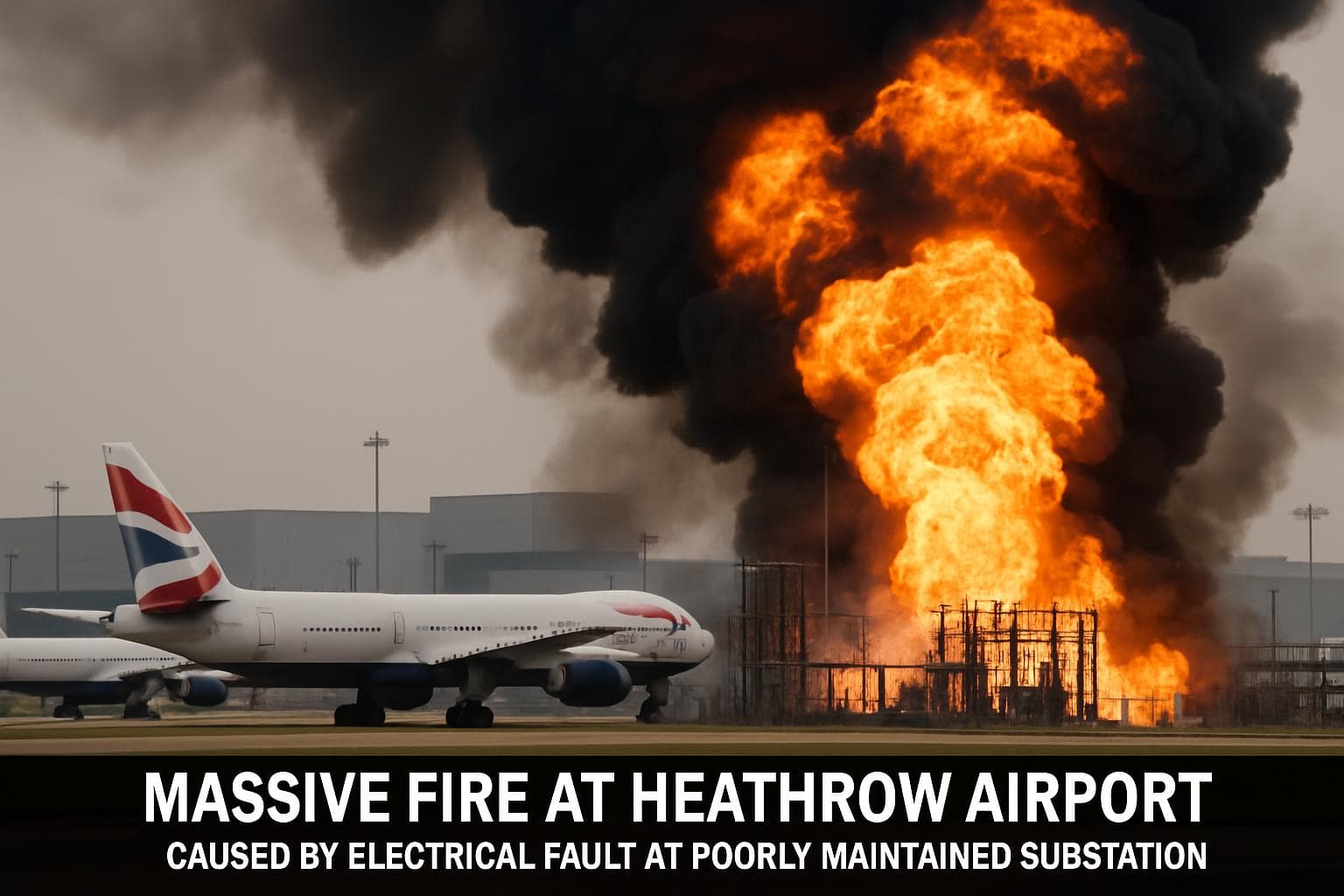
A preventable electrical fault at a substation led to a catastrophic fire that shut down Heathrow Airport in March, disrupting over 270,000 passenger journeys. The National Energy System Operator (NESO) report reveals that the fire, which affected more than 1,350 flights, was caused by moisture entering the bushing of a transformer at the North Hyde substation. This issue was first detected in 2018 but was not rectified, leading to a severe power outage.
Substation Faults and Maintenance Oversights
The NESO report highlights that the elevated moisture readings in the substation's bushing were recorded in 2018, yet appropriate actions were not taken. The failure to address this issue, coupled with an inoperable fire suppression system since 2022, resulted in the fire burning for nearly six days. The incident affected over 66,000 homes and businesses, including essential services like Hillingdon Hospital.
Regulatory and Government Response
In response to the findings, Ofgem has initiated an investigation into National Grid's compliance with maintenance regulations. The energy regulator aims to determine whether the failings were isolated or indicative of broader systemic issues. Energy Secretary Ed Miliband expressed grave concerns over the incident, emphasizing the need for urgent improvements in the UK's infrastructure resilience.
Heathrow and National Grid's Reactions
Heathrow Airport criticized National Grid for outdated safety standards and inadequate asset management. A spokesperson stated that the airport is implementing recommendations from an internal review to prevent future occurrences. Meanwhile, National Grid has acknowledged the incident's rarity and stated that it has taken steps to enhance the resilience of its substations.
WHAT THIS MIGHT MEAN
The ongoing investigation by Ofgem could lead to significant regulatory changes in how energy infrastructure is maintained across the UK. If systemic issues are identified, National Grid may face substantial penalties and be required to overhaul its maintenance protocols. This incident underscores the critical need for robust infrastructure to support the UK's major transport hubs and essential services. As the government reviews the findings, there may be increased pressure to invest in modernizing the country's aging energy systems to prevent similar disruptions in the future.
Related Articles

Middle East Conflict Drives UK Energy Prices to New Highs

Breakthrough Drug Offers Hope for Children with Severe Epilepsy

Trump Raises Import Tariffs to 15% After Supreme Court Setback

Arrest of Andrew Mountbatten-Windsor Captured in Iconic Photograph

UK Denies US Use of Military Bases for Potential Iran Strikes Amid Chagos Islands Dispute

Andrew Mountbatten-Windsor Arrested Amid Misconduct Allegations
Heathrow Airport Fire Exposes Critical Infrastructure Failures
In This Article
 Leila Hassan| Published
 HIGHLIGHTS
- A fire at Heathrow Airport's substation, caused by a known fault, led to a major power outage affecting over 270,000 journeys.
- The National Energy System Operator (NESO) found that moisture in the substation's bushing, first detected in 2018, was not addressed, leading to the fire.
- Ofgem has launched an investigation into National Grid for potential breaches in maintenance and development of the North Hyde substation.
- The fire suppression system at the substation was inoperable since 2022, exacerbating the incident's impact.
- Energy Secretary Ed Miliband described the findings as "deeply concerning," highlighting the need for improved infrastructure resilience.
A preventable electrical fault at a substation led to a catastrophic fire that shut down Heathrow Airport in March, disrupting over 270,000 passenger journeys. The National Energy System Operator (NESO) report reveals that the fire, which affected more than 1,350 flights, was caused by moisture entering the bushing of a transformer at the North Hyde substation. This issue was first detected in 2018 but was not rectified, leading to a severe power outage.
Substation Faults and Maintenance Oversights
The NESO report highlights that the elevated moisture readings in the substation's bushing were recorded in 2018, yet appropriate actions were not taken. The failure to address this issue, coupled with an inoperable fire suppression system since 2022, resulted in the fire burning for nearly six days. The incident affected over 66,000 homes and businesses, including essential services like Hillingdon Hospital.
Regulatory and Government Response
In response to the findings, Ofgem has initiated an investigation into National Grid's compliance with maintenance regulations. The energy regulator aims to determine whether the failings were isolated or indicative of broader systemic issues. Energy Secretary Ed Miliband expressed grave concerns over the incident, emphasizing the need for urgent improvements in the UK's infrastructure resilience.
Heathrow and National Grid's Reactions
Heathrow Airport criticized National Grid for outdated safety standards and inadequate asset management. A spokesperson stated that the airport is implementing recommendations from an internal review to prevent future occurrences. Meanwhile, National Grid has acknowledged the incident's rarity and stated that it has taken steps to enhance the resilience of its substations.
WHAT THIS MIGHT MEAN
The ongoing investigation by Ofgem could lead to significant regulatory changes in how energy infrastructure is maintained across the UK. If systemic issues are identified, National Grid may face substantial penalties and be required to overhaul its maintenance protocols. This incident underscores the critical need for robust infrastructure to support the UK's major transport hubs and essential services. As the government reviews the findings, there may be increased pressure to invest in modernizing the country's aging energy systems to prevent similar disruptions in the future.
Related Articles
Middle East Conflict Drives UK Energy Prices to New Highs
Breakthrough Drug Offers Hope for Children with Severe Epilepsy
Trump Raises Import Tariffs to 15% After Supreme Court Setback
Arrest of Andrew Mountbatten-Windsor Captured in Iconic Photograph
UK Denies US Use of Military Bases for Potential Iran Strikes Amid Chagos Islands Dispute
Andrew Mountbatten-Windsor Arrested Amid Misconduct Allegations