
Inner London Faces Funding Cuts Amid Government's Redistribution Plan
In This Article
HIGHLIGHTS
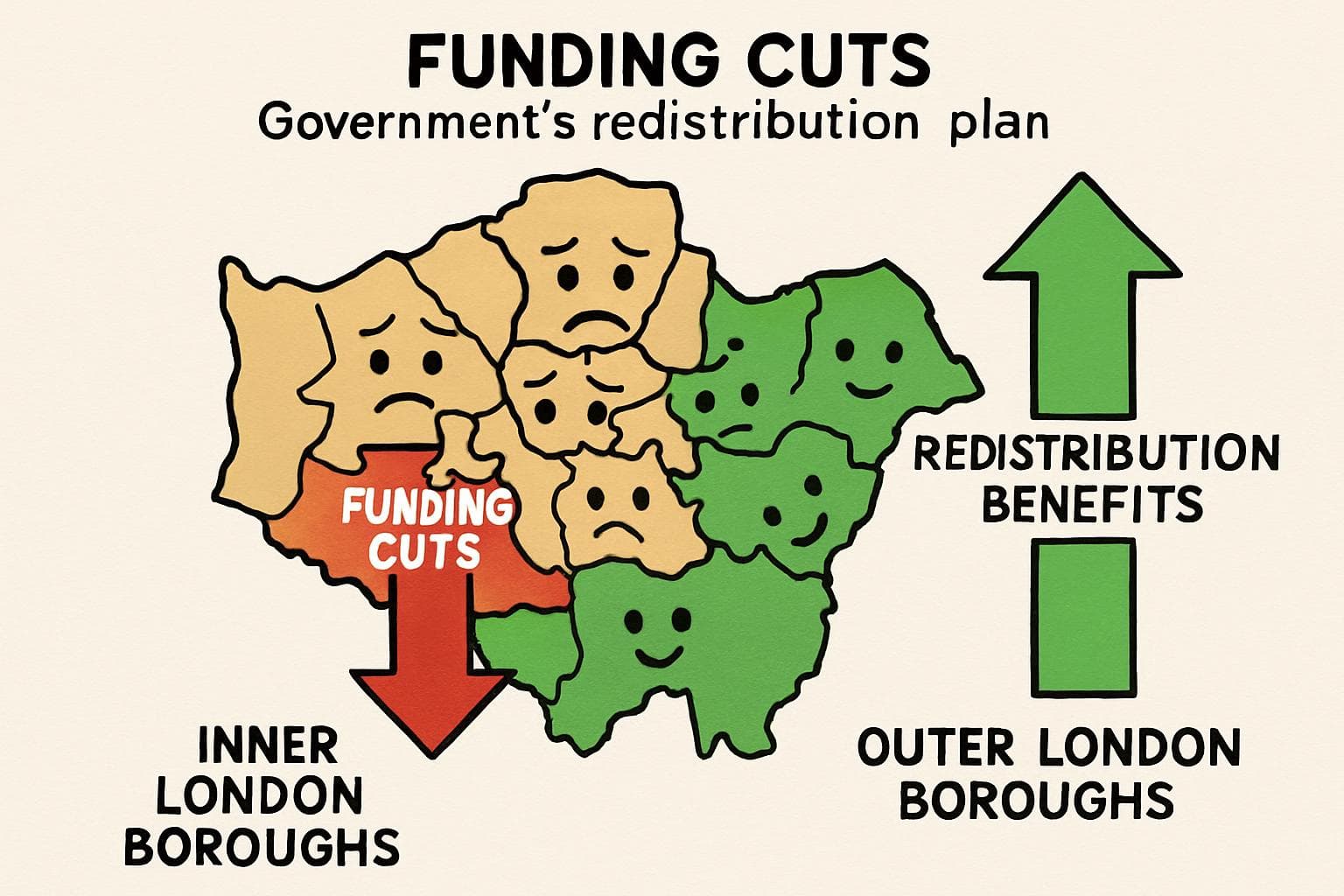
- Inner London councils could face funding cuts of up to 12% under a new government funding reform, impacting areas like Camden and Westminster.
- The Institute for Fiscal Studies (IFS) highlights that the reform aims to redistribute £2.1 billion annually, benefiting outer London and urban areas like Nottingham and Wolverhampton.
- The proposed changes, set to begin in 2026, will adjust funding formulas to better reflect local service demands and council tax band distributions.
- Critics argue the reform does not adequately address deprivation, with some deprived areas in London and the north losing funding despite high poverty levels.
- The new funding system will be phased in over three years, with final details expected later this year.
Inner London councils are bracing for significant funding reductions as the UK government prepares to implement a new funding distribution system. According to a report by the Institute for Fiscal Studies (IFS), some boroughs could see their funding decrease by up to 12% once inflation is considered. This shift is part of a broader government initiative to update council funding rules, which have not been revised in over a decade.
Redistribution of Resources
The proposed funding reform, set to be phased in from 2026, aims to redistribute approximately £2.1 billion annually across England. The changes will adjust the formulas used to allocate funds, taking into account local demand for services and the cost of delivering them. A significant portion of the funding will be redirected towards areas with a higher concentration of properties in lower council tax bands. Additionally, the portion of business rates income that councils have retained since 2013 will be redistributed.
Winners and Losers
While outer London boroughs and urban areas outside the capital, such as Nottingham and Wolverhampton, stand to gain from these changes, inner London councils like Camden, Hammersmith and Fulham, and Westminster are expected to lose out. The IFS report indicates that these areas, despite having high levels of poverty and homelessness, will experience funding cuts due to their low council tax rates and many properties in higher bands.
Concerns Over Deprivation
The reform has sparked criticism for not adequately addressing deprivation. The IFS expressed surprise that the proposed changes were not more strongly geared towards aiding deprived areas. Despite expectations that urban and impoverished regions would benefit, the current proposals suggest otherwise. Labour-controlled councils in central London have voiced strong opposition, arguing that the new system fails to consider the unique challenges faced by low-income communities in the capital.
Claire Holland, chair of London Councils, emphasized the potential impact on vulnerable residents, noting that London has the highest poverty rate in the country when housing costs are considered. "This would have major implications for our most vulnerable groups of residents," she stated.
WHAT THIS MIGHT MEAN
As the government moves forward with its funding reform, the finalization of the plans later this year will be crucial in determining the exact impact on individual councils. If the proposed changes proceed without significant adjustments, inner London boroughs may face increased financial strain, potentially affecting local services and support for vulnerable populations. The political implications could be significant, with Labour-run councils likely to continue their opposition, potentially influencing broader debates on local government finance and social equity. Experts suggest that a more nuanced approach, considering both deprivation and local economic conditions, may be necessary to achieve a truly equitable funding distribution.
Related Articles
Nottingham Attacks Inquiry: Families Demand Accountability and Truth

Labour MP's Husband Arrested in UK-China Espionage Probe

Government Announces £4 Billion Overhaul of SEND Support in England

Prince Andrew's Ties to Epstein Under Scrutiny Amid Calls for Inquiry

Government Criticized for Mishandling Maccabi Tel Aviv Fan Ban

Prince Andrew's Arrest Intensifies Scrutiny on Royal Succession and Prince William's Future Role
Inner London Faces Funding Cuts Amid Government's Redistribution Plan
In This Article
 Ethan Brooks| Published
 HIGHLIGHTS
- Inner London councils could face funding cuts of up to 12% under a new government funding reform, impacting areas like Camden and Westminster.
- The Institute for Fiscal Studies (IFS) highlights that the reform aims to redistribute £2.1 billion annually, benefiting outer London and urban areas like Nottingham and Wolverhampton.
- The proposed changes, set to begin in 2026, will adjust funding formulas to better reflect local service demands and council tax band distributions.
- Critics argue the reform does not adequately address deprivation, with some deprived areas in London and the north losing funding despite high poverty levels.
- The new funding system will be phased in over three years, with final details expected later this year.
Inner London councils are bracing for significant funding reductions as the UK government prepares to implement a new funding distribution system. According to a report by the Institute for Fiscal Studies (IFS), some boroughs could see their funding decrease by up to 12% once inflation is considered. This shift is part of a broader government initiative to update council funding rules, which have not been revised in over a decade.
Redistribution of Resources
The proposed funding reform, set to be phased in from 2026, aims to redistribute approximately £2.1 billion annually across England. The changes will adjust the formulas used to allocate funds, taking into account local demand for services and the cost of delivering them. A significant portion of the funding will be redirected towards areas with a higher concentration of properties in lower council tax bands. Additionally, the portion of business rates income that councils have retained since 2013 will be redistributed.
Winners and Losers
While outer London boroughs and urban areas outside the capital, such as Nottingham and Wolverhampton, stand to gain from these changes, inner London councils like Camden, Hammersmith and Fulham, and Westminster are expected to lose out. The IFS report indicates that these areas, despite having high levels of poverty and homelessness, will experience funding cuts due to their low council tax rates and many properties in higher bands.
Concerns Over Deprivation
The reform has sparked criticism for not adequately addressing deprivation. The IFS expressed surprise that the proposed changes were not more strongly geared towards aiding deprived areas. Despite expectations that urban and impoverished regions would benefit, the current proposals suggest otherwise. Labour-controlled councils in central London have voiced strong opposition, arguing that the new system fails to consider the unique challenges faced by low-income communities in the capital.
Claire Holland, chair of London Councils, emphasized the potential impact on vulnerable residents, noting that London has the highest poverty rate in the country when housing costs are considered. "This would have major implications for our most vulnerable groups of residents," she stated.
WHAT THIS MIGHT MEAN
As the government moves forward with its funding reform, the finalization of the plans later this year will be crucial in determining the exact impact on individual councils. If the proposed changes proceed without significant adjustments, inner London boroughs may face increased financial strain, potentially affecting local services and support for vulnerable populations. The political implications could be significant, with Labour-run councils likely to continue their opposition, potentially influencing broader debates on local government finance and social equity. Experts suggest that a more nuanced approach, considering both deprivation and local economic conditions, may be necessary to achieve a truly equitable funding distribution.
Related Articles
Nottingham Attacks Inquiry: Families Demand Accountability and Truth
Labour MP's Husband Arrested in UK-China Espionage Probe
Government Announces £4 Billion Overhaul of SEND Support in England
Prince Andrew's Ties to Epstein Under Scrutiny Amid Calls for Inquiry
Government Criticized for Mishandling Maccabi Tel Aviv Fan Ban
Prince Andrew's Arrest Intensifies Scrutiny on Royal Succession and Prince William's Future Role