
Inquest Reveals Systemic Failures in Care Home Tragedy of Melissa Mathieson
In This Article
HIGHLIGHTS
- Melissa Mathieson, an 18-year-old with Asperger syndrome, was murdered by Jason Conroy, a fellow resident at a care home in Bristol, in 2014.
- Mathieson had written a letter claiming social services "destroyed" her life, highlighting systemic failures in her care.
- Conroy, who had a history of violent behavior, was sentenced to life imprisonment in 2018 for the murder.
- The inquest, delayed by legal proceedings, revealed that Mathieson's family felt ignored by social services, which fueled her unrealistic fantasies about care homes.
- The case underscores the need for reform in how social services handle vulnerable individuals, as highlighted by the serious case review.
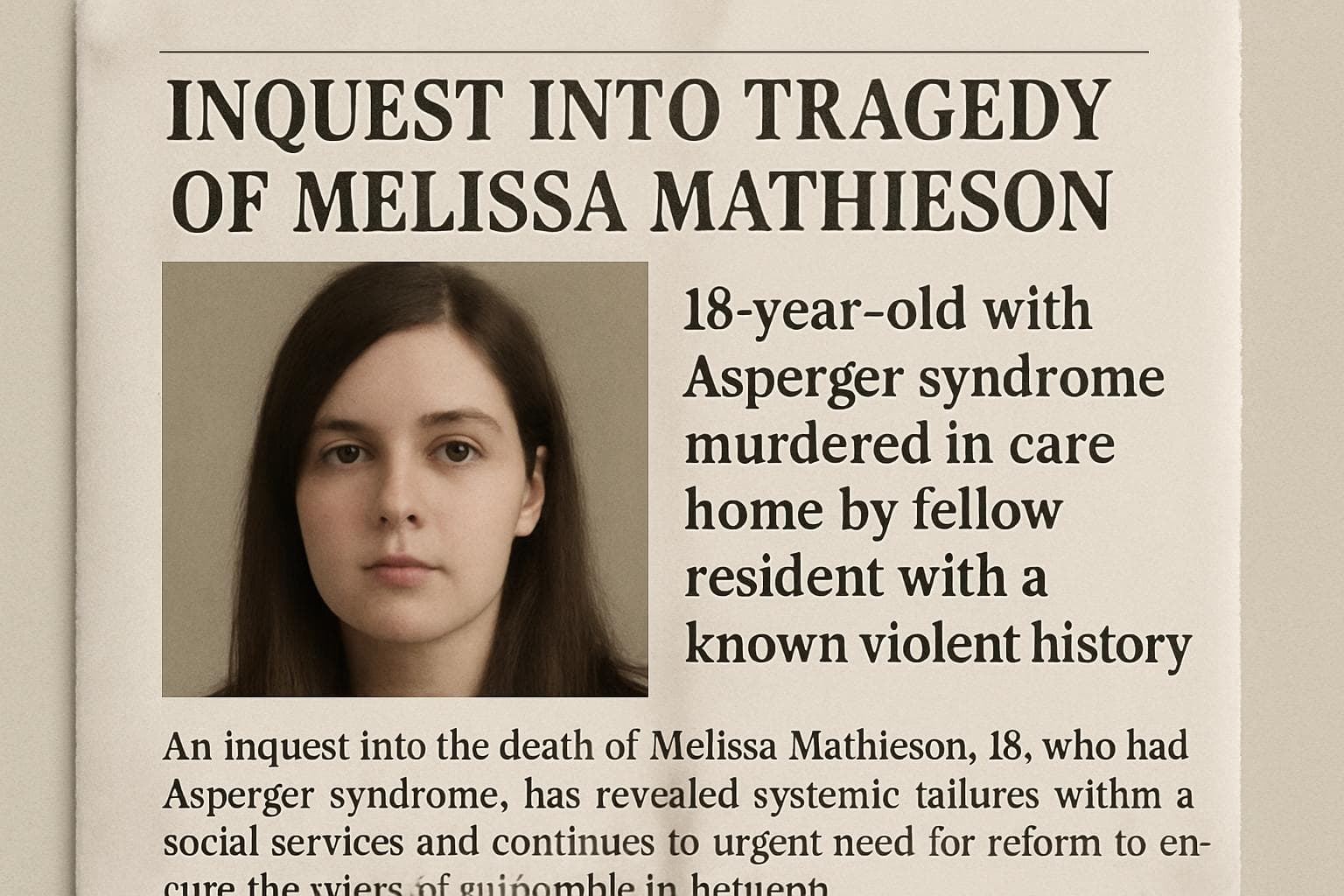
An inquest into the tragic death of Melissa Mathieson, an 18-year-old with Asperger syndrome, has shed light on systemic failures within social services that may have contributed to her murder in 2014. Mathieson was strangled by Jason Conroy, a fellow resident at Alexandra House in Bristol, a care facility for adults with autism and Asperger's. Conroy, who had a history of violent behavior, was sentenced to life imprisonment in 2018.
A Life Disrupted by Social Services
Melissa Mathieson's poignant letter, titled "Social Services Have Destroyed My Life," was read during the inquest at Avon Coroner's Court. In it, she expressed feeling "dragged away" from her home in Windsor, Berkshire, without consideration for her age or proximity to family. Her father, James Mathieson, criticized social services for fueling his daughter's fantasies about life in care, inspired by the fictional character Tracy Beaker.
A Predictable and Preventable Tragedy
The inquest revealed that Conroy's violent tendencies were known prior to the murder, raising questions about the care home's decision to house him with vulnerable individuals. A serious case review concluded that the attack was both predictable and preventable, leading to fines for Alexandra House.
Family's Struggle for Justice
James Mathieson voiced frustration over the decade-long wait for the inquest, emphasizing the need for lessons to be learned from his daughter's death. He described Melissa as a kind and gentle soul who aspired to work in a children's nursery. Her mother, Karen Mathieson, passed away from cancer in 2015, leaving the family to grapple with the compounded loss.
Calls for Systemic Reform
The inquest highlights the urgent need for reform in how social services manage vulnerable individuals. The Mathieson family's experience underscores the importance of involving families in decision-making processes and addressing the systemic failures that can lead to such tragedies.
WHAT THIS MIGHT MEAN
The inquest into Melissa Mathieson's death could prompt significant changes in the oversight and management of care homes, particularly those housing individuals with complex needs. Experts suggest that increased transparency and accountability within social services are crucial to prevent similar tragedies. Additionally, there may be calls for more rigorous assessments of individuals with violent histories before placing them in shared living environments. As the case continues to resonate, it serves as a stark reminder of the need for systemic reform to protect society's most vulnerable members.
Images from the Web


Related Articles

Police Federation Chief Arrested Amid Fraud Investigation

UK Police Intensify Investigation into Andrew Mountbatten-Windsor Amid Misconduct Allegations

Andrew Mountbatten-Windsor's Arrest Sparks International Calls for Justice

Calls for Action as Palestine Action Activists Face Retrial Amidst Protests

Nursery Worker Convicted of Sexual Abuse in Bristol: Families Demand Answers

Activists Acquitted in High-Profile Elbit Systems Break-In Case
Inquest Reveals Systemic Failures in Care Home Tragedy of Melissa Mathieson
In This Article
 Sofia Romano| Published
 HIGHLIGHTS
- Melissa Mathieson, an 18-year-old with Asperger syndrome, was murdered by Jason Conroy, a fellow resident at a care home in Bristol, in 2014.
- Mathieson had written a letter claiming social services "destroyed" her life, highlighting systemic failures in her care.
- Conroy, who had a history of violent behavior, was sentenced to life imprisonment in 2018 for the murder.
- The inquest, delayed by legal proceedings, revealed that Mathieson's family felt ignored by social services, which fueled her unrealistic fantasies about care homes.
- The case underscores the need for reform in how social services handle vulnerable individuals, as highlighted by the serious case review.
An inquest into the tragic death of Melissa Mathieson, an 18-year-old with Asperger syndrome, has shed light on systemic failures within social services that may have contributed to her murder in 2014. Mathieson was strangled by Jason Conroy, a fellow resident at Alexandra House in Bristol, a care facility for adults with autism and Asperger's. Conroy, who had a history of violent behavior, was sentenced to life imprisonment in 2018.
A Life Disrupted by Social Services
Melissa Mathieson's poignant letter, titled "Social Services Have Destroyed My Life," was read during the inquest at Avon Coroner's Court. In it, she expressed feeling "dragged away" from her home in Windsor, Berkshire, without consideration for her age or proximity to family. Her father, James Mathieson, criticized social services for fueling his daughter's fantasies about life in care, inspired by the fictional character Tracy Beaker.
A Predictable and Preventable Tragedy
The inquest revealed that Conroy's violent tendencies were known prior to the murder, raising questions about the care home's decision to house him with vulnerable individuals. A serious case review concluded that the attack was both predictable and preventable, leading to fines for Alexandra House.
Family's Struggle for Justice
James Mathieson voiced frustration over the decade-long wait for the inquest, emphasizing the need for lessons to be learned from his daughter's death. He described Melissa as a kind and gentle soul who aspired to work in a children's nursery. Her mother, Karen Mathieson, passed away from cancer in 2015, leaving the family to grapple with the compounded loss.
Calls for Systemic Reform
The inquest highlights the urgent need for reform in how social services manage vulnerable individuals. The Mathieson family's experience underscores the importance of involving families in decision-making processes and addressing the systemic failures that can lead to such tragedies.
WHAT THIS MIGHT MEAN
The inquest into Melissa Mathieson's death could prompt significant changes in the oversight and management of care homes, particularly those housing individuals with complex needs. Experts suggest that increased transparency and accountability within social services are crucial to prevent similar tragedies. Additionally, there may be calls for more rigorous assessments of individuals with violent histories before placing them in shared living environments. As the case continues to resonate, it serves as a stark reminder of the need for systemic reform to protect society's most vulnerable members.
Images from the Web
Related Articles
Police Federation Chief Arrested Amid Fraud Investigation
UK Police Intensify Investigation into Andrew Mountbatten-Windsor Amid Misconduct Allegations
Andrew Mountbatten-Windsor's Arrest Sparks International Calls for Justice
Calls for Action as Palestine Action Activists Face Retrial Amidst Protests
Nursery Worker Convicted of Sexual Abuse in Bristol: Families Demand Answers
Activists Acquitted in High-Profile Elbit Systems Break-In Case